

A repeatable, client-adaptive process that eliminates guesswork at every stage. Every phase produces documented, auditable outputs your team can rely on.


 Ownership
 Goal
Goal Architecture
 Scalability
 Speed (Long-term)
 Change Handling
 Cost Impact
 Product Control
 Engineering Focus
 Business Outcome














- 90%+
- Faster image processing
- 5X
- Shortened publishing cycle
Solutions
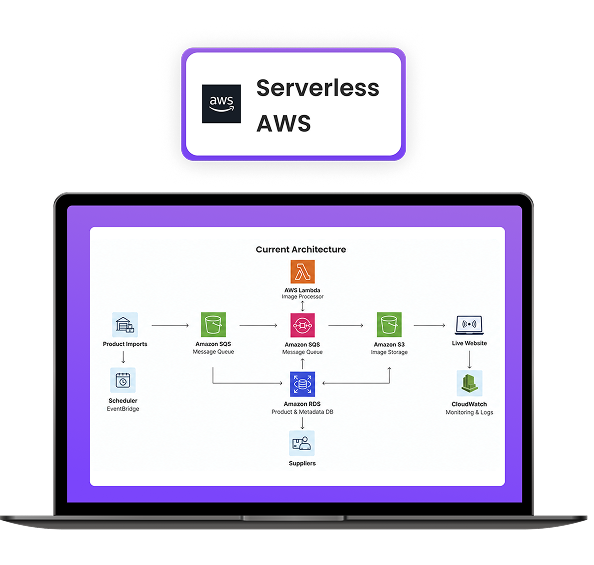
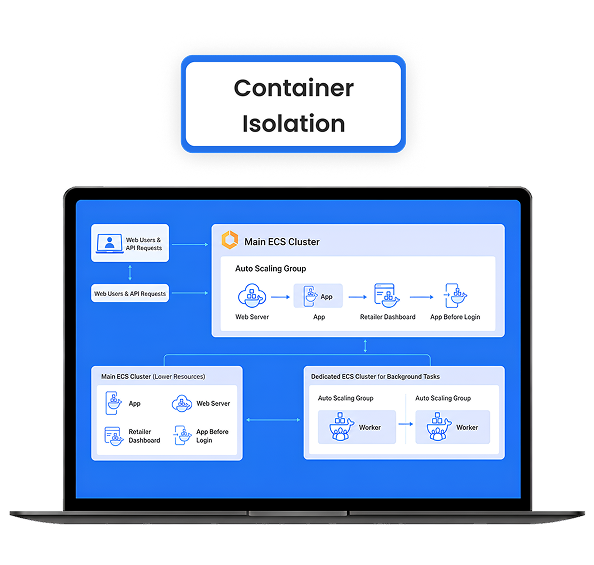
Serverless AWS Lambda pipeline with SQS queue management, replacing 10 EC2 instances and isolating image workloads from the core application.