Recognized for AI Excellence at 2026 Globee® Awards - Read More
Enterprise Application Development Services
9 to 14 Months Discovery to Production-Ready Apps
Radixweb is a globally trusted enterprise application development company that turns disconnected systems Into unified operations. From workflow automation to AI-ready enterprise platforms, we build applications that integrate, scale, and last.
Off-the-shelf tools are built for the average business. Custom enterprise applications are built for how yours realistically works.
Architecture Designed for Your Workflows
A generic platform approximates your process. A custom enterprise application encodes it. Every data flow, every role, every permission reflects how your teams operate, not a vendor's best guess about your industry.
Scales on Your Timeline, not a Pricing Tier
SaaS platforms scale against you. More users, higher bills, forced plan upgrades. Custom enterprise applications scale on your terms. You control the infrastructure, the feature roadmap, and the cost structure as the business grows.
Integrates With Every System You Already Operate
Your enterprise application is designed from the ground up to connect cleanly with your ERP, CRM, payment processors, data warehouses, and third-party APIs. No brittle middleware, no manual reconciliation, no paying a third party to bridge systems that should simply talk.
You Own the Code, the Architecture, and the IP
Every line of code belongs to your business permanently. No vendor lock-in, no renewal risk, no platform discontinuation event. You can hand the codebase to any team, modify it, extend it, or include it in a business valuation. The application is a capital asset.
Security Built for Your Exact Risk Profile
Shared platforms are shared targets. Your enterprise application carries security architecture defined from sprint one, not patched in after launch. HIPAA, GDPR, SOC 2, and PCI-DSS compliance built into design, not bolted on as a final checklist item.
Performance Tuned for Your Actual User Load
Generic platforms optimize for the median customer. Enterprise applications built by Radixweb are load-tested against your actual expected concurrency, geographic distribution, and transaction patterns. Your performance baseline holds under real conditions.
Certifications
ISO 27001:2022
ISO 9001:2015
SOC 2 Type II
HIPAA Compliant
PCI-DSS Aligned
Trusted By
XEROX
VERIZON
HP
THYSSENKRUPP
NEW YORK TIMES
RICOH
SHUTTERFLY
Our Enterprise Application Development Services
Radixweb delivers enterprise application development services for scalable operations across discovery, architecture, integration, deployment, and long-term maintenance.
Enterprise App Strategy & Consulting
We map your business objectives to specific technical decisions before any code is written. Architecture recommendations, technology stack selection, risk assessment, and a delivery roadmap you can trust before committing budget. Every architecture decision is a business decision, not a technical preference.
We transform legacy systems into scalable, modern architectures without disrupting business continuity. From API enablement and microservices replatforming to deep integration across ERP, CRM, and third-party ecosystems, we ensure your applications evolve with your business, not hold it back.
Full-stack web application engineering for portals, operational dashboards, multi-team platforms, and internal enterprise tools. Our enterprise web application development company capabilities span React, Angular, .NET Core, Node.js, and cloud-native deployment from day one.
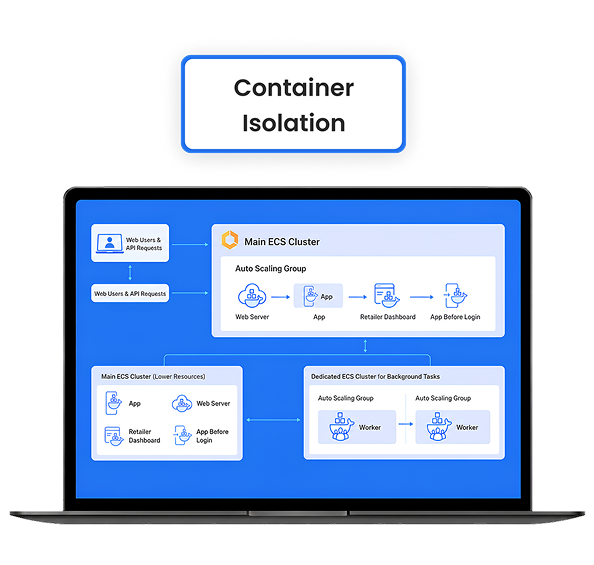
Applications designed to deploy on AWS, Azure, and Google Cloud from sprint one. Containerized, auto-scaling, and resilient by design. Cloud-based enterprise application development built for the workloads you have today and the scale you need in 24 months.
Functional, performance, and penetration testing across every release cycle. Security is not a project phase at Radixweb. It is embedded in how we write code, manage dependencies, and structure your application's data flows from the first sprint.
Enterprise Data Architecture & Reporting
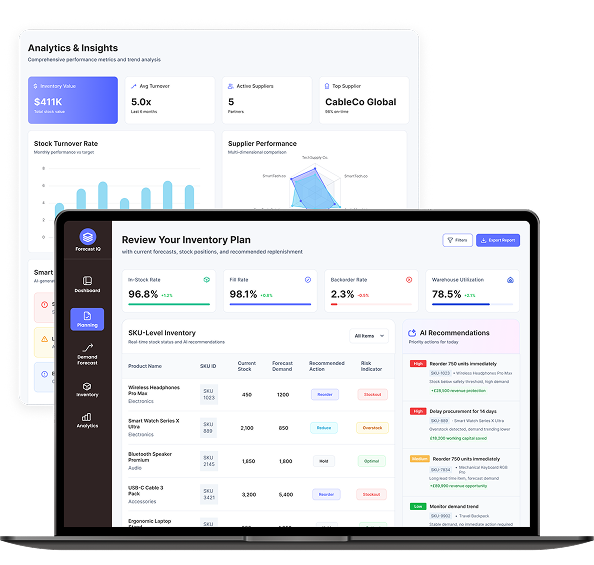
Enterprise data architecture and reporting are designed to turn application activity into trusted business intelligence from day one. Structured for visibility, accuracy, and operational control, built to support the decisions you make today and the scale you need in 24 months.
Types of Enterprise App Development Services
Each application type carries its own architecture, technology choices, and delivery approach. Select yours to see exactly how we build it.
Enterprise Application Integration Services
Connection new enterprise applications to the systems you already operate. API-first design, event-driven messaging, and purpose-built middleware that eliminates data silos without requiring full system replacement.
ERP and CRM Connectivity
Clean integrations with SAP, Oracle, Salesforce, and Microsoft Dynamics, designed during discovery, not discovered during testing.
Legacy System API Layers
Modern API wrappers on legacy cores allow new apps to communicate with existing infrastructure without requiring a full stack replacement.
Real-Time Data Synchronization
Event-driven architecture with Kafka and message brokers synchronizes data across app ecosystem in real time, eliminating batch processing delays.
Financial institutions integrating with banking cores
Enterprises connecting new platforms to legacy infrastructure
Organizations with siloed data across multiple systems
Businesses building embedded finance on existing platforms
Common Stack
REST APIs
GraphQL
Apache Kafka
RabbitMQ
MuleSoft
AWS SQS
Our Process for Enterprise App Development Solutions
At Radixweb, we have six highly coordinated phases with defined deliverables, clear handoffs, and weekly visibility at every stage. No surprises at go-live.
Discovery & Business Requirements Analysis
Business objectives mapped to technical decisions. Regulatory obligations identified per target market. Integration requirements scoped with third-party systems. Compliance and security architecture defined at high level before any design begins.
Before any UI design or development begins, your full regulatory obligations are mapped to specific technical requirements. Data collection scope. Storage jurisdiction. Audit trail depth. Reporting obligations. Answering these questions in phase two costs a fraction of answering them during QA.
Output: Compliance Architecture, Data Residency Plan, Audit Spec
Architecture Design & UX Engineering
Technology architecture defines the scalability ceiling, security posture, and long-term maintainability of your enterprise application. Cloud-native on AWS, Azure, or GCP is the default for 2026. Microservices for independent scaling. Modular monolith for defined-scope platforms. UX designed for task completion, not aesthetics.
Output: System Architecture, Database Schema, Wireframes, Design System
Agile Development & Integration
Agile sprints with weekly demos and trunk-based development. API integrations with payment networks, identity providers, banking infrastructure, and third-party data sources built and tested at this stage. Automated testing enforced throughout. No late-stage integration surprises.
Output: Codebase, Sprint Builds, Integration Test Reports
Security Testing & Compliance Review
Penetration testing. Vulnerability assessment. OWASP ASVS validation. Formal compliance architecture review before anything goes near a production environment. Security defects found in testing cost a fraction of what the same defects cost when found in production by a real user or a regulator.
Output: Pen Test Report, VA/PT, OWASP Validation, Compliance Sign-Off
Deployment, Support & Continuous Optimization
CI/CD pipeline execution. Zero-downtime production deployment. Infrastructure monitoring and rollback verification. Then SLA-backed post-launch support. The engineers who built your application handle ongoing maintenance. No knowledge transfer gaps, no context loss, no new team learning your system from documentation.
Output: CI/CD Logs, Production Release, Monitoring Setup, SLA Plan
Custom Enterprise Application Development Services Capabilities
Workflow Orchestration
Event-driven workflows coordinate multi-step business processes across users, services, and systems. Designed to minimize manual intervention, preserve transaction integrity, and maintain process continuity through approval chains, exception handling, and system-to-system automation.
AI-Ready Architecture
Structured APIs, clean data models, and extensible service layers prepare the platform for intelligent automation, LLM integration, and agentic workflows. Built to support future AI capabilities without requiring invasive refactoring of core application logic.
Multi-Tenant Enterprise Readiness
Tenant-isolated architectures support multiple business units, clients, or environments within a shared platform. Designed with logical data separation, configurable permissions, and scalable deployment patterns that preserve governance without duplicating application infrastructure.
Process Standardization
Application logic encodes repeatable business rules into structured, auditable workflows. This reduces process variance, improves compliance alignment, and makes enterprise operations more predictable, measurable, and easier to scale across distributed teams and regions.
Internal Productivity Enablement
Optimized task flows, reduced context switching, and faster system response times help teams complete work with fewer manual steps. Built to improve operational throughput, reduce cognitive load, and support high-volume enterprise execution.
Enterprise User Adoption
Interfaces are engineered around usability metrics, task frequency, and behavioral alignment. Designed to reduce training overhead, increase completion rates, and improve sustained adoption by making enterprise systems easier to navigate and less disruptive to existing work patterns.
Not Sure Which Type of Enterprise App You Need?
Let our experts help you make the right call based on your goals, budget, and timeline.
Why Choose Custom Enterprise Application Development
Custom enterprise application development matters when standard platforms can’t meet business demands, working with an enterprise application development company becomes essential.
High-Complexity Workflow Environments
When competitive advantage is embedded in unique workflows vendors cannot replicate, configurable software becomes a ceiling. Logistics networks with custom routing, financial institutions with proprietary risk models, and healthcare systems with specialized workflows hit this limit quickly. Custom enterprise development encodes your processes directly, instead of forcing them into predefined templates and scale without compromise.
Multi-Jurisdiction Compliance Requirements
Regulated industries cannot choose compliance obligations. HIPAA, PCI-DSS, SOC 2, GDPR, and financial regulations impose strict data residency, auditability, and access controls many SaaS platforms only partially support. Custom enterprise applications give security teams full architectural control, ensuring compliance is designed into systems from the ground up rather than added reactively later at scale today.
Business-Specific User Journeys
When your application serves multiple user roles with fundamentally different needs, a generic interface creates training friction, adoption resistance, and operational overhead that compounds as your user base grows. Custom UX engineering ensures that each user role encounters an interface designed for their specific tasks, not a general interface with features irrelevant to their workflow hidden in menus.
Security and Governance by Design
In regulated environments, control cannot be abstracted without introducing risk. Custom enterprise applications embed security, governance, and access control directly into system architecture, ensuring compliance is enforced at every layer rather than treated as an afterthought.
Multi-Role Enterprise Usage
When enterprise applications support multiple user roles, each with distinct responsibilities, generic interfaces create friction. As usage scales, these inefficiencies increase training overhead, slow productivity, and lead to inconsistent adoption across teams and functions.
Role-Specific User Experience
Custom UX design aligns interfaces with the precise needs of each user role. By reducing cognitive load and eliminating irrelevant features, organizations improve efficiency, accelerate onboarding, and ensure sustained adoption across complex, distributed enterprise environments at scale.
Enterprise Application Development Comparisons
The right choice for your business depends on your complexity, compliance requirements, and growth trajectory. Here is an honest comparison for enterprise decision-makers.
Factor
Custom Enterprise Development
Off-the-Shelf Software (COTS)
Low-Code Development
Best For
Unique, complex business processes
Standard processes (payroll, accounting)
Semi-custom apps needing speed
Time to Launch
3–9 months
2–6 weeks
1–3 months
Initial Cost
$50K–$500K+
$5K–$50K/year
$15K–$150K
Customization
Full control, built to spec
Limited to vendor settings
Moderate (drag-and-drop)
Scalability
Unlimited, designed for growth
vendor-limited, licensing costs
Platform-limited
Code Ownership
Full ownership
No ownership
Vendor-controlled
Vendor Lock-In
None
High (annual licensing)
High (platform dependency)
Compliance
Built for HIPAA, GDPR, SOC 2
May require workarounds
Limited for complex compliance
Long-Term Cost
Higher upfront, lower recurring
Lower upfront, rising licensing
Lower upfront, scaling costs increase
Technical Expertise
Requires development team
Minimal IT skills needed
Lower technical barrier
Maintenance
Partner-managed or internal
Vendor-managed
Platform-managed
Still not sure whether to invest in custom enterprise application development? Talk to our experts and make every technology decision count.
In every enterprise engagement we have delivered, the projects that reached production fastest had one thing in common: compliance, integration, and scalability requirements were scoped into the architecture.
“They were always highly responsive and even extended their daily schedules to ensure communication never suffered across time zones. The level of commitment to the project outcome was evident in every sprint review we ran together over six months."
Kim
Owner
Microservices Architectures
Independent services, domain-driven design, asynchronous messaging, and cloud-native scalability. We build microservices architectures for enterprise platforms handling high transaction volumes, complex integrations, and resilience requirements, using event streaming, API gateways, service mesh observability, and container orchestration for distributed performance.
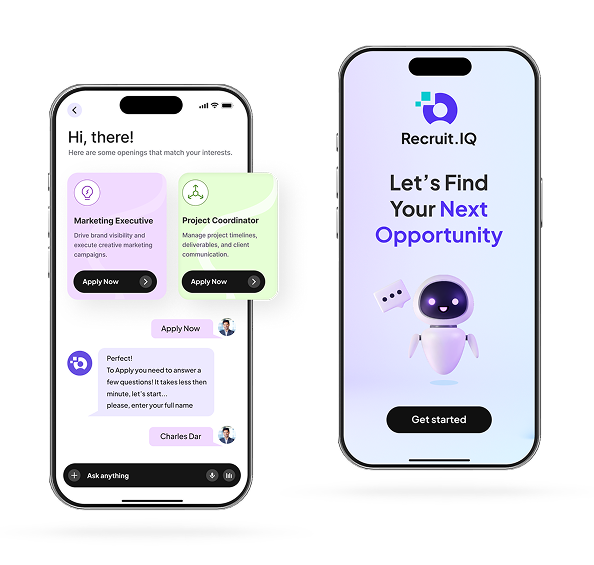
Embed OpenAI, Anthropic, or Azure AI directly into your enterprise application for intelligent document processing, content generation, automated reporting.
Design all enterprise application APIs to the Model Context Protocol standard, so your app is accessible to AI agents, copilots, and automation tools.
40%
of enterprise applications will embed AI agents by end of 2026, up from less than 5% today.
Do not get caught re-architecting in 12 months.
Radixweb builds AI-readiness into enterprise application foundations from day one. We have already delivered RAG-based legal document systems, AI-powered negotiation platforms, and LLM-integrated enterprise tools for clients across North America and Europe.
Security Built into Enterprise Digital Transformation Services
Attack vectors identified, trust boundaries defined, and security requirements set during architecture, not a post-launch pen test.
Threat Modelling Before Any Code
Attack vectors identified, trust boundaries defined, and security requirements set during architecture, not a post-launch pen test.
SAST & DAST in Every Sprint
Automated static and dynamic security testing runs on every commit. Vulnerabilities caught in development, not production.
Supply Chain Security (OWASP A03:2025)
All third-party dependencies vetted and scanned. SBOM generated for full dependency visibility across your supply chain.
Zero-Trust Authentication
RBAC, MFA, JWT with short-lived tokens, TLS/SSL. Access is verified at every layer. Never assumed.
Pen Testing & Ongoing Audits
Regular penetration testing against OWASP ASVS standards. Post-launch vulnerability monitoring with defined SLAs.
Compliance Standards We Support Thoroughly
ISO 27001:2022
Information security management protecting data confidentiality, integrity, and availability across every enterprise application delivery.
SOC 2 Type II
Independent audit of security, availability, and confidentiality controls across delivery, proving that our security posture is operational.
OWASP ASVS
Application Security Verification Standard-aligned testing for modern enterprise web applications across all vulnerability categories.
HIPAA Compliant
PHI protection, audit trails, and access controls for healthcare enterprise applications handling patient records and clinical workflows.
PCI-DSS Aligned
Cardholder data protection standards met across all enterprise applications that process, store, or transmit payment card information.
GDPR Architecture
Privacy-by-design architecture for enterprise applications handling EU personal data. Data residency, consent management, and deletion workflows.
Industries Where Enterprise Apps Deliver Value
Radixweb builds enterprise applications tailored to each industry's operational realities, ensuring scalability, security, and long-term business value across 30+ verticals.
Mission-critical financial platforms built for low-latency processing, regulatory control, and secure transaction flows.
Key Capabilities:
High-throughput transaction processing with deterministic performance.
Encryption, MFA, and identity controls embedded at the application layer.
Fraud detection and anomaly monitoring across transactional events.
Deep integration with core banking, payment rails, and ledger systems.
Audit-ready data structures for compliance, traceability, and reporting.
How You Can Engage with Radixweb
Three ways to structure our involvement depending on how much internal capability you already have and what your enterprise application project requires.
Best for Well-Defined Scope
Fixed Scope
Defined requirements, agreed deliverables, fixed timeline and budget. Best for enterprise applications with stable requirements and clear scope boundaries.
A cross-functional team including enterprise app developers, QA engineers, a UX designer, and a business analyst, embedded in your delivery workflow. The most effective model for complex enterprise application programs.
Individual enterprise app developers or specialists placed within your existing team. Best when you have internal delivery capability but need specific architecture, security, or integration expertise.
Time-zone aligned engineers available within 2 weeks
Full-stack, specialist, or architecture roles available
Impeccable results and consistent client success tells the story of our thorough efforts since 2000.
3000+
Clients Served Across the Globe
100%
Tailored Application Development Process
99%
Zero Roll Back Sprint Record
4.9
Star Rating Across Third-Party Review Platforms
Your Trusted Enterprise Application Development Partner
There are hundreds of enterprise application development companies. Here is what distinguishes how Radixweb approaches the work, and why it produces different outcomes.
We Treat Your Code as a Long-Term Asset
CISQ-compliant, documented, modular code from sprint one. Predictable maintenance costs, no surprise rewrites three years later, and a codebase your internal team can confidently take ownership of without re-learning the system from scratch.
Architecture Decisions Made with Context
We do not apply a default pattern to every project. Microservices, modular monolith, or server-side rendering. The right architectural choice depends on your team size, growth rate, and compliance requirements. We advise accordingly, not conveniently.
Production-Grade from Sprint One
Every sprint produces releasable, tested code with automated CI/CD. Not polished demos that need significant rework before going live. You get working software at every milestone, not just at the final delivery date.
Delivery Across 30+ Industries
Domain expertise reduces the time we spend learning your industry and increases the time spent solving your problems. Healthcare, finance, logistics, and legal each have distinct constraints. Our engineers know them before the first sprint begins.
Senior Engineers Lead Every Engagement
Your technical point of contact is a senior architect with real delivery experience, not a project manager who escalates technical questions. The people who answer your questions are making architecture decisions on your project.
Security as a Default, Not an Add-On
ISO 27001:2022 certified. SOC 2 compliant. Our security practices are embedded in how we write code, manage dependencies, handle credentials, and structure your application's data flows from the very first commit on every engagement.
Our Enterprise Application Development in Production
18+ years overseeing delivery of enterprise application programs across financial services, healthcare, and global enterprises. Specializes in compliance-driven architecture, enterprise system integration, and scaled engineering operations across distributed teams.
Get in Touch with the Experts
Send in your questions to our Enterprise App Development experts and get the technical guidance you need. Expect responses within 1 business day.
Should your web application be built as a monolith or microservices from day one?
This is the question most clients ask too late, often after they’ve already outgrown their first architecture. The honest answer is: it depends on your team’s maturity and your growth velocity. For early-stage products or MVPs, a well-structured monolith with clean module boundaries is faster to build and cheaper to operate. You can always extract services later. But if you’re already at scale, processing high transaction volumes, or have multiple independent teams working on the product simultaneously, a microservices approach delivers the deployment independence and fault isolation that makes growth manageable.
What I’ve consistently seen in our web application development projects is that the mistake isn’t choosing the wrong architecture upfront, it’s choosing an architecture and then treating it as permanent. The right web app development partner helps you build for where you’re going, not just where you are today.
How much does enterprise application development cost?
Cost depends on what your application needs to do, how many systems it integrates with, and what compliance requirements it must meet from day one. Realistic ranges are as follows.
MVP and proof-of-concept: USD 50,000 to USD 120,000. For regulated products, minimum USD 80,000. Timeline 2 to 4 months.
Mid-scale business-ready platform: USD 120,000 to USD 250,000. Timeline 5 to 9 months. The right starting point for funded startups and financial institutions launching a new digital service.
Enterprise platform: USD 300,000 and above. Timeline 9 to 14 months for initial release, with continuous development thereafter. Annual maintenance should be budgeted at 15 to 20 percent of the initial build cost. Compliance and security architecture alone can account for 30 to 40 percent of total project cost in regulated industries. We provide a transparent itemized estimate after a free discovery call.
How long does enterprise application development take?
MVP and proof-of-concept: 2 to 4 months. Mid-scale business-ready platforms: 5 to 9 months. Enterprise platforms with compliance and multi-system integration: 9 to 14 months for initial release, with continuous development thereafter.
The most expensive timeline overruns in enterprise application projects come from compliance and integration requirements discovered late in development rather than scoped during discovery. During our initial engagement, we provide a milestone-based delivery roadmap with sprint-level visibility, so you know exactly what is being built, when, and at what cost before development begins.
What regulations apply to enterprise application development?
The regulatory requirements that apply to your enterprise application depend on your industry, the types of data you handle, and the markets in which you operate.
Common regulations include PCI-DSS for any system handling payment card data, HIPAA for US healthcare applications handling protected health information, GDPR for any system processing the personal data of EU residents, SOC 2 for enterprise SaaS platforms serving US enterprise customers, and DORA for technology providers working with EU financial institutions. In India, the DPDP Act 2023 applies to applications collecting financial and identity data from Indian users.
Radixweb maps your specific regulatory obligations during the discovery phase before any design or development work begins. Compliance is treated as an architecture decision, not a legal checklist applied at the end of a project.
Can enterprise applications integrate with existing business systems?
Yes. Integration with CRM, ERP, analytics, payment, and legacy systems is typically a core requirement in enterprise application projects, not a feature addition. The enterprise application integration market is projected to grow from USD 23 billion in 2025 to USD 45 billion in 2030, driven precisely by organizations that need new applications to connect cleanly to existing infrastructure.
Radixweb scopes integration requirements during discovery and builds API layers, middleware connectors, and event-driven integrations that allow new applications to operate alongside existing systems without requiring full stack replacement. We have direct experience with legacy system integration across financial services, insurance, and manufacturing environments.
What technologies are used for enterprise application development?
Technology selection depends on your specific requirements, not a default stack preference. Radixweb evaluates and selects from backend technologies including Node.js, .NET Core, Python, and Java Spring Boot; frontend frameworks including React, Angular, and Next.js; mobile platforms including React Native, Swift, and Kotlin; cloud infrastructure on AWS, Azure, and Google Cloud; and databases including PostgreSQL, MongoDB, and Redis.
For AI-ready enterprise applications, we incorporate LLM integration, RAG architecture, MCP-compatible API design, and agentic workflow support. The right stack is the one that fits your team's long-term maintenance capability, your compliance requirements, and your 3-year growth trajectory.
How do enterprise applications improve business operations and scalability?
Custom enterprise application development improves operations by encoding your actual workflows rather than requiring teams to work around a vendor's process assumptions. Practically: eliminating manual handoffs between disconnected systems, reducing data entry duplication, providing real-time operational visibility across business functions, and creating audit trails that satisfy regulatory requirements without manual effort.
On scalability, custom applications scale on your terms rather than a SaaS pricing tier. Mid-market enterprises report 80 to 120 percent ROI within 18 to 24 months on well-scoped custom applications. Enterprise organizations exceeding 500 employees achieve 100 to 200 percent ROI over 3 to 5 years through transformational custom applications that eliminate the operational overhead that generic platforms create.
How do I choose the right enterprise application development company?
The single variable most correlated with enterprise application project success or failure is development partner selection. Evaluate candidates on domain experience in your specific industry, not general software capability. Ask to see case studies from projects in your specific category.
Demand demonstrable compliance expertise. A partner who does not raise PCI-DSS, KYC, AML, or the specific regulatory framework for your market in the first conversation will surface those requirements as budget surprises later. Assess security architecture capability in detail. Look for long-term partnership orientation over delivery speed optimization. Check how many enterprise applications this partner has taken from design to production and whether their clients have passed regulatory audits without remediation cycles traced back to the development work.
Technical accuracy verified by Anand Trivedi, VP of Operations and Delivery, Radixweb
18+ years of enterprise application delivery experience across 30+ industries
Looking for a Trusted Enterprise Application Development Partner?
Talk to a Radixweb consultant. We will review your scope, recommend the right architecture, and give you a realistic delivery estimate. No commitment required.







 Best For
 Time to Launch
 Initial Cost
 Customization
 Scalability
 Code Ownership
 Vendor Lock-In
 Compliance
 Long-Term Cost
 Technical Expertise
 Maintenance