
Recognized for AI Excellence at 2026 Globee® Awards - Read More
About the Client
Our client is a health insurance company based in San Jose, California. With over 40 branch offices across the United States and 200,000+ customers, they are one of the fastest-growing companies recognized by Inc. Regionals for offering affordable insurance plans to mass customers.

Client Location
USA

Industry
Health Insurance

Team Size
6 Experts

Project Duration
14 Months
Business Challenge

Keeping up with sales and customer service operations was becoming difficult with the client’s legacy contact center. Downtime and system crashes started happening on a frequent basis. There was a lack of integration with the latest communication channels such as mobile apps and social media. Siloed data and manual processes posed additional challenges.
Project Brief

The IT team of the insurance firm consulted with Radixweb to explore modernization opportunities for their enterprise-scale insurance software. They needed to work with a partner that could help them choose a suitable cloud platform to migrate its existing contact center, last updated in 2012.
As a Microsoft Cloud Solutions Partner in Digital and App Innovation (Azure), we proposed the Microsoft Digital Contact Centre Platform as one of the best solutions to their requirements. The reasons are its omnichannel customer engagement solutions, IVR, chatbots. AI-driven self-service, etc.
As the first step, building a POC (Proof of Concept) was critical to validate the feasibility and potential benefits of the Azure-powered contact center system. This would garner buy-in for the final scope, help us identify potential issues, and refine the solution before full-scale deployment.
Their existing workflows were far from streamlined. We, therefore, designed and built the modernized contact center infrastructure on Azure, while progressively migrating from the legacy on-prem environment, minimizing disruption to ongoing operations.
Client Feedback

Our industry is cutthroat, so we didn’t have room for a second chance. We had to make sure we invested in the best possible solution. Radixweb understood our vision and delivered the cloud solution as perfectly as we needed it to be. The modernized system has changed the overall facet of our business.
Rather than pushing for a full platform rebuild, we focused on practical, incremental improvements, automation, cleaner data flow, and dashboards that stakeholders use. That approach built trust and kept the engagement productive year after year.

Mounil Shah
Project Approach
UX-based vendor assessment and selection - Vendors were benchmarked against UX heuristics, API extensibility, and integration capabilities to select a platform compatible with the client's tech stack.
Customize and configure the contact center platform - As part of the legacy system modernization effort, platform configuration involved setting up omnichannel routing rules, custom entity models, and API-level integrations with existing CRM and backend systems.
Prototyping key features for POC development - Core modules like call routing, IVR flows, and chatbot logic were prototyped in a sandbox environment to stress-test feasibility before committing to full-scale builds.
Process and workflow optimization - Legacy workflows were reengineered using automation triggers and conditional logic to reduce manual handoffs and optimize case routing at the process layer.
Logical and technical system architecture - A layered architecture was engineered as part of the broader legacy infrastructure modernization initiative for data flow, service dependencies, and integration points in cloud-native components for scalability and fault tolerance.
Code support and maintainability improvement - Codebases were refactored for modularity, with version control practices and CI/CD pipelines introduced to improve long-term maintainability and deployment reliability.
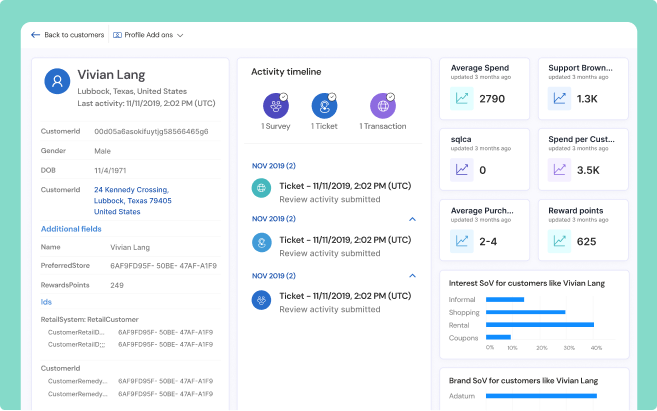
Centralized workspace with customizable workflows - Agents gained access to an integrated workspace where workflows could be adjusted on the fly, a key outcome of the IT infrastructure modernization services delivered for this engagement.

Solutions Provided

Secure, Omnichannel Engagement
DCCP securely connects prospects and customers across digital, voice, and social channels with biometric authentication and fraud detection, strengthening engagement and brand trust.

Intelligent Self-Service
The client could now create intelligent virtual agents with AI-powered recommendations to connect with customers in real time. Automation of sophisticated workflows and repetitive tasks is also possible.

AI-Driven CX Enhancements
CX was enhanced with the implementation of AI-powered features like intelligent call routing and personalized interactions, using real-time customer context and interaction history.

Personalized Customer Service
With the use of AI and deep analytics, the client can predict customer behavior and anticipate their intent to deliver personalized offers and enhance customer acquisition.

Advanced Case Management
Through intelligent response recommendations and case swarming of Context IQ, their team is able to quickly resolve open cases and create cross-sell and up-sell strategies.

Data Management & BI Readiness
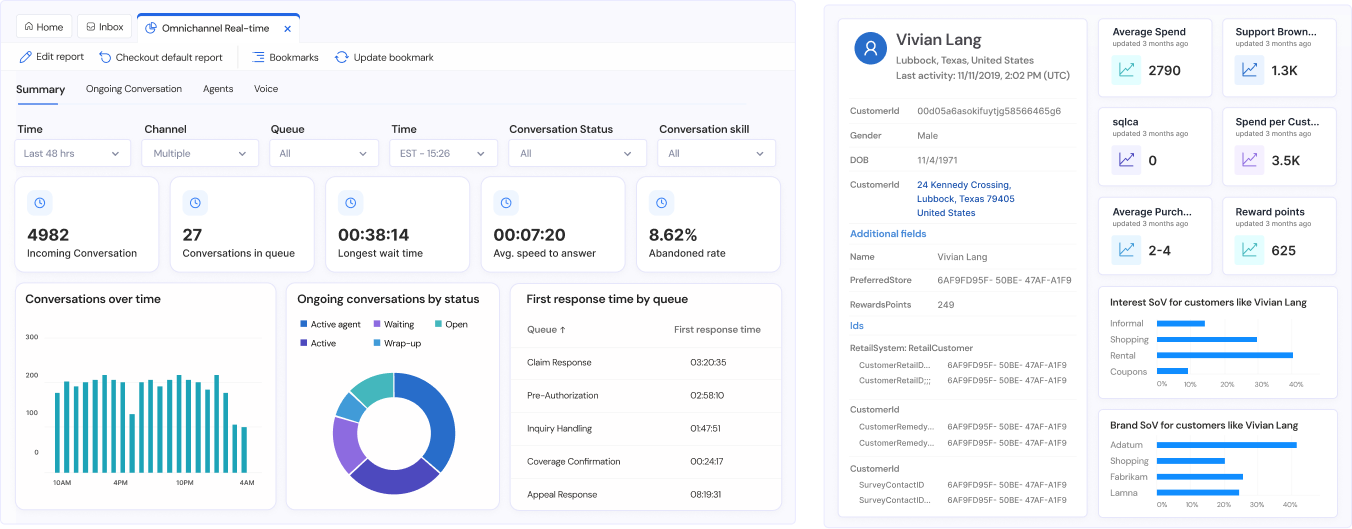
The modernized platform unified customer interaction data across channels, enabling centralized reporting, real-time performance tracking, and a foundation for data engineering, BI and analytics-driven decision-making.
Book a 30-minute call directly with the senior architect who would own your modernization project, and get a same-week feasibility assessment.
Technologies We Worked on
Dynamics 365 Customer Service
To empower agents with intelligent tools like case management and knowledge bases, leverage insights from customer interactions, and track service metrics.
Azure Communication Services
A suite of APIs for integrating voice, video, and messaging capabilities into the contact center platform for reliable and secure interactions across any device and platform.
Power Virtual Agents
Built AI-powered chatbots as smart virtual assistants to resolve inquiries faster and provide 24/7 support without the need for extensive coding.
Nuance Digital Engagement Platform
Used to deliver personalized and conversational experiences across digital channels, analyze AI-driven insights to optimize engagement strategies, and increase conversion rates.
Nuance Conversational IVR
A modern IVR process was used to reduce call handling times, minimize customer response time, and increase first-call resolution rates through automatic conversational interactions.
Nuance Gatekeeper
Used voice biometrics and behavioral patterns to verify the identity of callers, detect fraudulent activities, safeguard sensitive information, and mitigate fraud risks.
Benefits Achieved

Faster Case Resolution
As everyone in the team has the needed information on what customers wanted in the past and what their future preferences are, the average handling time for a single case shrank from 420+ minutes to under 180 minutes.

Improved Agent Productivity
Since the support team has all the needed data on customers and their activities, they can efficiently handle multiple cases and customer requests at the same time. This resulted in a 28% increase in First Call Resolution (FCR) rates while also handling over 4 million customer interactions per year.

Enhanced Operational Agility
Smooth workflows and reduced handling times are the direct result of advanced routing capabilities and omnichannel support. The client witnessed a significant decrease in misroutes by minimizing misdirected inquiries and unnecessary call transfers.

Increased Acquisition and Revenue
By consolidating all the legacy applications and workflows onto Microsoft DCCP, the client achieved software cost savings, revenue growth, and a boost in long-term value proposition.
Share your current infrastructure details and receive a modernization roadmap within 5 business days, reviewed directly by a senior solutions architect.