

Read More


Recognized for AI Excellence at 2026 Globee® Awards - Read More

Dhaval Dave
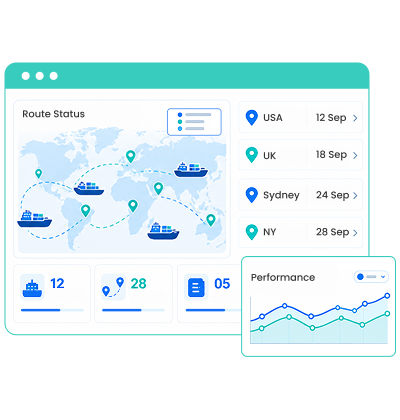
A 20-vessel fleet running on spreadsheets, email threads, and three separate tracking systems. When a compliance deadline gets missed by an hour, nobody realizes it until the penalty notice arrives. That's not an edge case in maritime operations. It's just how most fleets work.
The global maritime trade moves 12.3 billion tons of cargo annually. That's 80% of all trade by weight. Yet, 25% of cargo owners are still coordinating shipments via email. Moreover, crew schedules live in spreadsheets. Fuel tracking sits in a different siloed system. Compliance reporting gets compiled manually three days before every audit.
This kind of patchwork holds up for a while, then breaks. The worst part? The cost of such broken systems isn't always obvious. Instead, it shows up in missed deadlines, duplicated work, and decisions made on outdated information. The solution isn't to add another software or tool to the mix. It is partnering with an experienced team that can build custom software for your marine workflows. With that, you are not forcing your operations into someone else's template. Read on to see what that looks like, what it costs, and how to get it right.
Running maritime operations on disconnected systems creates avoidable delays, missed compliance windows, and cost leaks nobody can see. This guide breaks down custom maritime software development end to end: why you might need maritime software solutions built for your fleet instead of buying off-the-shelf, the core features that matter, real business benefits, cost by complexity, integration challenges, best practices for building it right, and how to measure ROI.
| Aspect | Details |
|---|---|
| What does this guide cover? | When off-the-shelf maritime tech falls short, key features for vessel management software, real business benefits, cost tiers by complexity, common maritime software integration challenges, proven development process, FAQs on timeline and scaling |
| Who should read this guide? | Fleet owners, shipping company executives, port operators, operations directors, technology leaders in maritime logistics, freight forwarders evaluating software investment, compliance officers planning system upgrades |
Custom maritime software development is the process of building tailored solutions for fleet management, compliance, crew operations, tracking, and vessel data. Maritime software companies build products designed to fit multiple industries and dozens of vessel types. A generic solution covers broad use cases. But if your fleet runs specific routes, operates under particular compliance frameworks, or works with unique cargo types, generic software creates gaps. That's where custom maritime software development comes in.
Custom shipping software development includes building applications around how your maritime operation actually works. Your crew, your routes, your compliance region, your existing systems. Not a template that forces your workflows into someone else's process.
You need maritime software solutions built around your operations when off-the-shelf tools stop matching how your business actually runs. Not when it's just a little slow, or missing one feature. When the software itself becomes a bottleneck. Here are the signs to look out for:
| Signal | Off-the-Shelf Limitation | Custom Solution Advantage |
|---|---|---|
| Fleet data scattered across multiple systems | Manual consolidation for reports; no single source of truth | Real-time unified dashboard pulling from all vessel systems |
| Crew scheduling locked into templates | Can't track your specific certification or rest-hour requirements | Workflows designed around your exact compliance needs |
| Integration gaps with existing tools | Manual data re-entry between systems; slow updates | Seamless data flow between your ERP, weather providers, AIS tracking |
| Compliance changes require IT to modify software | Weeks of waiting for vendor updates | Adapt workflows within days, your own team controls changes |
| Can't track your specific cargo or route types | Reports show generic metrics, missing what matters to your business | Dashboards and alerts tailored to your trade lanes and cargo profiles |
| Performance degrades as fleet grows | Expensive upgrade cycles; system redesign needed | Architecture designed to scale from 10 to 100 vessels without rebuild |
| No offline capability for crew reporting | Crews can't log reports at sea; everything waits until connectivity returns | Offline data capture with automatic sync when connection returns |
Most maritime businesses hit two or three of these signals before they realize a generic tool won't fix the underlying problem. So, don't wait, as soon as you see even one of these signs, start exploring your custom development options.
Suggested Read: Selecting the Right Software Development Company
Custom maritime software development pays off in measurable ways. Not just convenience, but operational efficiency that shows up directly in fuel costs, delay rates, and crew productivity.
Here are the key business benefits of custom maritime software:
One platform replaces patchwork. A comprehensive solution developed for fleet management, for example, brings vessel location, maintenance status, documentation, and crew assignments into a single system. Your operations team stops making decisions based on three different reports that don't agree. Instead, everyone works from live data.
Impact: Dispatch and management see accurate vessel positions and readiness without status-check calls.
Maritime compliance software that generates emissions reports, safety logs, and regulatory documentation from existing data eliminates the three-day pre-audit scramble. Reporting takes hours instead of days, and audit risk drops because data is consistent, auditable, and always current.
Impact: What used to take a compliance officer 40 hours now takes 4.
Maritime fleet optimization means route planning accounts for weather, fuel cost, and port congestion automatically. The software recommends the most fuel-efficient route per voyage. That compounds across hundreds of voyages annually.
Impact: Direct reduction in fuel spend, typically 8–15% annually depending on trade lanes.
Booking, documentation, vessel status updates, and invoicing move faster with fewer manual handoffs. Maritime operations software built around your workflow removes the administrative overhead that slows everything else down.
Impact: Operations teams spend less time on administration, more time on strategy.
When every decision is made on current, accurate information instead of estimates or outdated reports, outcomes improve, with maritime fleet management software, maintenance is scheduled before problems occur. Crew assignments account for actual skill availability. Route adjustments happen in hours, not days.
Impact: Fewer costly surprises. More proactive problem-solving.
Real-time tracking means accurate ETAs instead of estimates. Clients see their cargo moving. Delays are communicated immediately, not discovered after the fact. That builds reliability into your brand.
Impact: Higher customer retention. Fewer escalations.
When maintenance is predictive instead of reactive, when fuel is optimized instead of estimated, when admin work is automated instead of manual, costs drop measurably. Shipping software development pays for itself through operational efficiency.
Impact: Lower fuel, maintenance, and administrative costs with more predictable operating expenses.
These benefits compound when the system is built around your actual operations. Off-the-shelf software often delivers one or two of these. Custom maritime software delivers all of them because it was designed with your entire workflow in mind.
A lot of maritime software features have now become table stakes. Most off-the-shelf maritime software already covers basic fleet tracking, reporting, documentation, and crew management. But when you invest in custom maritime software development, you should cover these fundamentals while going further to support the workflows, integrations, and operational needs that are unique to your business. Here are the must-have features to build into your maritime shipping software:
Beyond core features, building software with advanced maritime technology capabilities is what separates leading operators from the rest. These include:
Maritime route optimization powered by machine learning learns from your historical voyage data. Weather patterns, fuel consumption, port turnaround times, seasonal constraints. The AI-powered system built on your data and workflows, recommends routes that work, while also improving over time as it learns what actually works best for your fleet and trade lanes, giving you the best of shipping and maritime intelligence.
Instead of maintaining vessels on fixed schedules, Internet of Things in maritime industry makes it more proactive. Sensors feed engine, fuel, and equipment data continuously. Machine learning identifies patterns that precede failures. Maintenance gets scheduled before equipment breaks.
Maritime systems that use agentic AI can coordinate crew assignments based on skill requirements, certification status, rest hours, and vessel location. The system proposes assignments and identifies conflicts before they become schedule problems.
Integrating IoT capabilities into software built for maritime industry extends beyond engines. Sensors track temperature, humidity, and container integrity for temperature-sensitive cargo. Deviations trigger alerts. Problems are detected and corrected within hours, not discovered at destination.
Historical cargo data, seasonal patterns, and market signals feed into forecasting models. The system predicts demand weeks ahead, allowing you to position vessels and crews more efficiently.
The goal isn't to include all maritime software features just because they are trending or sound impressive in a demo. Instead, start with how your teams actually work. Map your workflows, identify the processes that create bottlenecks, and involve the people who will use the software every day. Then build a feature set that keeps operations moving today while giving your maritime business the flexibility to innovate, scale, and adapt as requirements change.
The success or otherwise of a maritime software development initiative depends as much on the process you follow as on picking the right vendor. How you approach the work determines whether you ship on time and within budget.
Here's the step-by-step maritime software development process:
| Stage | What It Covers | Timeline |
|---|---|---|
| Discovery & Requirements | Interview crew, operations, compliance teams. Document actual workflows, existing systems, integration points. Audit current tech stack. | 2–3 weeks |
| Architecture & Design | Design system architecture, database schema, integration approach. Define security and compliance requirements. Plan for scalability. | 3–4 weeks |
| Core Platform Development | Build tracking system, crew management, basic dashboards. Establish CI/CD pipeline, infrastructure setup. | 6–10 weeks |
| Integration & Data Migration | Connect to AIS, weather providers, ERP, accounting systems. Migrate historical data. Test data accuracy. | 4–8 weeks |
| Advanced Features | Add AI route optimization, predictive maintenance, agentic capabilities. Build custom dashboards for your trade lanes. | 4–8 weeks |
| Testing & Validation | Unit tests, integration tests, end-to-end testing. Pilot with subset of vessels. Security audits. | 3–6 weeks |
| Deployment & Support | Phased rollout to full fleet. Operations team training. 24/7 support during stabilization. | 2–4 weeks |
These timelines vary based on your specific situation. A basic platform with minimal integrations typically launches faster than an enterprise system.
But the process itself is consistent across projects. The difference is how much complexity exists in each stage.
A small fleet needing tracking and reporting only might complete the full cycle in 12–16 weeks. A larger operation needing multiple system integrations across tools and software, custom compliance workflows, and AI features typically needs 24–32 weeks. Your legacy systems also influence the timeline. Well-documented existing integrations speed things up. Undocumented, years-old systems slow everything down.
But remember not to chase speed at the discovery stage. Time spent understanding your actual workflows saves weeks of rework later.
A vast majority of maritime software development challenges are predictable. They're the same ones we see across projects. What's also important to know is that these challenges are solvable, you just need to know what to prepare for.
So based on our experience across various maritime projects, here are the most common challenges. Plus, how to tackle those.
The Problem: Your fleet likely uses marine software from different eras. Vessel tracking from one vendor, fuel management from another, crew scheduling from a third. Each system doesn't talk to the others. Getting unified data requires manual workarounds.
This level of integration complexity bloats timelines. Data inconsistencies create reconciliation work. Unified dashboards are hard to build when underlying data doesn't align.
Best Practice to Avoid This: Audit every system feeding operational data before development starts. Document how data flows between systems now. Identify which legacy systems are critical (keep them) versus which can be retired (replace). Prioritize integration points by impact. Your most critical integrations get built first. Less critical ones can be added later. Clear visibility into the tech landscape means architecture decisions align with reality. Integration scope becomes knowable instead of a moving target. You avoid surprises mid-project.
The Problem: Your crew and operations team have workflows they've optimized over years. A new marine management software can disrupt that. Even if the new system is objectively better, adoption can stall when people perceive it as more work or unfamiliar.
Best Practice to Avoid This: Involve the people actually using the software in design decisions from day one. Not just management. Crew members, dispatchers, planners, and operations teams can identify usability issues and workflow gaps that aren't obvious from a management perspective. Map their existing processes, understand where friction occurs, and design the new system around how work actually gets done. Validate key workflows with users before development moves too far.
The Problem: Maritime regulations are constantly evolving. CII requirements, FuelEU Maritime, IMO updates, and regional regulations can change how operators calculate, track, and report compliance. A platform built around today's requirements can quickly become difficult to adapt.
Best Practice to Avoid This: Design compliance logic separately from core business logic wherever possible. Use configurable rules, parameters, and workflows so regulatory thresholds, calculations, and reporting requirements can be updated without changing the underlying application. Build flexibility into the architecture from the start so regulatory changes can be accommodated without turning every update into a major development project.
The Problem: Legacy marine service software often contains incomplete, inconsistent, or unreliable data. Vessel records may conflict, crew certifications may have incorrect statuses, and historical fuel or voyage data may contain gaps. Migrating everything into a new system can carry those problems forward.
Best Practice to Avoid This: Clean and validate historical data before migration. Audit representative records from each critical system, identify recurring data-quality issues, and define which data should be migrated, corrected, archived, or excluded. For critical workflows, validate the new platform against existing systems during the transition period. This gives your team time to identify discrepancies before the old systems are fully retired.
The Problem: What works with 10 vessels may behave very differently at 20 or 50. More vessels mean more crew, voyages, telemetry, documents, users, and integrations. Bottlenecks that weren't visible initially can emerge as the fleet grows.
Best Practice to Avoid This: Design for your expected growth from day one. Use a database architecture that can handle increasing operational data, APIs that can distribute growing workloads, and infrastructure that can add capacity without requiring a fundamental redesign. This doesn't mean over-engineering for a scale you don't need. It means making architectural decisions with your growth trajectory in mind, so adding vessels doesn't force a rebuild later.
While the challenges are avoidable, it is important to not let a generalist software development agency learn maritime complexity on your project. They may be able to navigate problems once they appear, but they may not anticipate them early enough to avoid them.
With maritime software experience, we, at Radixweb can identify these risks upfront, address them during planning and architecture, and keep your project on track.
Modernized Maritime Solution Boost EfficiencyWe recently modernized a legacy voyage management software for a US-based global maritime company. With architecture modernization and new capability addition, the modernized solution had 99.9% uptime, production stability, stronger compliance foundation, and scalable infrastructure.
The cost of maritime software development depends mainly on complexity, integrations, and architecture, not just feature count. A basic tracking system costs very differently than an enterprise-grade platform built with multiple integrations and AI capabilities.
Here's how much marine business software costs based on project complexity:
| Complexity Tier | Estimated Cost Range | Estimated Timeline |
|---|---|---|
| Basic (tracking + reporting) | $25,000 – $60,000 | 2–4 months |
| Mid-tier (fleet + crew + compliance) | $60,000 – $150,000 | 4–8 months |
| Enterprise (full platform, multiple integrations, AI features) | $150,000 – $400,000+ | 8–14+ months |
These are the specific factors that push your budget and timeline up or down within complexity tier:
| Factor | Impact on Cost | Estimated Timeline |
|---|---|---|
| Third-party integrations (AIS, weather, ERP) | Medium to high- each integration adds development and testing work | 2–6 weeks per integration |
| Regulatory compliance workflows | High- custom logic for frameworks like CII or EU ETS takes time to validate | 4–10 weeks |
| Offline data capture and sync | Medium- requires additional testing across connectivity conditions | 3–6 weeks |
| Number of vessels/users at launch | Low to medium- affects infrastructure and QA scope, not core build time | 1–4 weeks |
| Custom dashboards and reporting | Medium- depends on how many distinct views different teams need | 2–5 weeks |
These are estimates. Your actual cost depends on:

Build Custom Software for Maritime Operations to Boost Operational Efficiency
Maritime operations slip slowly. Not through one catastrophic decision, but through disconnected tools, missed maintenance windows, and data nobody fully trusts. Getting a tailored software designed to meet your business needs addresses that. When a software solution is built around how your fleet actually operates, it connects your crew, your data, and your decision-making. Compliance becomes automatic instead of scrambled. Maintenance becomes predictive instead of reactive. Routes become optimized instead of estimated.At Radixweb, we've built maritime software solutions for shipping companies, port operators, and logistics providers. We've modernized legacy maritime systems. We've integrated dozens of vessels into unified platforms. And we've watched maritime tech transform how teams work. So, if your fleet is ready for a platform built around how you actually work, not how some vendor thinks you should work, schedule a consultation with our software architects. We'll map your workflows, audit your current systems, and show you exactly what a purpose-built platform could do for your operations.
Ready to brush up on something new? We've got more to read right this way.

