Read More


Recognized for AI Excellence at 2026 Globee® Awards - Read More

Anand Trivedi
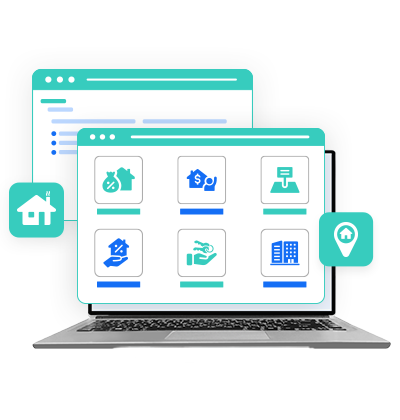
Quick Summary – New-age property management software development presents its own set of challenges, including user adoption, scalability, data security, and complex integration landscapes.
This detailed guide explores the fundamentals of developing property management software - the types, advantages, real-world applications, key challenges, cost insights, best tips and tricks. It further highlights how Radixweb has been a central player in revolutionizing legacy platforms into innovative, AI-powered property management solutions that boost efficiency and growth.
TL;DR
● PMS is used to centralize real estate operations like leasing, maintenance, accounting, tenant communication, and property performance tracking.● An advanced PMS acts like a unified digital command centre for streamlining core operations, automating workflows, and enabling data‑driven oversight for portfolios.● PMS has evolved from traditional record-keeping, spreadsheet-like trackers to AI‑powered, automation‑first platforms delivering predictive insights, smart maintenance, and revenue optimization.● The most used PMS types are residential, commercial, hospitality, HOA, or enterprise-grade hybrid systems, chosen based on operational complexity and integration needs.● Must-have features include automated billing and collection, maintenance orchestration, accounting engines, mobile-first access, analytics dashboards, mobility, and RBAC.● PMS development delivers significant ROI growth with reduced operational load, optimized asset utilization, stronger tenant experiences, and scalable digital ecosystems.● Real-time applications include self-service portals, predictive maintenance, occupancy management, AI chatbot support, IoT integrations and portfolio-wide operational intelligence.
Real estate property operations are highly complex. With multi‑asset portfolios, cross‑region operations, hybrid workforces, businesses do not just handle an uprise of tenant demands but data that lives across fragmented systems – PMS, CRMs, ERPs, IoT, point tools, accounting and maintenance solutions.
Traditional PMS systems experience a broad spectrum of challenges: from inefficiency in manual and fragmented systems to unplanned outages and downtimes, limited visibility leading to slower decisions, mixed legacy stacks leading to security gaps, scaling issues from monolithic builds.
Turning basic property management solutions into smart, scalable real estate apps - AI-first PMS with composable architectures, API-first integrations, mobile-first accessibility, centralized observability and optimized security posture, streamlines your digital backbone.
What Does This Guide Have:
Property Management Software (PMS) is a modern real estate digital platform that streamlines property operations - simplifying workflows such as financial reporting, maintenance requests, rent collection, lease tracking, and tenant management.
Whether deploying for commercial facilities, mixed-use development, or residential complexes, PMS solutions help optimize profitability, transparency, and productivity.
Property management software development generally includes:
The ongoing digital transformation in the real estate industry is clearly visible in the market’s rapid growth. The global property management software market is expected to reach USD 52.21 billion by 2032, growing at a CAGR of 10.1%. PMS is contributing significantly to the growing tech efficiency for this sector.
This is a five-phase transformation journey of property management software that also mirrors multiple real-world scenarios.
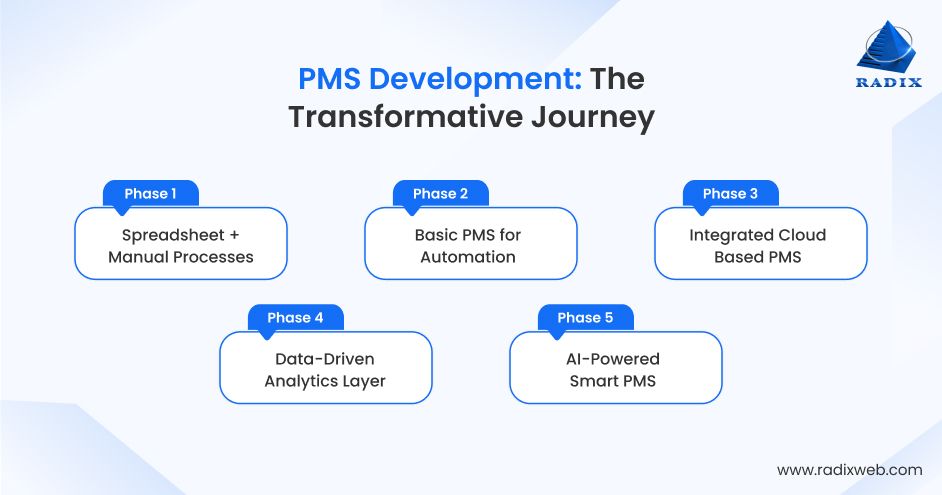
Phase 1 – Spreadsheet + Manual Processes
Phase 2 – Basic PMS for Automation
Phase 3 – Integrated Cloud-Based PMS
Stage 4 – Data-Driven Analytics Layer
Phase 5 – AI-Powered Smart PMS
The real estate landscape needs different property management software options accustomed to multiple user needs. Following are the significant types of property management systems:
1. Commercial Property Management Software – Built for warehouses, retail spaces, and offices to manage compliance tracking, multi-tenant billing, and complex leases.
2. Residential Property Management Software – Best option for rental homes, co-living spaces, and apartment complexes. It also helps automate tenant onboarding, rent collection, and maintenance.
3. Hotel and Hospitality Property Systems - Manages real-time occupancy data, guest services, and room reservations.
4. Condominium or HOA Management Software – Simplifies amenity booking, shared maintenance costs, and homeowner communication.
5. Cloud-Based Property Management Software - Hosted on cloud infrastructure and ensures multi-device support, maintenance, and data accessibility.
6. Custom Property Management Software – Customized as per your unique branding and workflows to ensure better scalability, flexibility, and data ownership - a key Radixweb competency that helps clients deliver on emerging PropTech trends reshaping property management.
When planning to develop advanced software for property management, it's important to ensure your PMS system includes the following features and core modules :
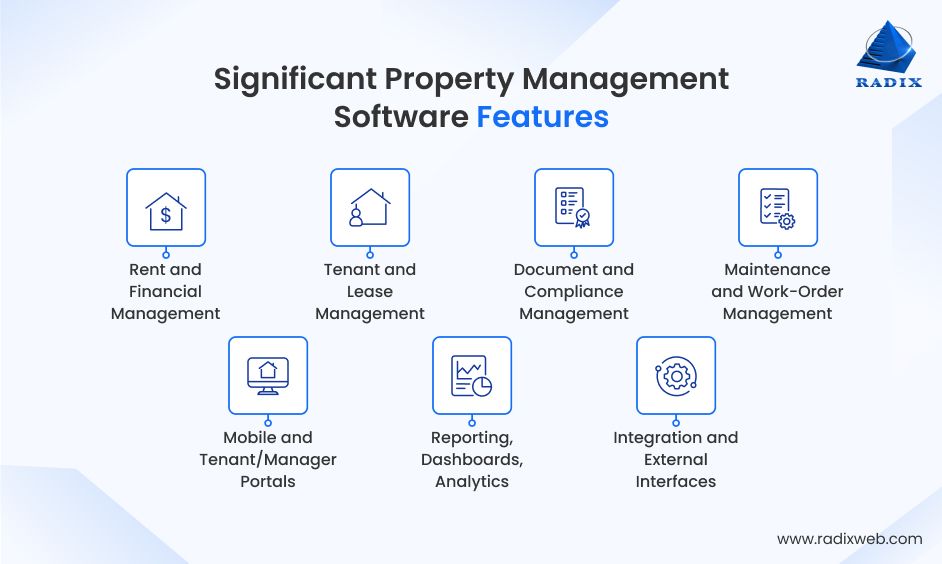
1. Rent and Financial Management
2. Tenant and Lease Management
3. Document and Compliance Management
4. Maintenance and Work-Order Management
5. Mobile and Tenant/Manager Portals
6. Reporting, Dashboards, Analytics
7. Integration and External Interfaces
Modern property management software solutions comes with transparency, efficiency, and support to simplify real estate operations. It also helps property managers minimize errors, save time, and improve tenant satisfaction. Enlisted below are some of the best advantages of property management system:
Operational Efficiency - Automates routine workflows - rent collection, reporting, and reminders to reduce significant manual efforts.
Centralized Data Management - The data regarding property, lease, and tenant is stored in central repository to ensure informed decision-making and minimal human error.
Enhanced Tenant Experience – Mobile accessibility, real-time communication, and tenant portals enhance satisfaction and retention rates.
Financial Transparency – Dashboards integrated in custom-built real-estate software with AI-led analytics help track income in real-time, occupancy metrics, and maintain expenses for improved financial insights.
Scalability - Cloud-based property management software scales as your portfolio grows to support new locations and properties without system redesign.
Regulatory Compliance – Integrated real-time alerts and notifications for regional compliance needs, safety checks, and contract renewals.
Sustainability and Smart Operations - AI-powered real estate systems helps predict schedule preventive maintenance, energy utilization, and reduce waste, which improves ESG performance.
From mobile-first management to AI-based tenant screening and predictive maintenance, these property management systems help stakeholders make informed decisions faster. Following are some practical, real-world use cases that highlight the true potential of modern PMS platforms:
If you’re looking to build custom property management software or want to configure an off-the-shelf product, here’s a step-by-step development process:
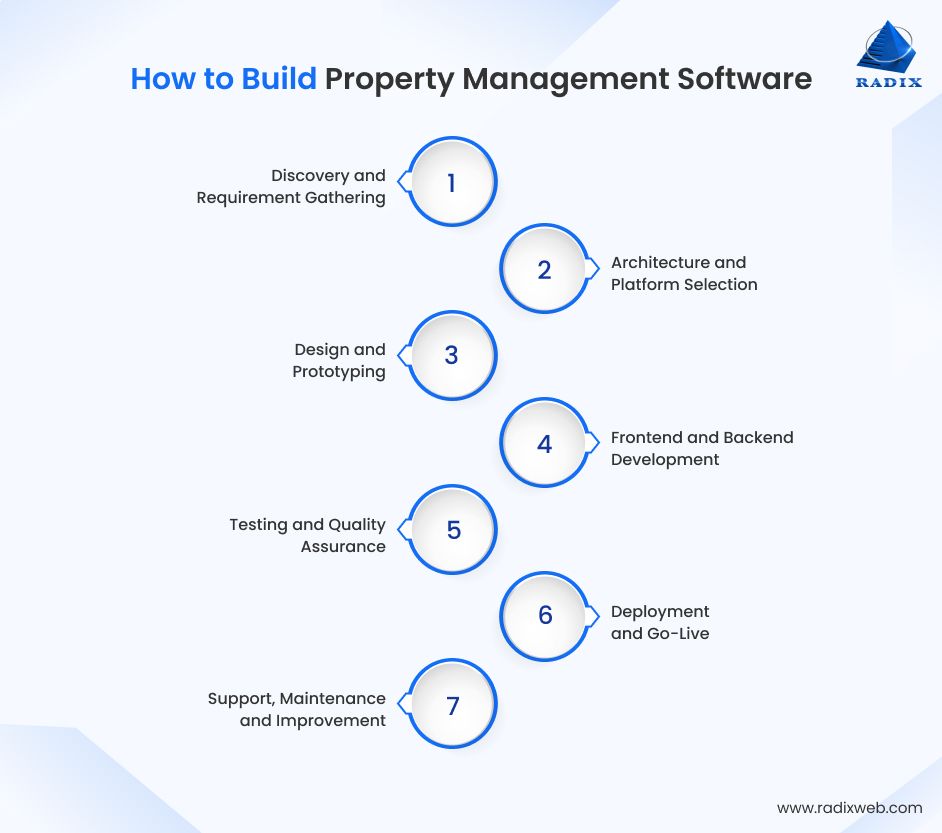
Building property management software solutions is not a cakewalk. From ensuring data security to maintaining scalability and seamless integrations, every phase demands strategic insights and expertise. Following are the major challenges of developing PMS and how experts at Radixweb helps address them efficiently:
Many legacy property management platforms lack modularity and scalability, making the update process quite challenging.
Our Solution - We reform such legacy systems with robust APIs and clean, microservice architectures to support seamless integration of new features and long-term scalability.
A modern PMS should integrate smoothly with IoT systems, accounting tools, payment gateways, and CRMs.
Our Solution – Our expert software developers build interoperable APIs and custom integration layers to ensure unified operations and seamless data flow.
Managing sensitive property, financial, and tenant data comes with strict governance obligations.
Our Solution – We ensure full compliance with GDPR protocols when integrating access control mechanisms, secure authentication, and enterprise-grade encryption.
As your property portfolio expands, PMS software often encounters slow downtime and response times.
Our Solution – Our experts leverage cloud-native architecture and load balancing to deliver high performance, speed, and uptime across large-scale deployments.
Radixweb has actively been part of this transformation from legacy real estate solutions to modern, AI-powered platform management software. One such example is our recent partnership with a California-based digital property-management service provider, where we modernized their legacy platforms end-to-end. With mature APIs, resilient infrastructure, and robust architecture deployed to prepare their platform for their future, the client is steadily simplifying complex buying and renting experiences.
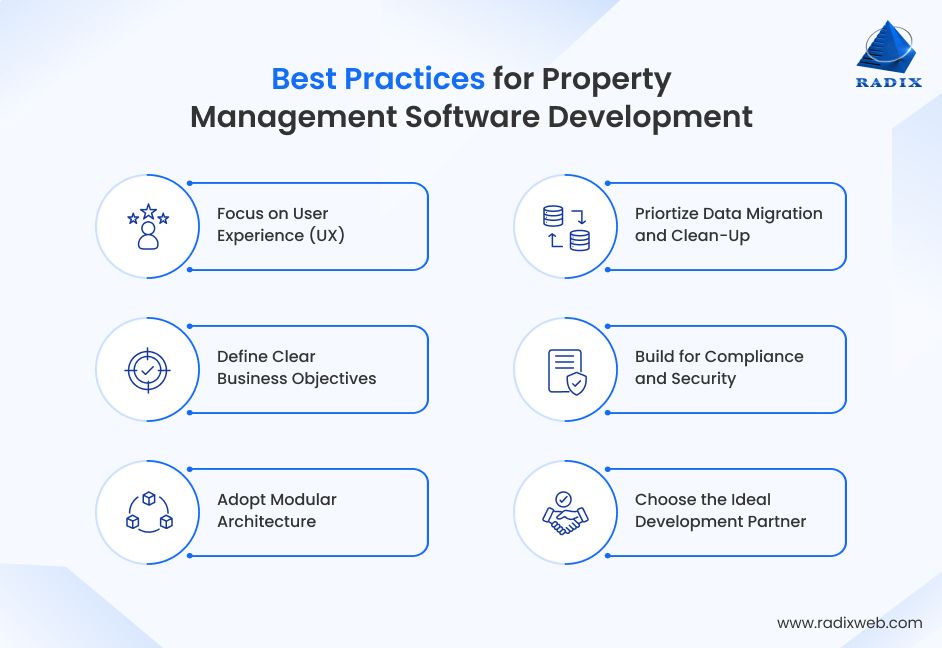
When you begin with property management software development, following are some best tips and tricks you can consider throughout the development and implementation process:
The average cost of developing property management software majorly depends on project scope, its complexity, business objectives, features and functionalities, and integrations. Let's now go through the cost breakdown:
| Software Complexity | Estimated Range | Timeline |
|---|---|---|
| Basic PMS | USD 30,000 – USD 60,000 | 3-4 months |
| Mid - Complex PMS | USD 60,000 – USD 120,000 | 5-7 months |
| Enterprise - Grade PMS | USD 120,000+ | 8-12 months |
The major factors impacting the overall software development cost:
Move to Smart, Modern Property Management with Radixweb
In the world where data-driven insights, adopting advanced technologies, operational complexity, and tenant expectations are significant factors, shifting from a manual, obsolete property management strategy to a modern, AI-powered software solution is not a choice—it’s imperative.You need to start with the basics - define your business objectives, design a robust infrastructure, emphasize user experience, and then integrate AI and analytics. Another vital aspect is choosing the ideal partner who has expertise in both scalable custom software development and real estate operations. As demonstrated through Radixweb’s collaboration with a property management service provider and numerous global organizations, the shift from loosely connected code to resilient, modern architecture is attainable and drives tangible business results.Whether you’re handling dozens of portfolios or a handful of properties, property management software development can revolutionize your operations, your strategic decision-making, and your tenant experience. Contact our experts to learn more about our services.Contact our experts to learn more about our services.
Ready to brush up on something new? We've got more to read right this way.