
Recognized for AI Excellence at 2026 Globee® Awards - Read More


About the Client

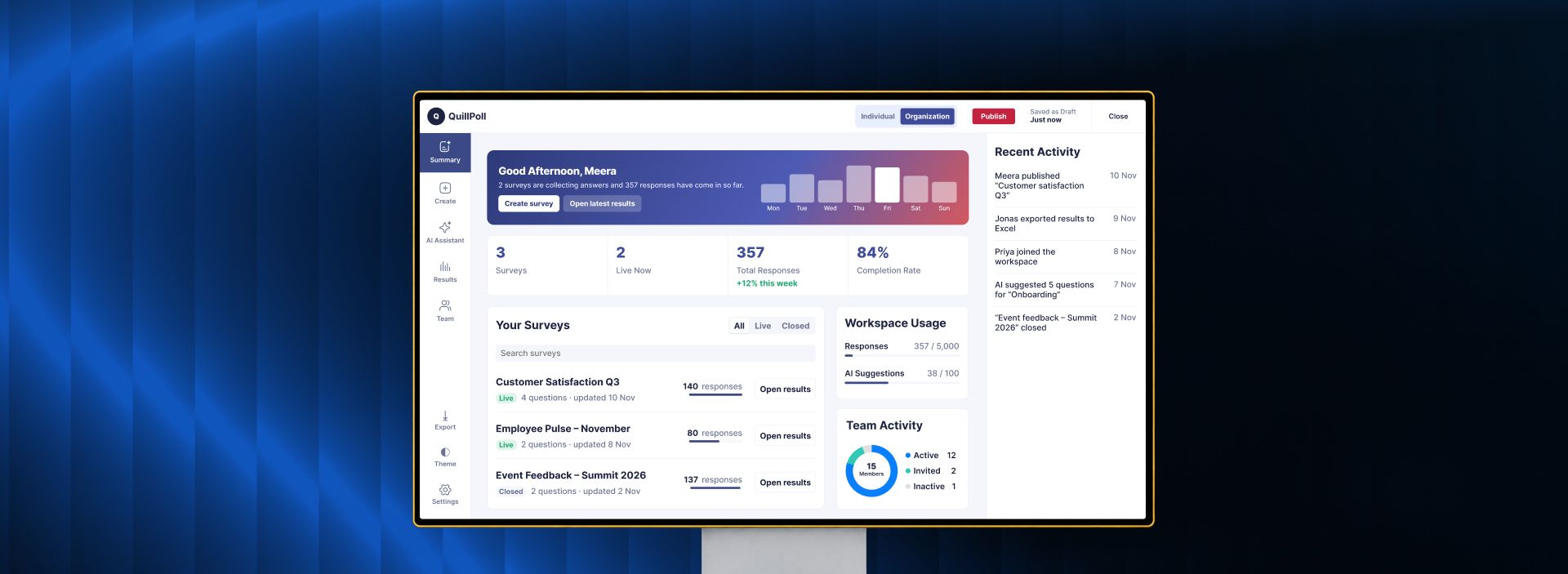
The client operates an online survey research platform that supports empirical research throughout its lifecycle. It helps students, universities, and business users create, conduct, analyze, and share surveys. The platform’s second development phase focused on extending capabilities while strengthening the foundation behind survey creation and research workflows.
Project Goals

The client wanted to make survey creation and analysis more accessible for individual and organizational users. The survey platform modernization was expected to expand business accounts, introduce AI-assisted question suggestions, improve charting, and modernize the backend. Support was also needed for paid subscriptions and recurring revenue.
Brief of the Project

The engagement's primary ask was online survey software modernization by migrating the backend from Zend Framework to Laminas. Later on, Radixweb also identified the need to introduce a dedicated chart visualization service to improve consistency across devices and downloaded survey results.
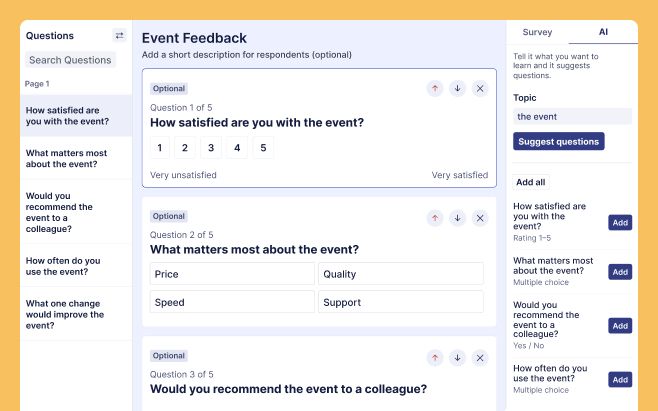
As platform requirements expanded, we also explored adding business accounts supporting multiple organizational users. The final software solution built for the German organization also had options for Word, Excel, and PowerPoint exports and introduced AI-powered survey question generation through the OpenAI API.
We further strengthened the infrastructure through Docker containerization, Kubernetes-based deployment, Helm configuration, and MinIO object storage. These improvements carried out by modernizing the legacy business system were important to ensure the survey platform's migration and modernization, while supporting a more scalable research environment.
Client Feedback

Radixweb helped us evolve our survey platform through several important development phases. The improved exports, AI-assisted question suggestions, and business account capabilities have strengthened the platform. Their continued technical support has also helped us maintain and extend the solution as our requirements have grown.
This engagement required us to modernize an established platform without disrupting its core research workflows. Our team addressed framework migration, infrastructure improvements, business account capabilities, and complex export requirements in successive phases. We also introduced AI-assisted functionality while keeping the architecture modular, maintainable, and prepared for evolving platform demands.

Faisaluddin Saiyed
Key Challenges
- The legacy Zend Framework backend restricted modernization, requiring a structured migration to Laminas to support the evolving online survey application's modernization and future feature development.
- Google Charts produced inconsistent visualizations and downloads across devices, limiting reliable online survey data visualization and requiring a dedicated chart rendering service.
- Individual accounts restricted organizational collaboration, creating a need for business survey management software that could accommodate multiple users and institutional survey workflows.
- Existing exports lacked editable charts and flexibility, limiting advanced survey data export capabilities across Word, Excel, and PowerPoint for research reporting.
- Local server storage constrained infrastructure flexibility, making it necessary for the scalable survey platform infrastructure to be built as a cloud-first app, to support growing file volumes through object storage.

Solutions Delivered

Framework Upgrade
We migrated the backend from Zend Framework to Laminas, modernizing the application foundation while retaining its established workflows. The transition improved maintainability and prepared the online survey application for continued feature development and integrations for future platform requirements.

Chart Visualization
We replaced direct chart rendering with a dedicated Node.js Chart Visualizer API. Controlled image dimensions improved consistency across mobile and desktop displays, while enabling users to download full-sized charts regardless of the device used across common survey reporting workflows consistently.

Business Accounts
We expanded the account model beyond individual users to support NSU business accounts and multiple organizational users. This enabled survey experiences for institutions and companies, strengthening business survey management software capabilities within the platform for its expanding institutional customer base.

Advanced Exports
We enhanced survey exports across Word, Excel, and PowerPoint, including charts, question titles, response counts, and branding. Native editable charts in Word and PowerPoint gave researchers greater flexibility when presenting and adapting survey findings for downstream analysis and stakeholder reporting.

AI Question Assistant
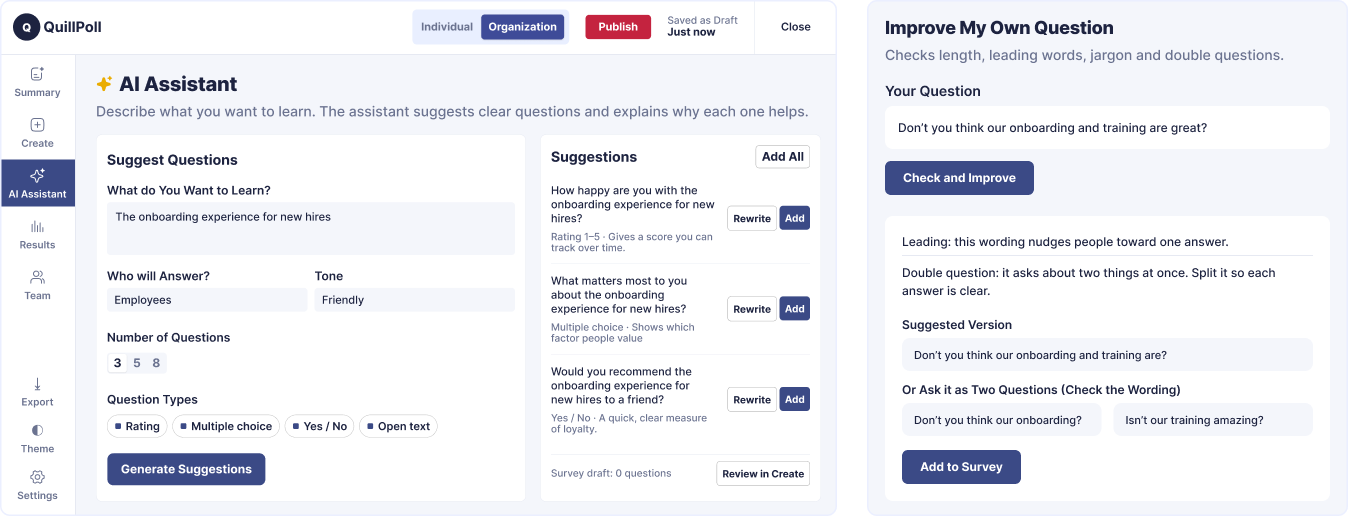
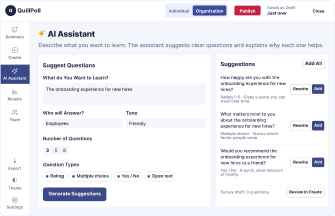
We build the business app with AI (specifically the OpenAI API) suggest survey questions, helping users move from research objectives toward questionnaire creation. This added practical support for AI-powered survey question generation without replacing users’ control over question selection.

Cloud Infrastructure
We containerized application services with Docker and configured Kubernetes and Helm deployments. We also migrated uploaded files from local servers to MinIO object storage. This strengthened deployment consistency, and supported a scalable survey platform infrastructure built to work natively on the cloud.
Build reliable research tools with Radixweb’s custom survey platform engineering expertise today.
Technologies Used
React
Powered the interactive survey creation, participation, and results interfaces, allowing users to build questionnaires, complete surveys, and review research outputs through responsive web experiences.
PHP, Laminas, and Mezzio
PHP handled server-side logic and APIs, Laminas replaced Zend Framework, while Mezzio structured backend request handling and service communication across the modernized application architecture.
MySQL
MySQL stored user accounts, surveys, responses, and application records, supporting the platform’s core data requirements and reporting workflows used by researchers and organizations.
Docker
Docker containerized the application and supporting services, creating consistent runtime environments and preparing components for coordinated deployment across development and production stages.
Kubernetes and Helm
Kubernetes orchestrated frontend and backend services, while Helm managed deployment configuration. Production settings allowed services to scale from three to nine replicas based on resource use.
MinIO
MinIO provided object storage for uploaded files migrated from local server storage, separating file handling from application servers as platform usage and content volumes grew.
GitLab CI
GitLab CI automated build and deployment workflows, supporting repeatable delivery processes for the containerized application and its evolving frontend and backend components during ongoing development.
PHPUnit and React Scripts
PHPUnit supported backend testing, while React Scripts provided the frontend test runner, helping validate application behavior as survey creation and reporting capabilities evolved over time.
Node.js Chart Visualizer API
The Node.js Chart Visualizer API generated chart images with controlled dimensions, improving display consistency and enabling full-sized downloads across desktop and mobile devices.
Rendertron
Rendertron supported search engine rendering of public pages, helping crawlers access relevant content from the platform’s React-based frontend and improving discoverability of public research resources.
OpenAI API
The OpenAI API powered AI-assisted question suggestions, helping users develop questionnaire ideas from research needs and adding guidance to the survey creation process.
Stripe and PayPal
Stripe and PayPal processed paid subscriptions, providing established payment options and enabling the platform to introduce recurring payments for access to subscription-based features.
Newsletter2Go and SMTP
Newsletter2Go supported newsletter signups and mailing lists, while configurable SMTP email delivery handled application messages and user communications without tying delivery to one provider.
JWT, HTTPS/TLS, and OTP
JWT authentication protected API access; HTTPS and TLS encrypted connections, while configurable OTP verification offered an additional account security measure when enabled by administrators.
Business Benefits

10× Survey Growth
With online survey platform modernization, the platform grew from approximately 10,000 surveys in 2020 to 100,000, representing tenfold growth in survey creation and demonstrating wider adoption of its research capabilities among the users it serves.

9 Service Replicas
Kubernetes configuration allowed frontend and backend services to scale from 3 to 9 replicas based on CPU and memory utilization, giving the platform configurable capacity as demand changed without relying on a fixed service count.

3 Export Formats
Users could export questionnaires and results to Word, Excel, and PowerPoint, including charts and branded content, making research outputs easier to share, edit, and present to stakeholders, supporting clearer communication and further analysis during presentations.

Revenue Channel Addition
The project introduced paid subscriptions as a part of the survey platform feature enhancement project. This was made possible with Stripe and PayPal, creating a recurring revenue mechanism where none had previously existed.

Extend platform capabilities with focused modernization and enhancement with Radixweb's dedicated engineering team.