
Recognized for AI Excellence at 2026 Globee® Awards - Read More
About the Client
The client is a Dubai-based healthcare institute specializing in advanced diagnosis, treatment, and patient care. They understood the need for access to the right care and for that, they wanted to create a unified platform with telehealth and EHR functionalities, that was easy to manage for everyone involved.

Industry
Healthcare

Client Location
UAE

Project Duration
Ongoing

Team Size
6 Experts
Client Objectives

Integration of new telehealth capabilities with the existing EHR system for improved patient experience and service delivery. For patients, the EHR-integrated telehealth platform has to offer quick access to specialized healthcare and for medical professionals, it must help them provide informed and personalized care. Complying with HIPAA/GDPR standards and laying the foundation for AI-driven automation were other priorities.
Project Summary

The project presented a watershed moment integrating EHR with a secure telehealth patient portal. We also needed to integrate AI models to enhance clinical workflows and data accessibility. It was a significant step forward in improving how tech solutions supports modern care delivery.
So, we assembled our best team for it—a multidisciplinary group consisting of IT consultants working across hospital and provider systems, developers, UI/UX designers, integration experts, and a project manager with prior experience delivering complex healthcare technology projects.
We set out to build the telehealth platform as the primary phase of the project. After ensuring its stability and usability, we proceeded to integrate the EHR system with minimal disruption to ongoing workflows, while laying the groundwork for applied generative AI built for long-term extensibility to support intelligent data handling and future automation. This phased approach allowed us to build the EHR-integrated patient portal steadily, with everything running in the background and minimal service interruptions.
Client Feedback

The stakes were high in our requirements and any loose end could have wrecked the whole project. That didn't happen with Radixweb. In fact, we hardly faced any major issues. They took their time but gave us the solutions just as we needed it to be.
Integration projects always pose a challenge because they involve connecting different systems that, in most cases, weren’t originally designed to work together. For this project, integrating the telehealth portal with the EHR system meant merging complex data structures. It was technically demanding, but the end result was worth it.

Disha Shah
Primary Challenges

- Implementing low-latency communication channels for audio-video transmission in live consultations and real-time interactions.
- Protecting sensitive patient data and information by complying with HIPAA and GDPR regulations.
- Resolving data disparities and inconsistencies between the telehealth platform and the existing EHR system.
- Handling data mapping and transformation for accurate synchronization of patient records.
- Aligning workflows between the telehealth platform and the EHR system for a cohesive user experience.
- Ensuring that patient data shared during telehealth sessions frictionlessly integrates into the existing clinical workflows.
Solutions Provided

Automated Patient Data Entry
We developed an OCR and NLP-based extraction model that can parse relevant patient data like medical history, medications, and treatment plans from scanned documents, images, or textual formats. We then integrated this information into the EHR system.

API Integration Layer
RESTful APIs with HL7/FHIR standards were created to enable real-time, bidirectional data exchange between the custom telehealth patient portal and the EHR system. Data integrity was preserved during the integration process.

Big Data Solution
We implemented a data pipeline capable of ingesting structured and unstructured data like video session logs, EHR records, and remote monitoring feeds from multiple sources in real time. The architecture included distributed storage and stream processing to support high-volume data ingestion.

User-Centric Interface Design
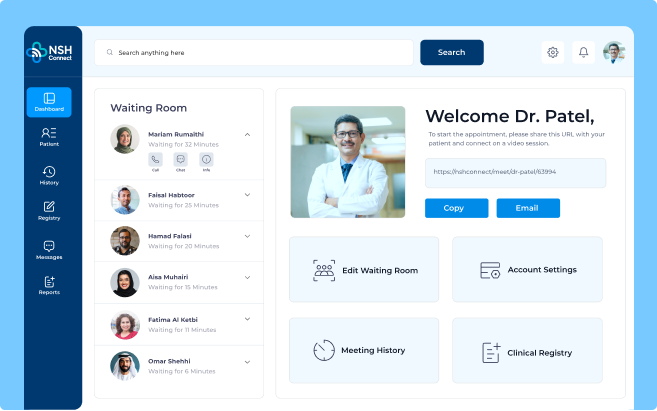
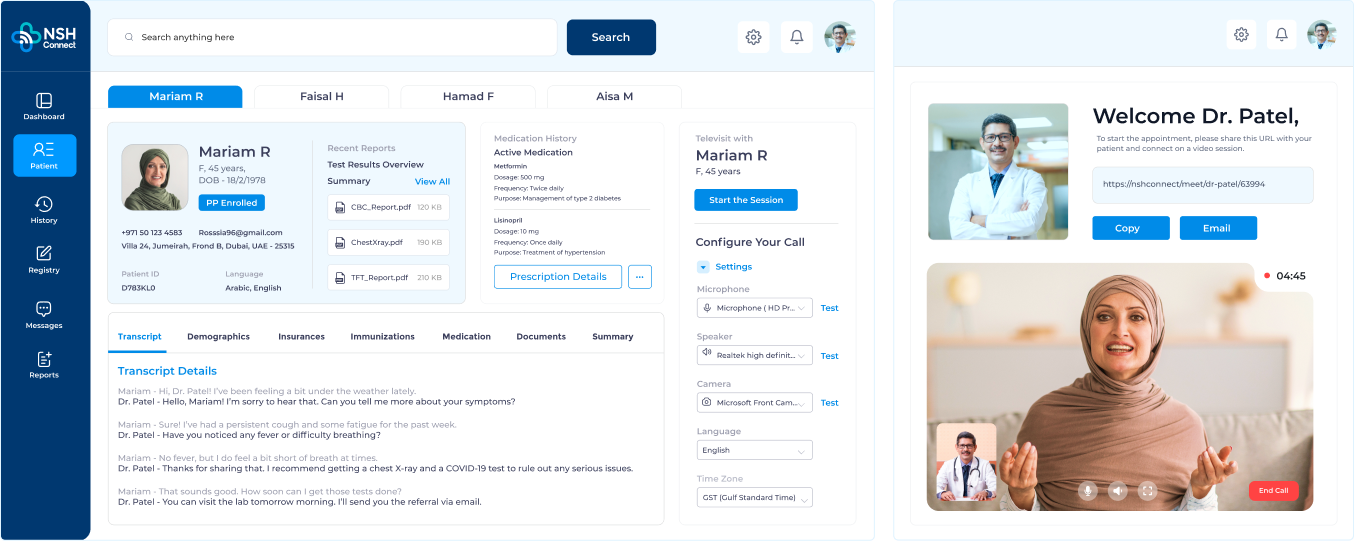
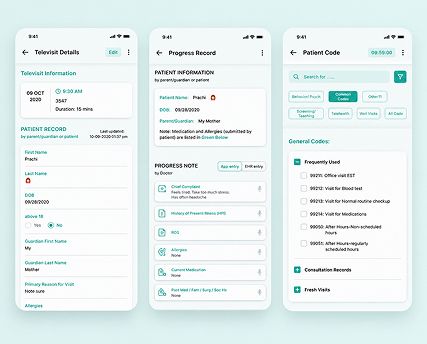
We conducted iterative design sprints and usability testing to create an intuitive and accessible patient portal with EHR integration. The focus was on usability and accessibility because healthcare staff with diverse workflows should be able to easily navigate the system. The final interface followed WCAG accessibility guidelines and used role-based dashboards.

Security and Compliance
End-to-end encryption (AES-256 for data at rest, TLS 1.2+ for data in transit) for messaging and file-sharing features was implemented. Access control was enforced through role-based permissions (RBAC), with audit logging for all data access events to meet HIPAA and GDPR compliance requirements.

Remote Patient Monitoring
Integrating virtual monitoring techniques was critical to capture and share real-time health metrics like activity levels, vitals, and medication from the patient’s end. With the remote patient monitoring platform, doctors and other healthcare professionals can remotely track and treat health conditions with data-backed insights.
Share your requirements and get a scoped proposal with team size, timeline, and fixed-cost estimate within 3 business days.
Key Functionalities
Real-Time Video Consultations
The telehealth platform with EHR integration comes with high-quality, secure video calls that allow patients and healthcare providers to engage in real-time consultations without third-party plugins or interruptions. Optimized video streaming protocols give a spot-on virtual clinic experience.
Electronic Health Records Access
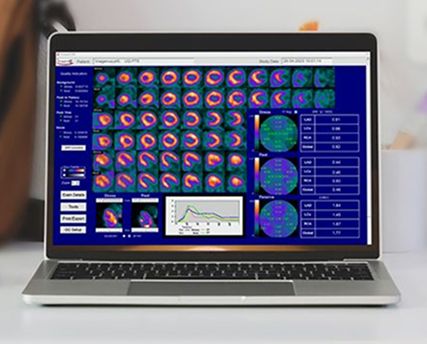
Through a comprehensive patient dashboard, users get access to synchronized EHR data within the telehealth portal. Authorized users gained secure access to patient records, medical histories, diagnoses, and treatment plans.
Secure Messaging and File Sharing
We created end-to-end encrypted messaging functionality for secure communication between patients and healthcare professionals. The system offers file sharing capabilities with the transmission of different medical documents.
Appointment Scheduling and Reminders
It's an intuitive scheduling module with calendar integration so that patients can book and manage appointments. We used calendar APIs to synchronize appointment schedules and integrated automated reminders via SMS or email to reduce no-show rates.
Telemedicine Prescription
With this feature, healthcare providers can prescribe medications remotely following prescription guidelines. We also implemented secure authorization workflows for prescription refills and ensured patient safety and compliance with legal regulations.
Tech Stack Used

- WebRTC powers low-latency, high-quality video consultations without third-party plugins.
- HL7/FHIR, the healthcare data standard, enabled accurate EHR data mapping and synchronization.
- Node.js handles the API integration layer connecting telehealth and EHR systems in real time.
- For secure messaging, end-to-end encryption protocols protect patient-provider communication and file sharing.
- AWS (or Azure, depending on client infrastructure) hosts the platform's scalable, HIPAA-compliant cloud environment.
- Big data processing relies on Apache Kafka to ingest and stream high-volume patient data.
- React was used to build an intuitive, responsive interface for the patient portal.
- Underpinning future automation, a Gen AI framework lays the groundwork for intelligent data handling.
Client Achievements

Faster Care Resolution Time
The integration cut down the time doctors spend on each patient. Doctors don’t have to manually look up and enter data; they can access all the information in one place. It has helped them save an average of 22 minutes per visit. Over a year, this added up to 3000+ hours saved in total.

Better Communication Medium
The new system made communication between doctors, nurses, and other healthcare staff much smoother. With automated updates, everyone gets the latest patient info instantly. This led to cutting average response time between departments by approximately 40%.

Improved Data Accuracy
By reducing manual data entry and errors, the integration provided more accurate data. The healthcare team sees fewer mistakes in patient records, which helps in providing more relevant diagnoses and treatments.

Streamlined Monitoring & Workflows
Remote tracking reduced in-person visits from 14,000 to 9,500 annually, enabling doctors to see 350+ more new patients monthly. The integrated workflow reduced 60% administrative steps per record as we combined these steps into just 3 simplified tasks.
Onboard a 4-8 person healthcare IT team, scoped to your stack, with weekly delivery checkpoints and a fixed-cost or T&M model.