

Read More


Recognized for AI Excellence at 2026 Globee® Awards - Read More

Sarrah Pitaliya

Quick Overview: Discover the latest trends and insights shaping front-end development in our comprehensive front end statistics blog. It highlights adoption trends across leading frameworks like React and Vue.js, the growing impact of Progressive Web Apps (PWAs), and the continued importance of responsive, performance-first design. Let’s understand what’s shaping user experience, scalability, and innovation across digital products.
Front-end development sits at the intersection of user experience, performance, and business outcomes. Whenever users click, scroll, or interact, it generates valuable signals about how they engage with websites and web applications. Therefore, statistics of frontend provide insights into which browsers people use, whether they prefer desktop or mobile devices, and which frameworks and technologies are shaping the future of web development.
From the soaring popularity of JavaScript frameworks like React and Vue.js to the rise of Progressive Web Apps (PWAs) and responsive design, this article – frontend statistics offers a glimpse into the ever-evolving world of web development.
However, this research-driven article – frontend statistics are more than just numbers – they are facts and figures waiting to be told. Let’s explore together and discover interesting facts about it, unraveling the mysteries of frontend development.

Frontend frameworks like React and Vue.js are leading the market, but Vue and Svelte is competing with them by offering exciting features and functionalities.
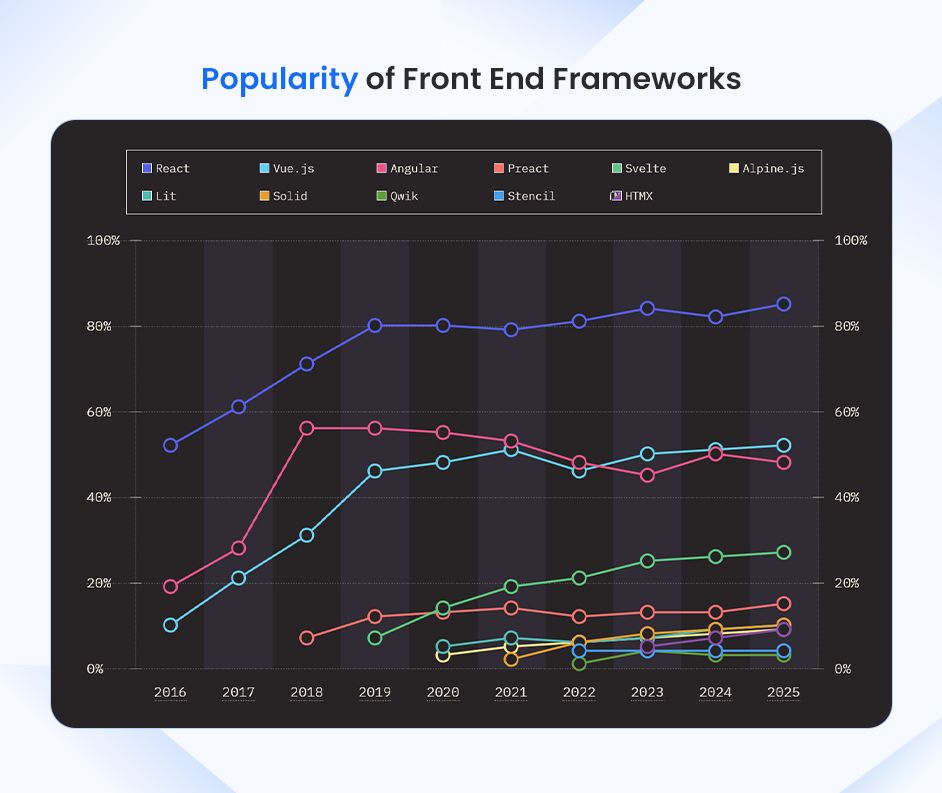
As of 2025, 82% of JavaScript developers utilize React as their primary frontend framework. Following closely behind React, Angular and Vue.js emerge as popular alternatives, increasing usage percentages of 48% and 52%, respectively. While considering user satisfaction, Vue.js even surpasses Angular.
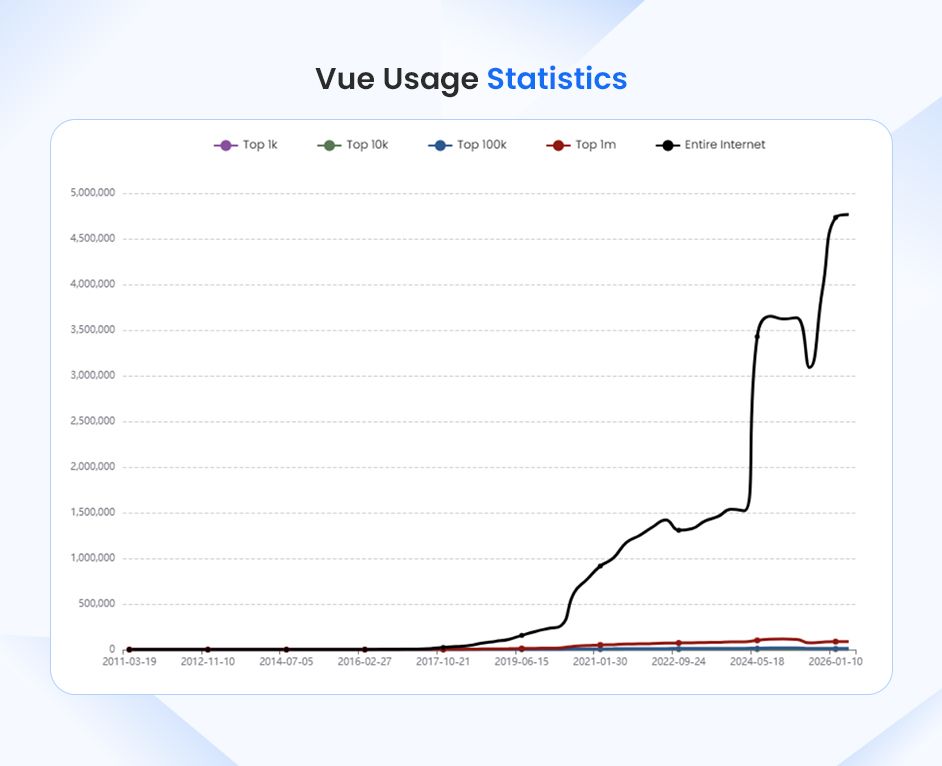
As per the report by Builtwith, around 5 million live websites globally are built on Vue, emphasizing its widespread adoption and usage across the web development landscape.
As per the report by StackOverflow 2025:
According to Stack Overflow’s survey, React is the most popular front-end framework, followed by Angular and Vue.
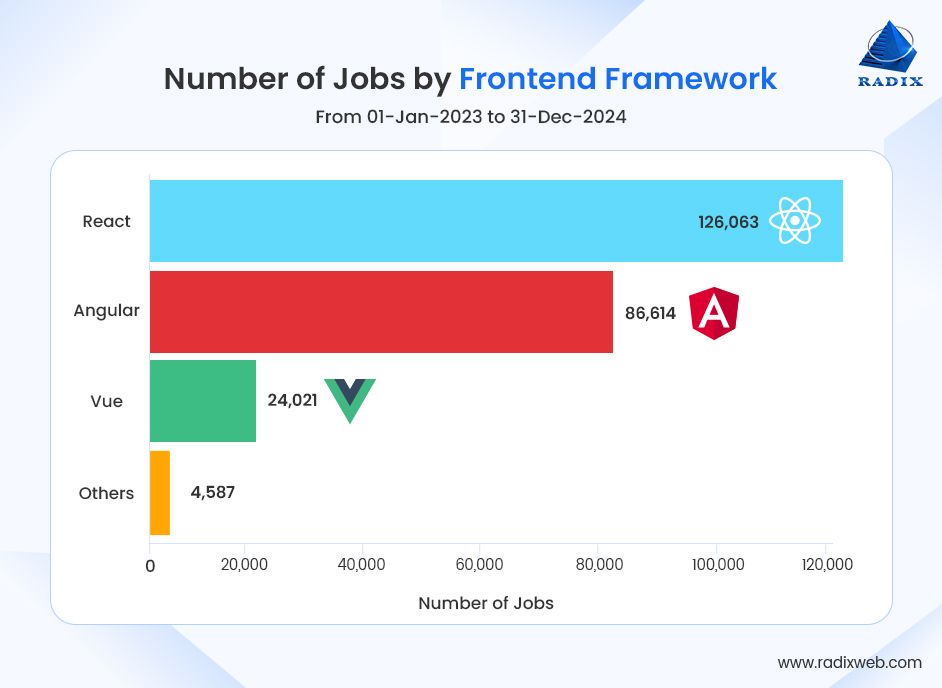
Based on a 2024 year analysis of approximately 250,000 frontend job postings aggregated from global job boards and professional networks, React emerged as the most in-demand frontend framework, accounting for roughly 126,000 open roles.
This demand reflects React’s widespread enterprise adoption, mature ecosystem, and suitability for building scalable, production-grade web applications.
Angular ranked second with nearly 87,000 roles, reflecting its continued relevance in enterprise-scale and long-term applications.
Vue.js placed third with about 24,000 job opportunities, indicating steady adoption but comparatively lower hiring demand than React and Angular. The “Others” category—including frameworks such as Svelte, Solid.js, Alpine.js, Backbone, and Lit—collectively represents a small portion of total job postings.
Despite growing developer interest in these technologies, their limited standardization in large production environments results in relatively low real-world hiring demand.
Although some frameworks are currently highly popular, there is less employment demand.
The percentage of frontend job offers for each frontend framework is represented below:
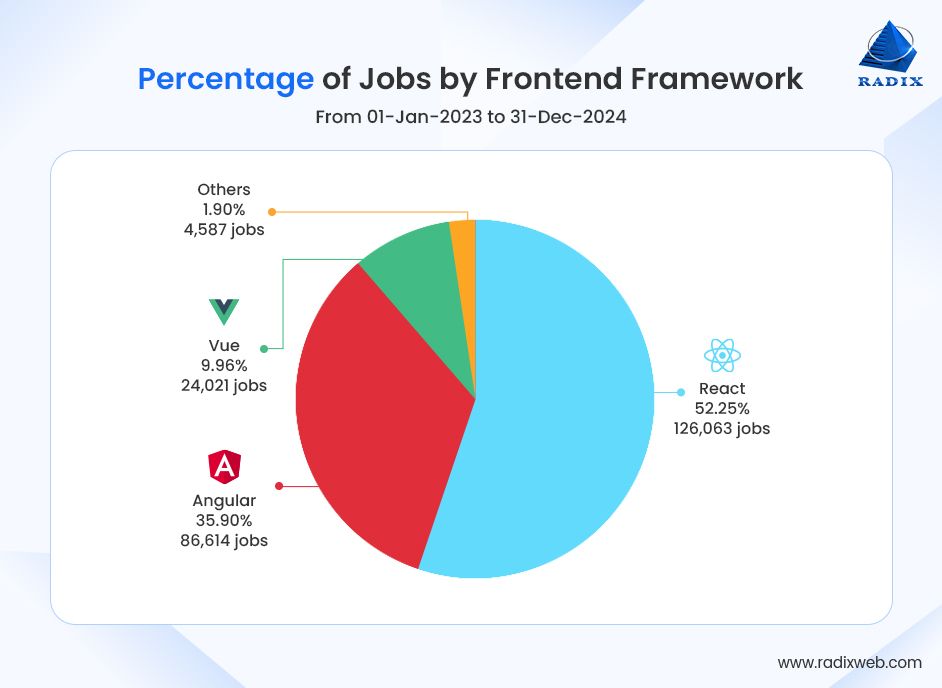
Here, we can conclude that:
Front end developers always juggle multiple options when it comes to website styling options. Between Angular, React, and Vue, there are many component libraries, more than 40 CSS frameworks, and more than 40 CSS available in JavaScript libraries.
Some new styling solutions, like Shadcn UI, Ark UI, Panda CSS, and StyleX (from Meta), came into existence in 2023. Also, recently, we saw a new open source React UI library, Wedges by Lemon Squeezy.
As developers and open-source creators contribute their distinctive methods to creating user interfaces and websites, we should anticipate seeing more solutions appear for front end development.
Moreover, we should anticipate seeing:

After going into details, we found some interesting data about front end developers. Based on a database of 30 million profiles and job portal websites in the USA, here is our analysis:
Bachelor's degree is the most common degree for front end engineers, with 72%. Master's degrees are the second most common degrees, with 15%.
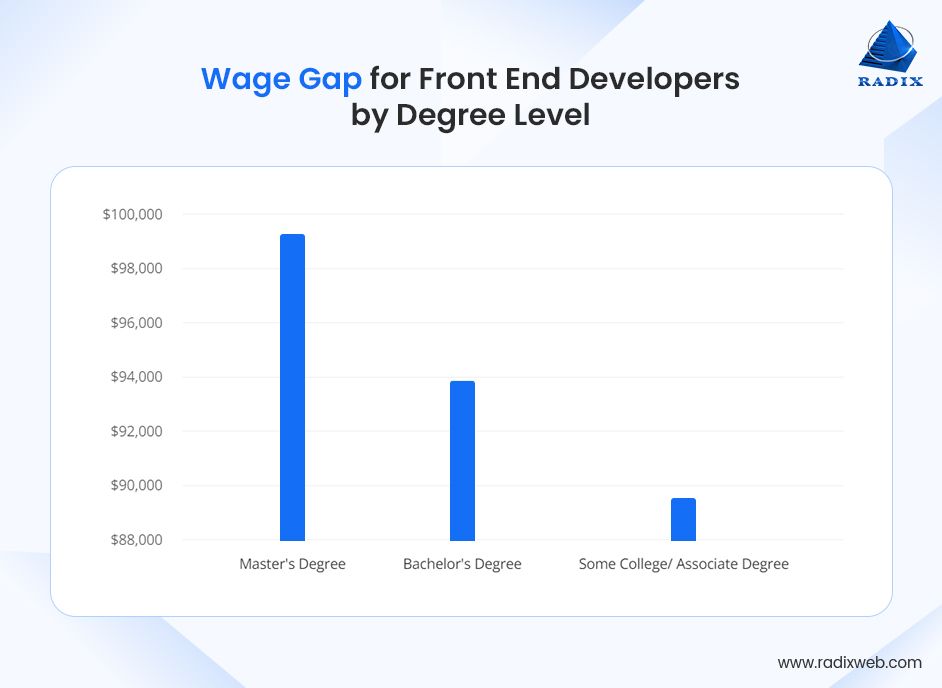
The research indicates that front end developers who hold a master's degree earn $99,256 per year more than those who do not. The typical annual salary for front-end developers with a bachelor's degree is $93,883, while that of front-end developers with an associate degree is $89,495.
Many front end developers work for the public sector in the technology industry.
49% of front-end developers work for companies with more than 10,000 employees.
3% of front-end developers work for companies with less than 50 employees.
It is not uncommon for front end developers to have preferences regarding their workplace. For example, the majority of front end developers would rather work for public companies than for private ones.
The three sectors in which front end developers prefer to work with are technology, finance, and professional.
Here, we are going to talk about how front end framework has evolved with regard to its job offerings or employment in the previous year – 2023.
The above graph shows that React and Angular are moving ahead in parallel. There’s no vast difference between these two demanding jobs. On the other hand, Vue and other frameworks represent a narrow opportunity for developers.
While we compare the above – 2023 data with the data below 2022, you will find slight differences between React vs Angular in job opportunities. When compared to React, Angular was much less in demand the year before, but by the end of the year, it was getting closer, showing an intriguing growth tendency.

What happens if we bifurcate frontend frameworks based on countries? This is what we have done based on asking industry experts several questions.
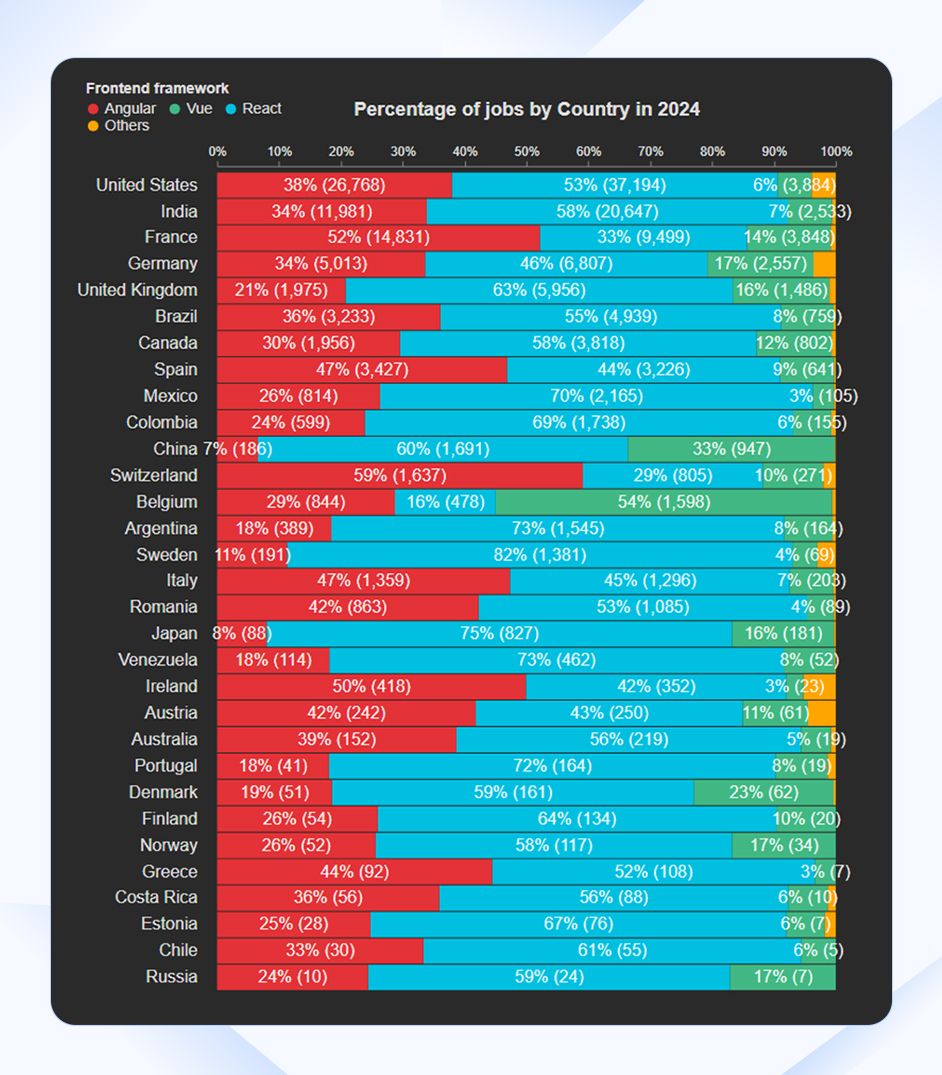
While React dominates frontend hiring demand across most global markets, several European countries show distinct deviations from this trend.
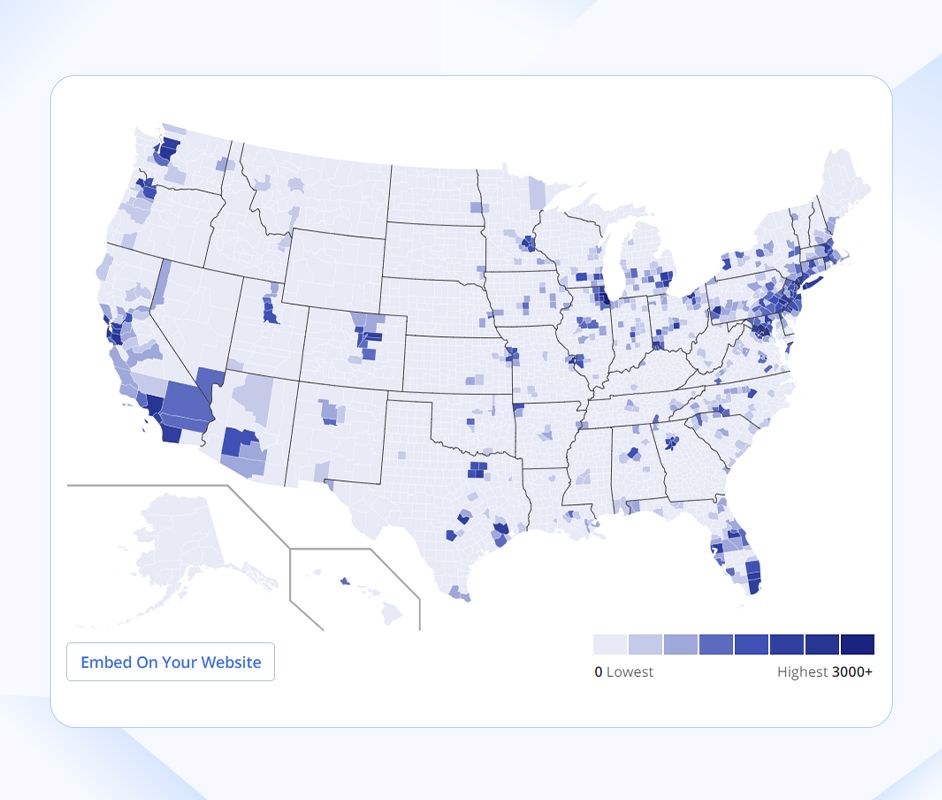
With around 12K resumes stored in our database, we found that New York, NY and Chicago, IL are the most popular places for front end developers.
Which Frontend Framework Has More Lead/Architect, Senior, Junior, and Other Roles?
The chart above illustrates the distribution of Junior, Senior, and Lead/Architect roles across various frontend frameworks.
Interestingly, React and Vue show a similar pattern, with a predominant number of roles categorized as "Senior." However, Angular presents a notable difference, with approximately 35% of Angular roles identified as Lead or Architect.
The US average income range for a front-end developer is $82,819 to $111,919, according to five career portals.
| Glassdoor | Zippia | Indeed | Payscale | ZipRecruiter |
|---|---|---|---|---|
| $82,819 | $92,147 | $111,919 | $82,607 | $109,843 |
React developers are the highest paid front end developers with an average salary of $116K per year. Second place is secured by Angular developers with an annual salary of $110K in the US.
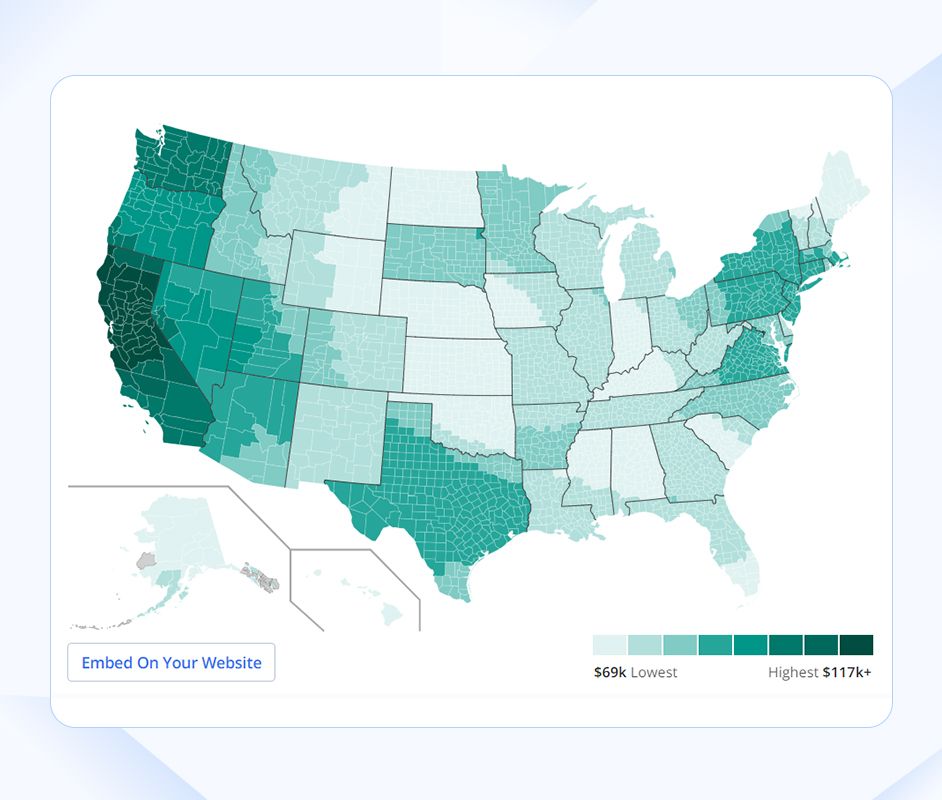
However, if we bifurcate the data based on the location where front end developers earn the most, we get California.
California is the place where the average salary of front-end developers is around $107,914. The below image represents the front-end developers salary based on location in the US market.
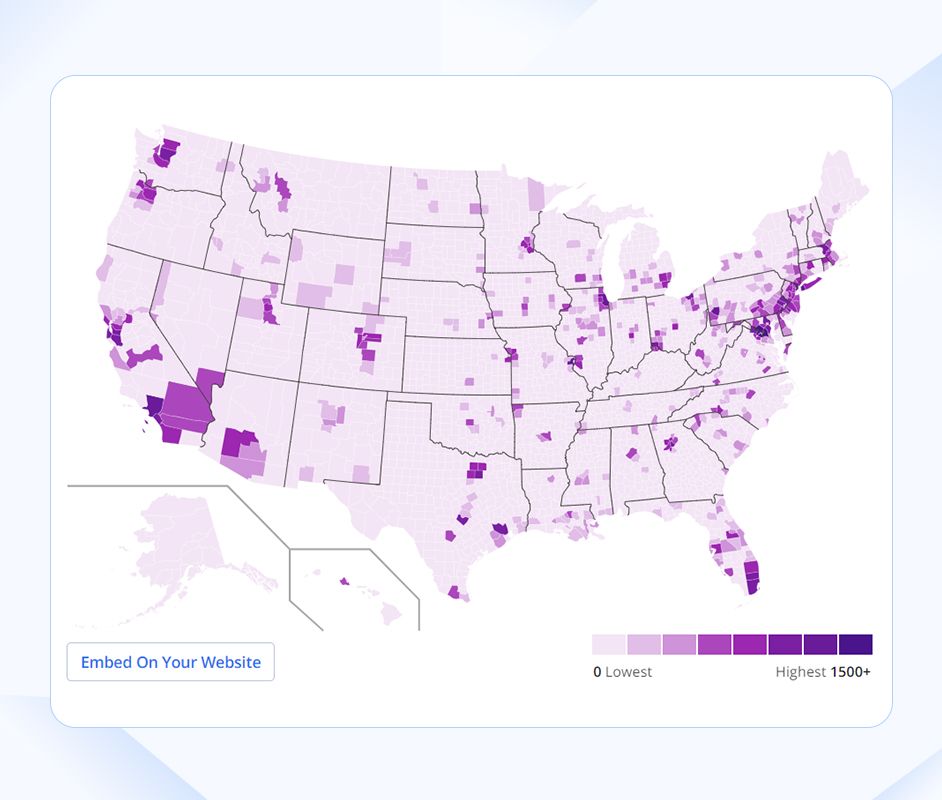
In New York, there is a huge demand for front end developers. Here are the 94 front end developer job vacancies that are currently available. We examined job postings to ascertain the regions of the nation where front end developers are most in demand.

When considering desktop code editors, Visual Studio wins the race with a very powerful extensions system. JetBrains joins the second spot.
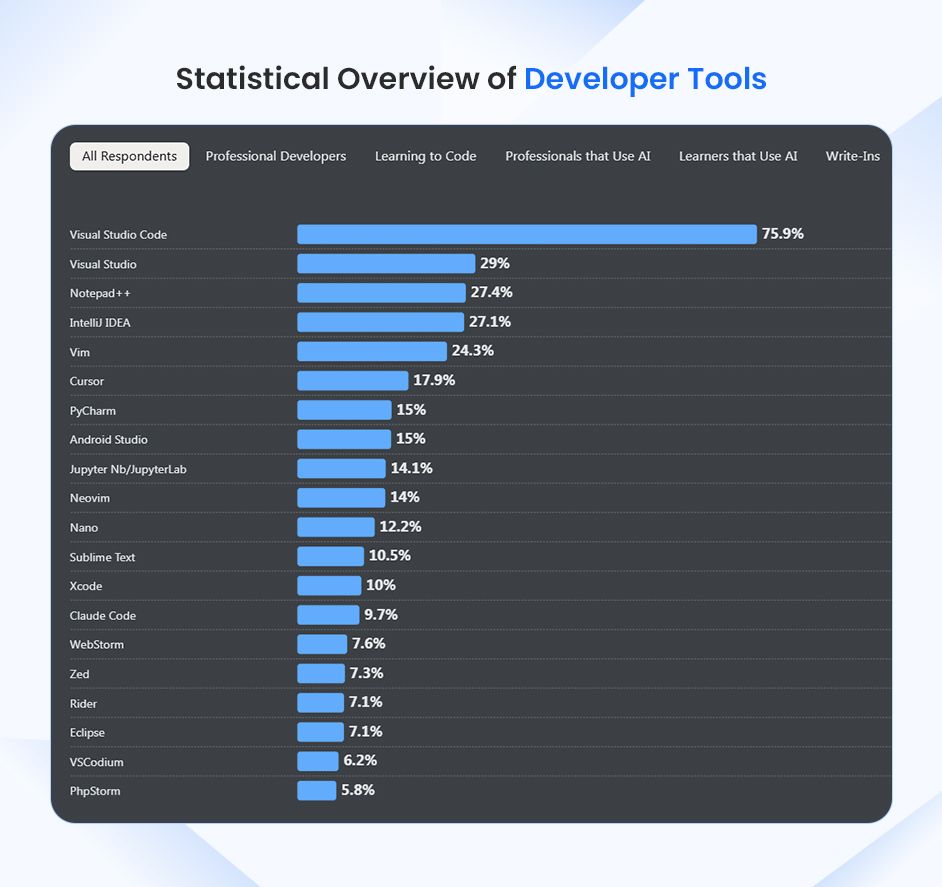
Several major technology companies are moving to Visual Studio Code (VS Code) for software engineering purposes. Facebook is a notable example, having shifted from Atom to VS Code as its preferred development environment across the organization.
Eslint, Prettier, and Webpack are considered to be the “default” build toolsets for frontend engineers. Eslint serves as a static code analyzer, seamlessly integrating with popular code editors like VS Code and IntelliJ. Prettier, on the other hand, offers an opinionated code formatting solution, supporting various languages such as JavaScript, TypeScript, CSS, HTML, GraphQL, and Markdown across major code editors.
Webpack, a static module bundler, compiles modules of your project, including JavaScript/TypeScript files, CSS/SASS, Handlebars, and more, into static assets. It efficiently handles dependencies and optimizes packaging to reduce runtime size and loading latency. With advanced features, such as asynchronous dependency loading at runtime, Webpack further enhances performance by minimizing initial loading time.
Amazon Web Services (AWS) continues to lead the global cloud infrastructure market among frontend developers with an estimated 30% share, followed by Microsoft Azure at around 20% and Google Cloud at approximately 13%. Together, these three hyperscalers account for over 60% of worldwide cloud infrastructure spending as of Q2 2025.
The remaining market share is highly fragmented across smaller providers, with no single vendor exceeding a 4% share, underscoring the dominance of the leading cloud platforms and the long tail of niche and regional players.
| Cloud Provider | Market Share (Q2 2025) |
|---|---|
| AWS | 30% |
| Microsoft Azure | 20% |
| Google Cloud | 13% |
| Alibaba Cloud | 4% |
| Oracle | 3% |
| Salesforce | 2% |
| IBM Cloud | 2% |
| Tencent Cloud | 2% |
Be a Front Leader for Futuristic Front End Development
As this frontend statistics analysis shows, modern front-end development is increasingly shaped by data, scale, and real-world adoption trends. From framework dominance and regional preferences to evolving tooling and cloud ecosystems, these insights highlight how technology choices directly influence performance, user experience, and long-term maintainability.With the statistics and data of the front end, developers and businesses can make informed decisions, adapt their strategies, and stay ahead in the ever-evolving front-end development services.To stay ahead in the next generation of web development, teams must combine innovation with proven technologies, backed by measurable insights. Lead with data, adopt with confidence, and build frontend experiences that are ready for the future.Want even more interesting technologies-related statistics and facts? Check out Artificial Intelligence Statistics, NodeJS Statistics, Agile Statistics, Back End Statistics, and JavaScript Statistics from Radixweb’s Facts and Figures library.
Ready to brush up on something new? We've got more to read right this way.

