

Read More


Recognized for AI Excellence at 2026 Globee® Awards - Read More

Sarrah Pitaliya

Quick Summary: Explore the latest JavaScript statistics in 2026, including global usage, developer adoption, popular frameworks, and ecosystem trends. This blog highlights key insights on JavaScript’s role in modern development, its comparison with TypeScript, and emerging trends shaping the future of web and application development.
JavaScript has evolved from a simple scripting language for adding interactivity to websites into one of the most influential technologies powering the modern digital ecosystem. Considering recent scenarios, it drives everything from dynamic web interfaces and real-time apps to scalable backend services and cross-platform mobile experiences.
With the rapid rise of cloud-native architectures, AI-powered applications, and highly interactive user experiences, JavaScript continues to play a central role in how modern software is built and delivered.
The versatility of various JavaScript frameworks across both client and server environments has made it a preferred choice for development teams worldwide. Technologies such as Node.js enable JavaScript to run on the server side, while frameworks like React and Next.js have transformed how modern web applications are developed. At the same time, the growing adoption of TypeScript is reshaping development workflows by introducing stronger type safety and scalability for large applications.
In this article, we are going to explore the latest JavaScript statistics for 2026, including global usage patterns, framework popularity, and emerging development trends, offering valuable insights into how JavaScript continues to shape the future of software development.
Before we talk about its popularity and JavaScript usage statistics, let’s understand what JavaScript is.

JavaScript is a high-level, interpreted programming language used to create interactive and dynamic web experiences. It is one of the core technologies of the modern web, helping developers to build responsive user interfaces, handle real-time updates, and manage complex client-side logic within web browsers.
Originally developed to make websites interactive, JavaScript has evolved into a full-stack development language used across both front-end and back-end environments. With the introduction of server-side runtimes such as Node.js, developers can now build scalable backend services, APIs, and microservices using JavaScript. On the front-end, libraries and frameworks like React, Angular, and Vue.js help teams create highly interactive and performant web applications.
JavaScript also allows developers to build real-time applications, single-page applications, progressive web apps (PWAs), and cross-platform mobile apps. Its flexibility, extensive open-source ecosystem, and strong developer community have made it one of the most widely used programming languages globally.
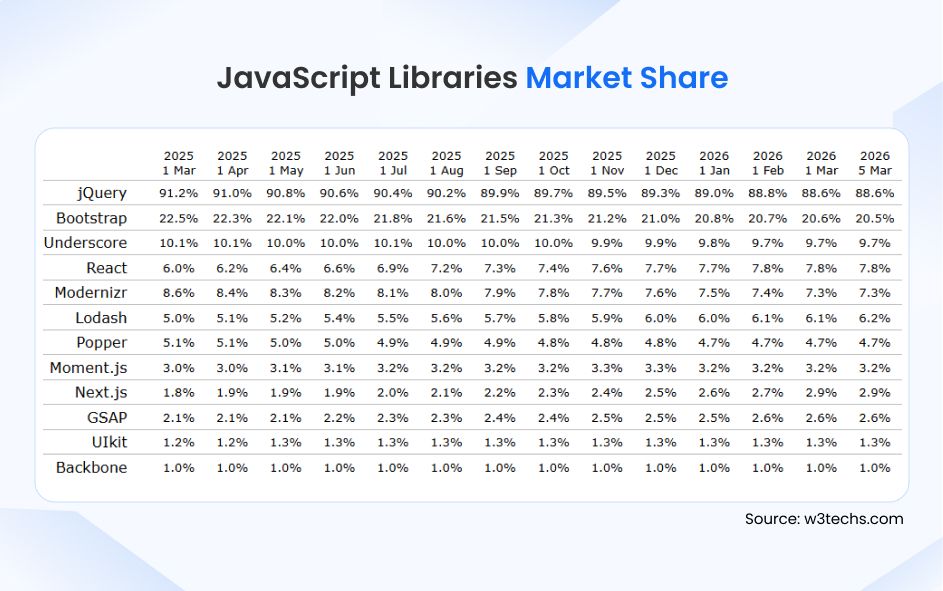
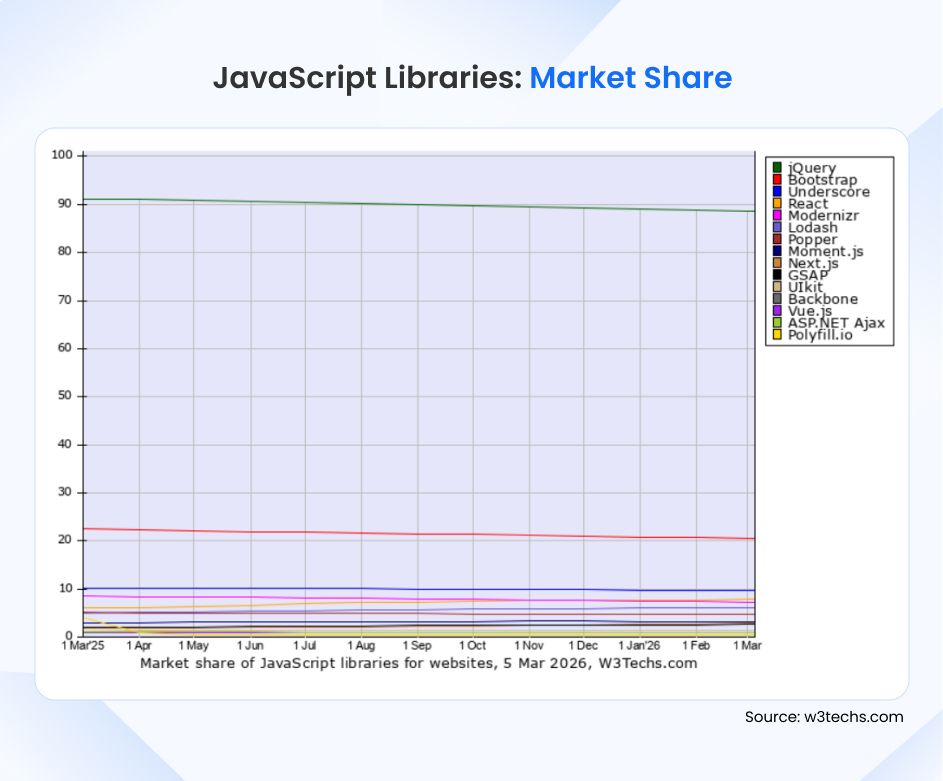
#21 Market Share for JavaScript Libraries
This report shows the market share trends for the top JavaScript libraries since March 2026.
The diagram shows only JavaScript libraries with more than 1% market share.
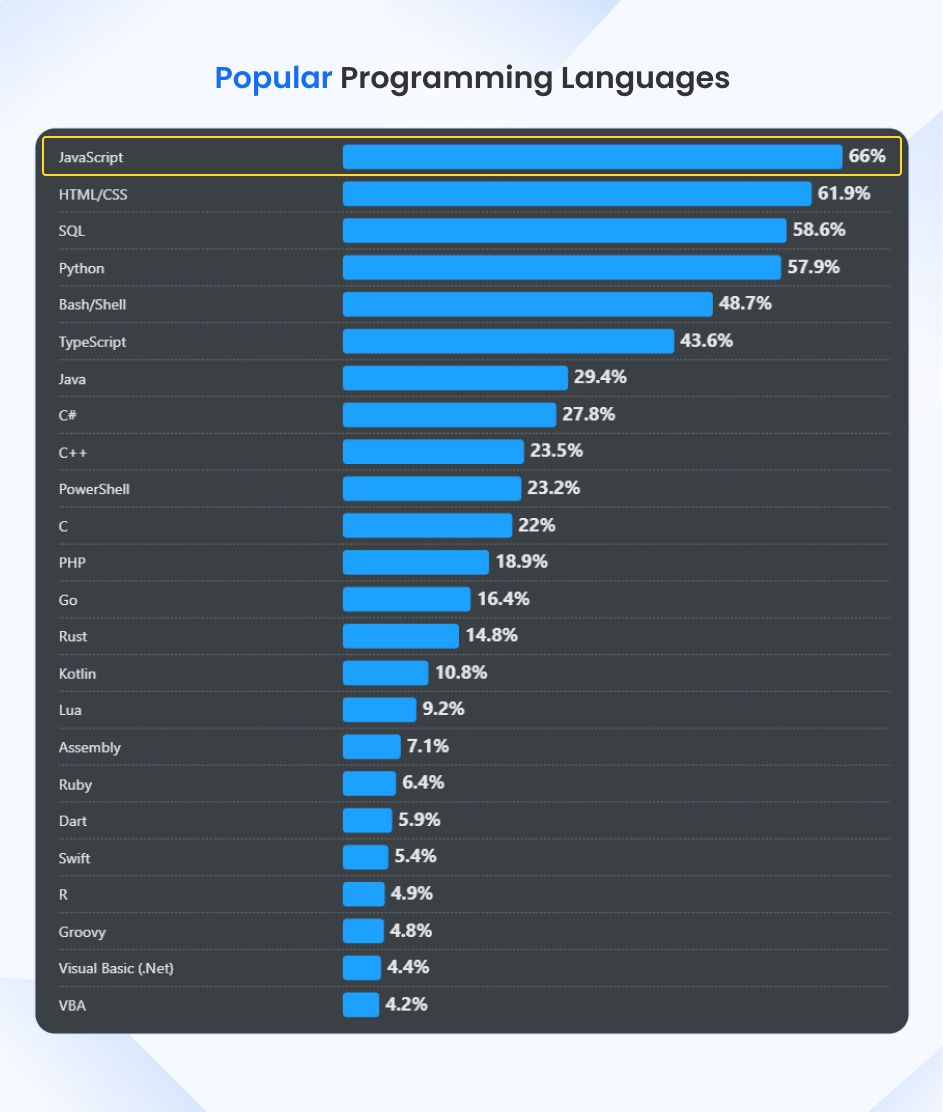
JavaScript is the most popular programming language among software developers worldwide, with 66% of users, followed by HTML/CSS (61.9%) and SQL (58.6%).
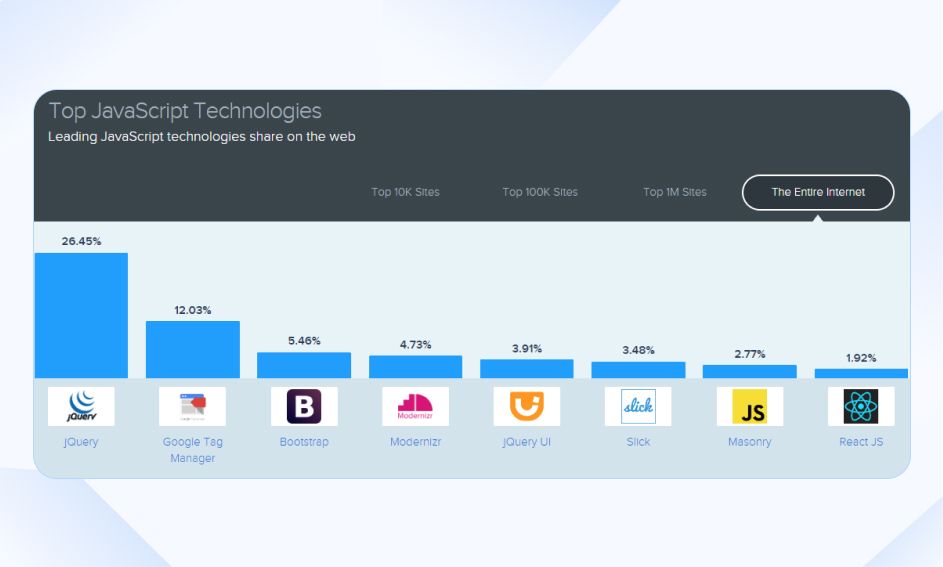
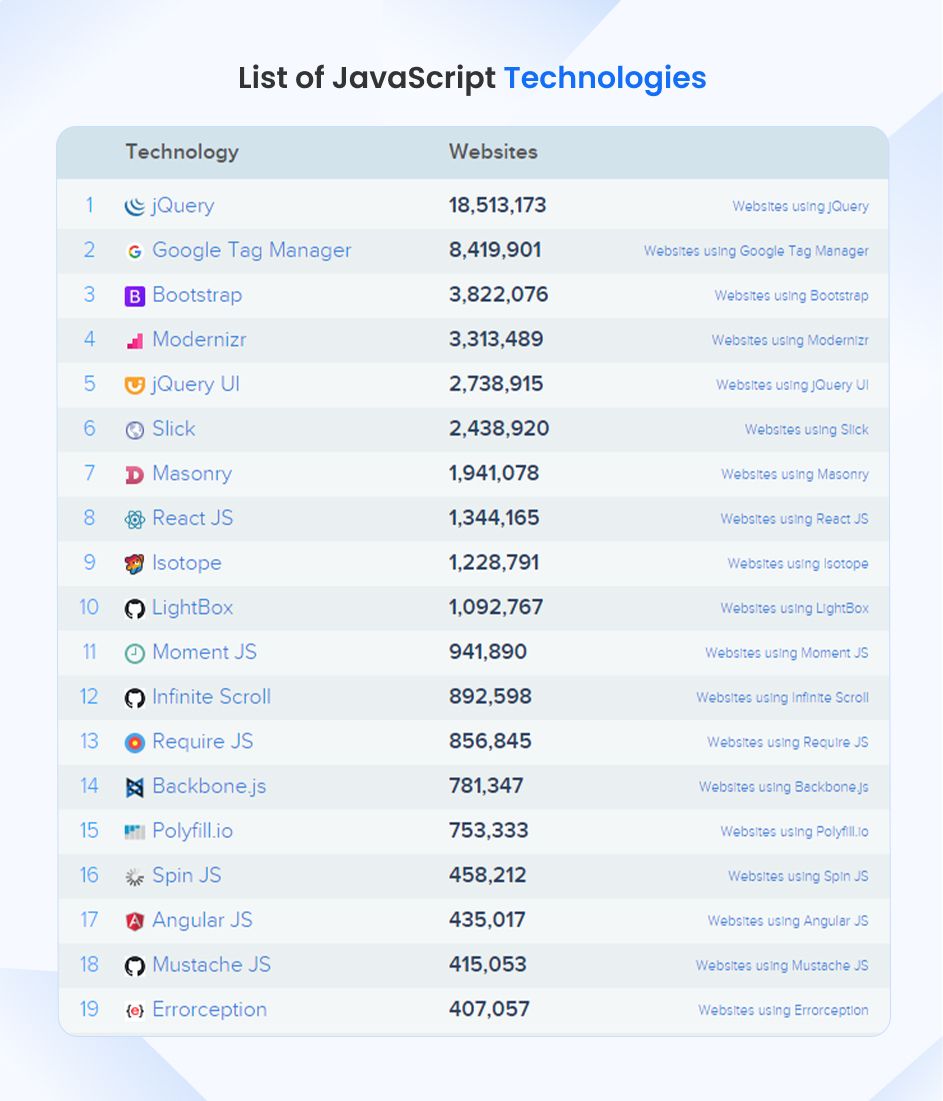
#22 Top JavaScript Technologies
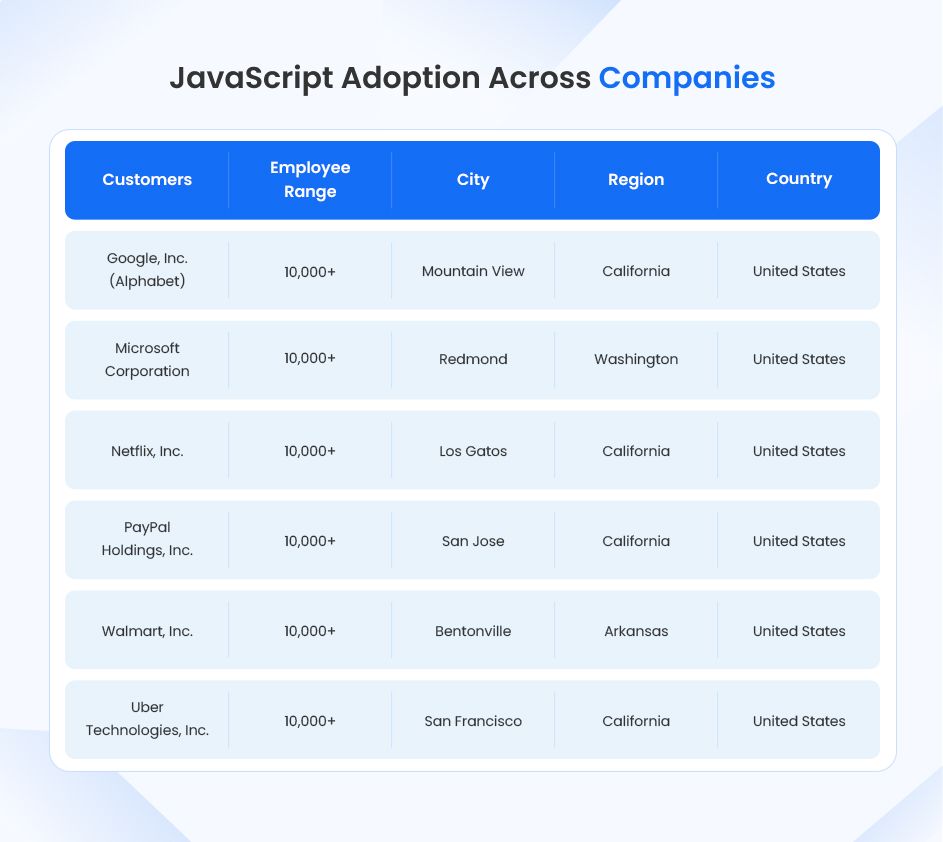
#23 Companies Using JavaScript
There are around 16,270,234 companies in the world that have started using JavaScript languages tool in 2025.
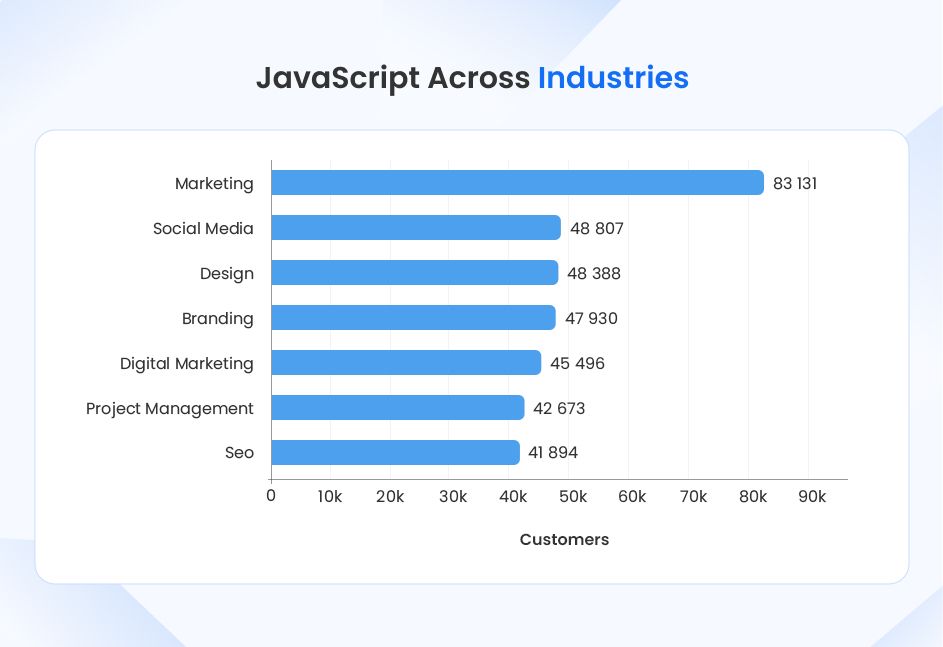
#24 Industries That Use JavaScript
There are top three industries – Marketing (80550), Social Media (47494), and Design (47435) that use JavaScript language.
#25 Popular Countries Using JavaScript
Recent global developer ecosystem data indicates that the United States, India, and Germany remain among the largest contributors to JavaScript projects and web development technologies.
#26 JavaScript Usage: The Overpowering Popularity of TypeScript
Microsoft released TypeScript in 2012 as a superset of JavaScript that supports optional types. It took JS syntax and semantics and incorporated some additional features that developers needed. The difference between JavaScript vs Typescript is that the latter offers boosted productivity and easy maintenance of growing codebases.
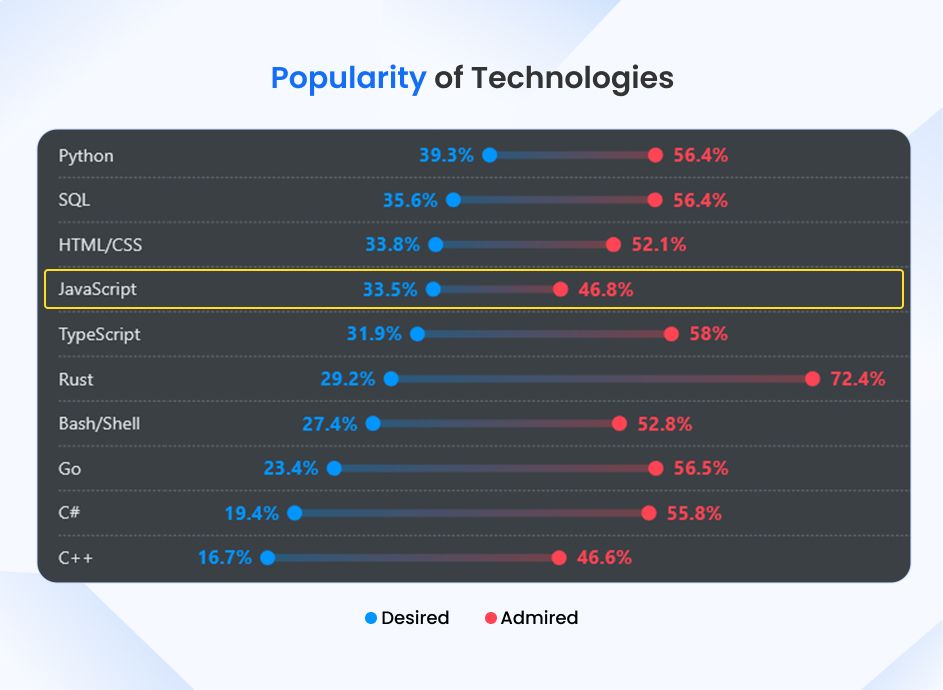
That's why TypeScript is not simply a JavaScript trend; it has now become a de-facto language. The latest survey of StackOverFlow 2025 states that JavaScript is the most popular programming language, with a 66% usage rate among developers.
Additionally, as per the Stack Overflow Developer Survey, TypeScript is the fifth most admired and desired language in 2025. All these JavaScript statistics indicate the rapid growth of TypeScript as an influential trend in the software industry.
#27 JavaScript Usage: React is Leading the Pack
React has been successful in keeping a solid position in the JavaScript ecosystem as it outshined jQuery in the race for the most commonly used framework.
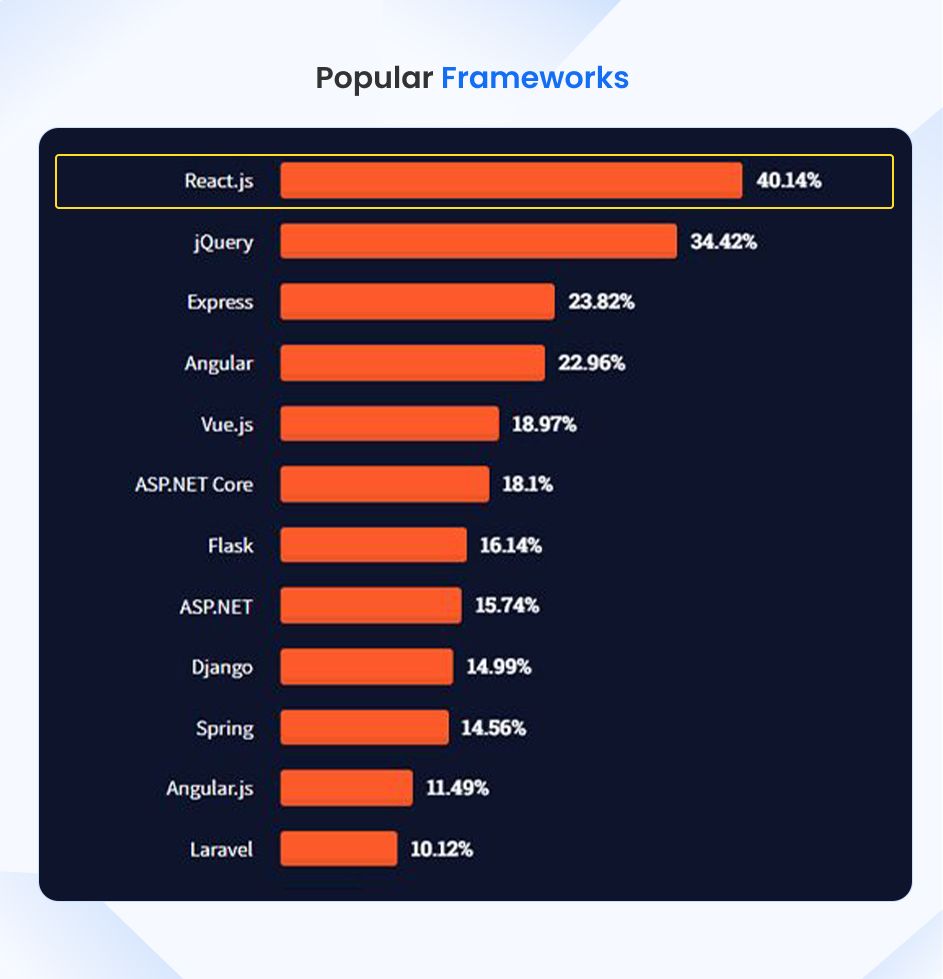
This won't change this year as well because developers and business leaders love to use React.js for future-proof front-end development.
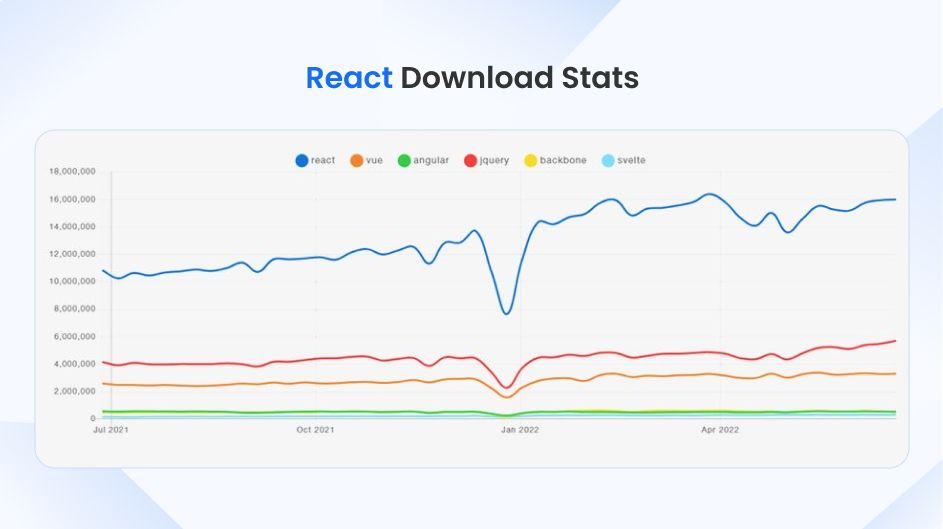
Furthermore, as a matter of fact, React had the most npm package downloads in 2026 with its 19.2.4 version getting downloaded by 8,60,25,666 users.

#28 JavaScript Usage: Node.js Saw a Surging Demand
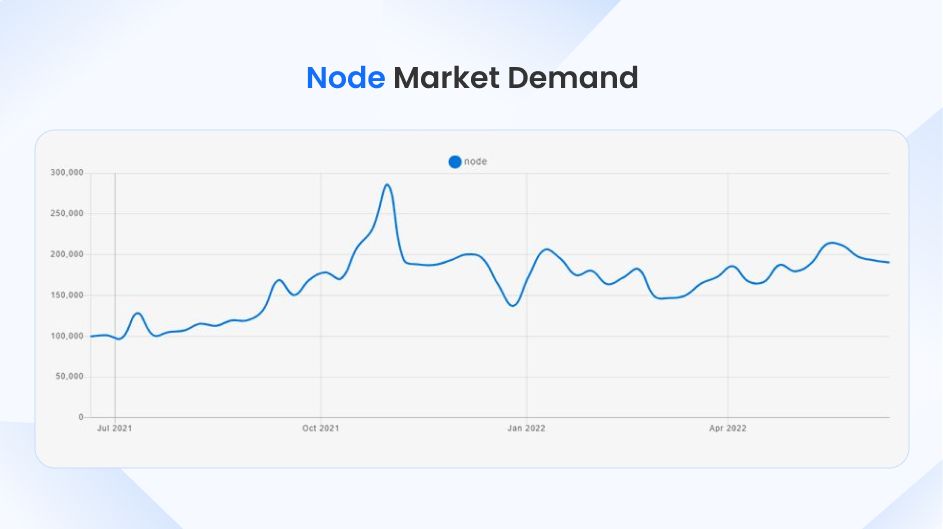
Node.js is a JavaScript runtime environment that helps developers create flexible and lightweight codebases. Its versatility and modular structure allow vertical/horizontal scaling, improved performance, and a faster development process.
For its extensive capabilities, Node.js had been enjoying steady growth in download and installation rates. If you (as a developer) have not installed Node.js on your system, then you can follow the instructions here – Guide to Install Node.js on Windows and macOS.
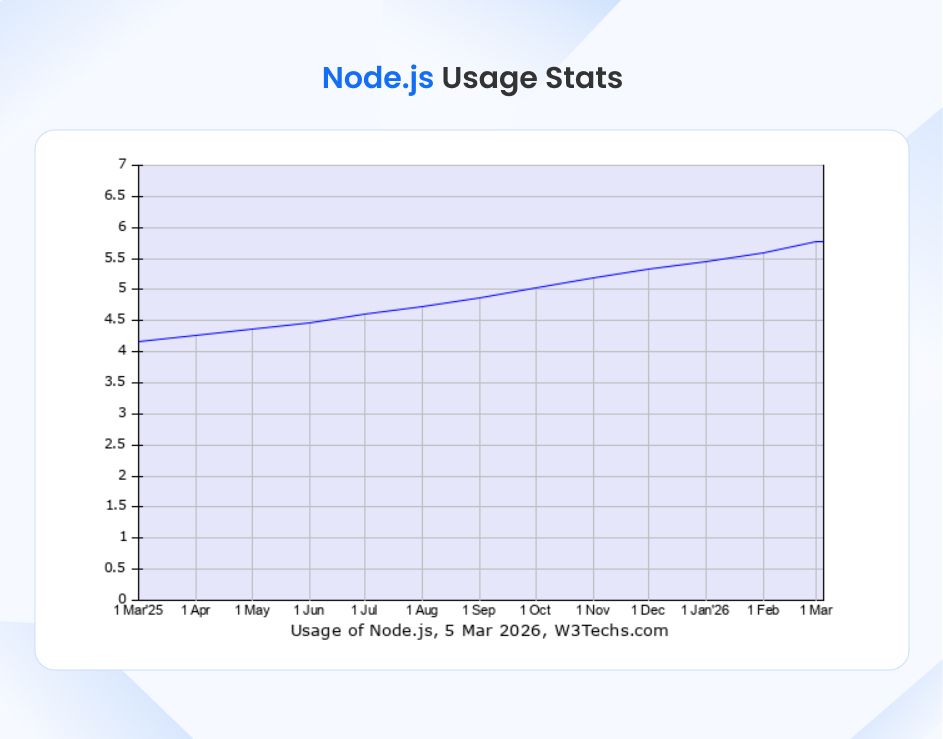
Moreover, historical trends of JavaScript usage in websites show that 5.8% of global web servers use Node.
Node.js is the best choice for high-functioning and complicated projects in 2026 like streaming apps, real-time apps, and microservices-based apps, etc.
#29 JavaScript Usage: No Surprises in Vue Evolution
Vue.js is a progressive JavaScript framework known for its outstanding resources, easy learning curve, collaborative community, and much more. The latest version, Vue 3.5, offers a broad range of improvements like:
Currently, there are 11,384,948 websites using Vue around the world. Here are its usage statistics:
#30 JavaScript Usage: Svelte is Barging in
Since 2016, the podium of most used JavaScript frameworks has been circling around the top three monarchs. However, the popularity of Svelte is growing by leaps and bounds, especially after it started supporting TypeScript.
15% of JavaScript developers actively use this framework, and in terms of satisfaction, it has won the proud first place, surpassing React.
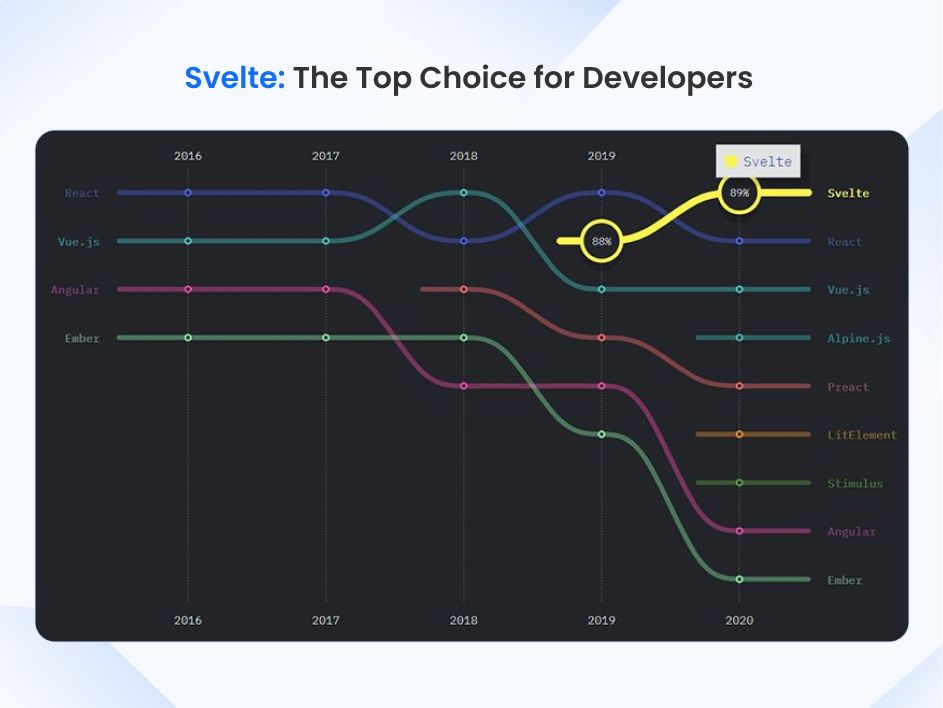
The accelerating advancement of Svelte only means that it will draw more and more attention to it, and it's only a matter of time before it joins the clan of the top front-end development frameworks. Who knows how much the JavaScript stats for frameworks will change by the end of 2026.
#31 JavaScript Usage: GraphQL is Excelling at Data Management
GraphQL is a query language created by Facebook to enhance the data cell performance of their app. It allows developers to query data from both the back-end and front-end with a flexible syntax. Other exciting features include fast data retrieval, request customization, efficient query, and so on.
As per the State of GraphQL survey, 31.8% of developers were happy with the overall state of the GraphQL ecosystem.
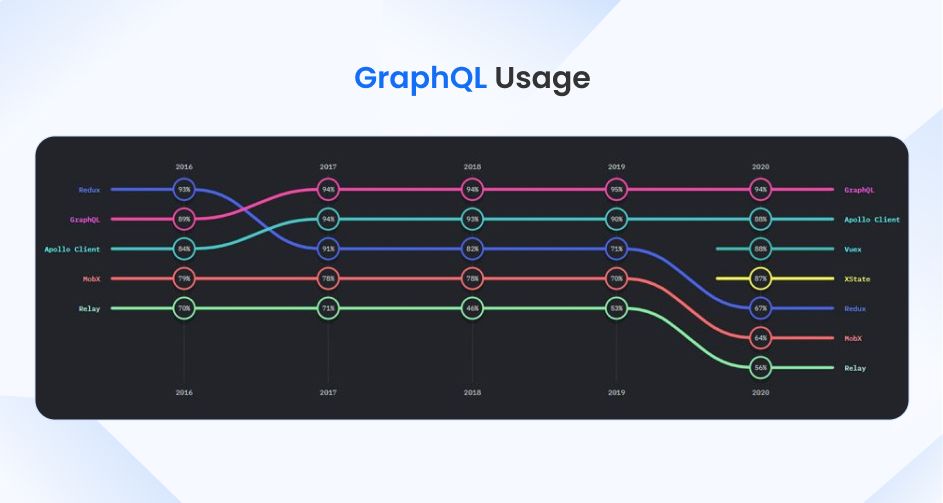
All this data suggests that GraphQL is soon going to replace the RESTful approach and definitely emerge as one of the top JavaScript usage examples.

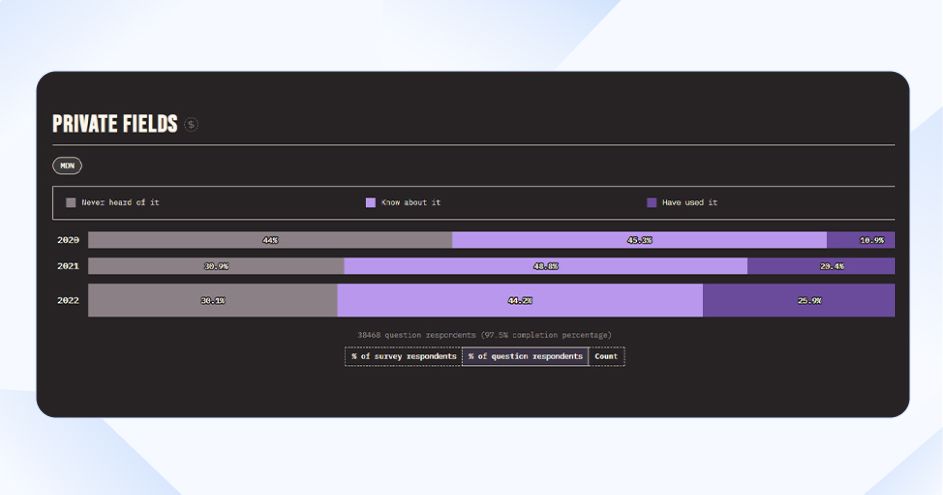
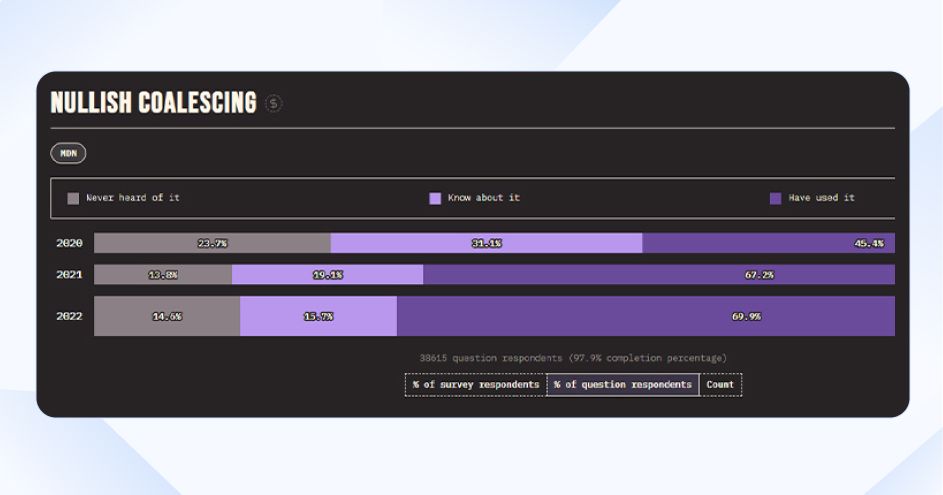
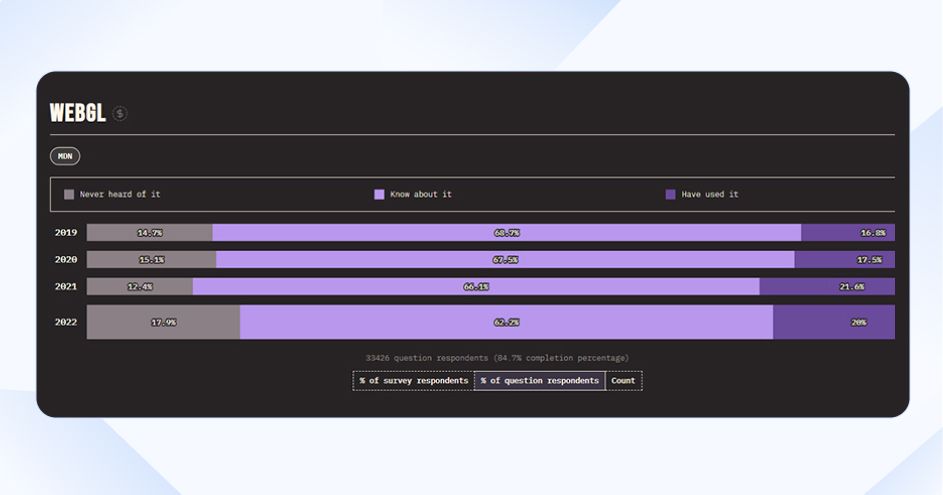
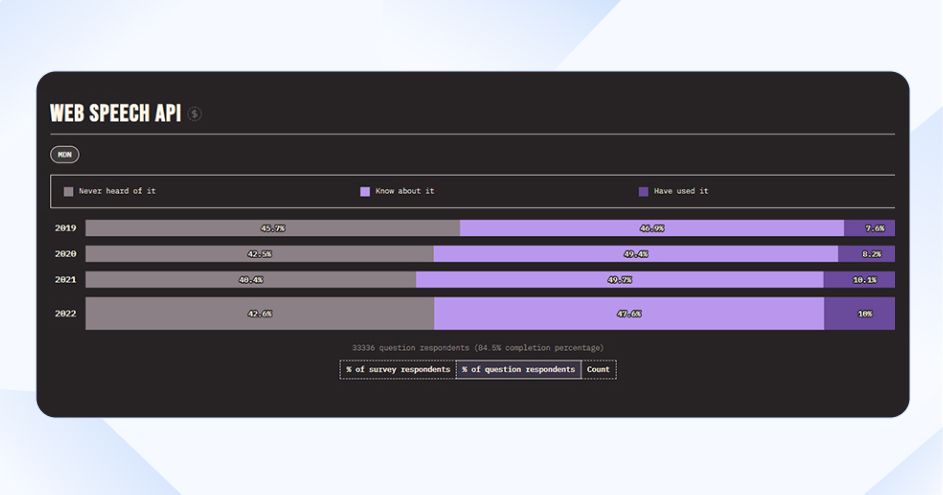
#32 JavaScript Usage: Rise of the Latest JavaScript Features
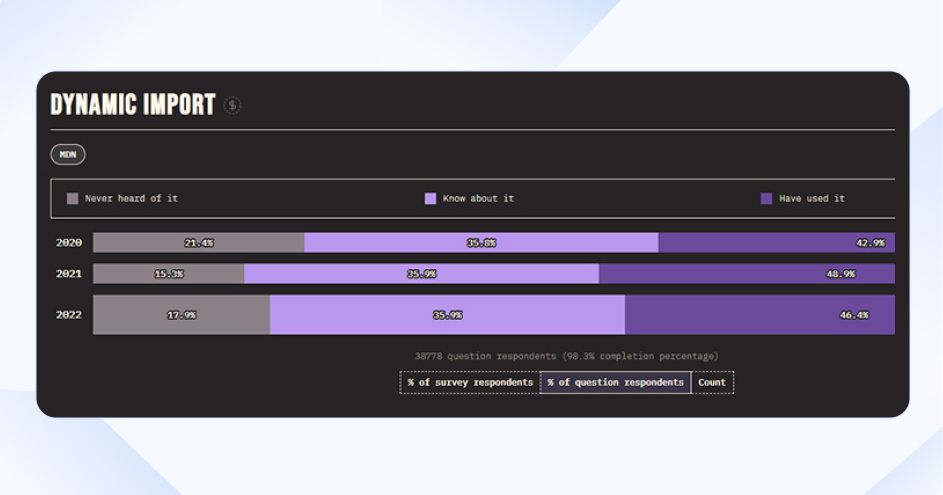
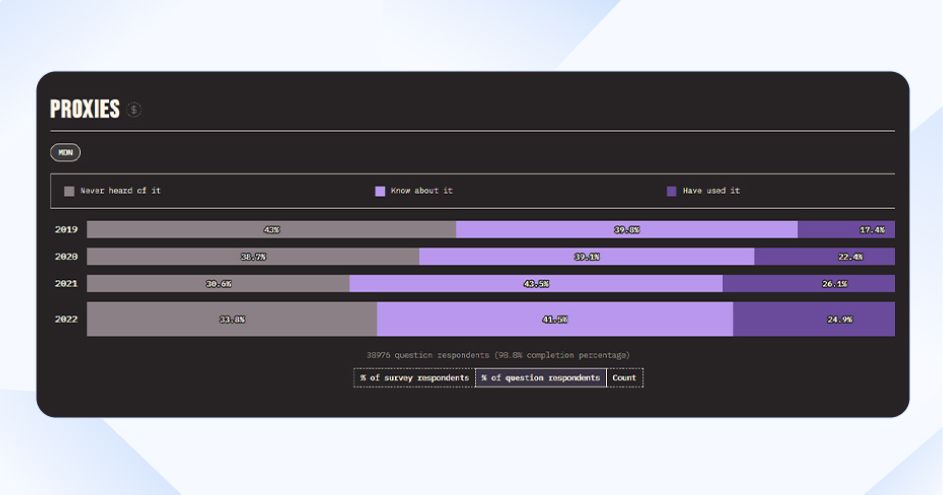
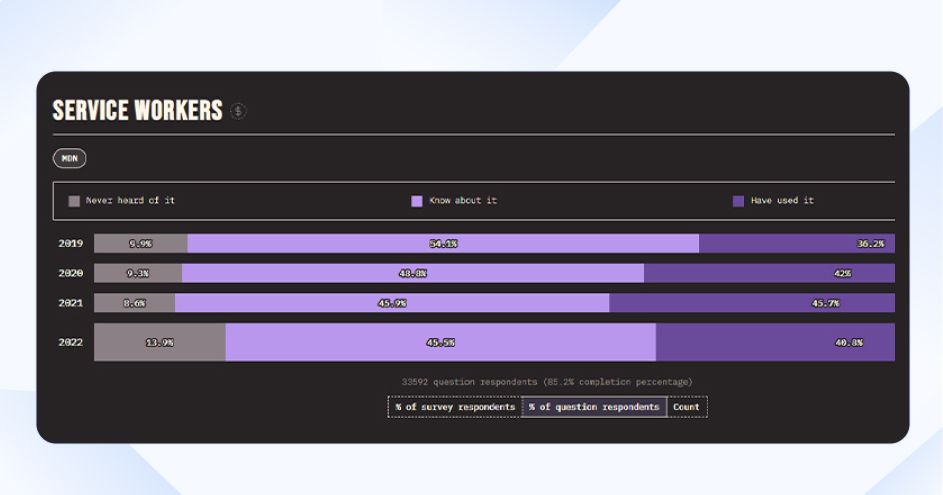
We don't know exactly how, but the usage of many new JavaScript features is steadily increasing, as reported by the latest State of JS. More and more developers started exploring the JavaScript ecosystem and contributing their own expertise to it. For example:
#33 JavaScript Usage: Jamstack is Serving Millions
Jamstack is a modern web development architecture that allows developers to create secure and fast websites and web apps with many efficient libraries and tools. According to the Jamstack Community Survey, 32% developers were working on websites that would serve millions of users:
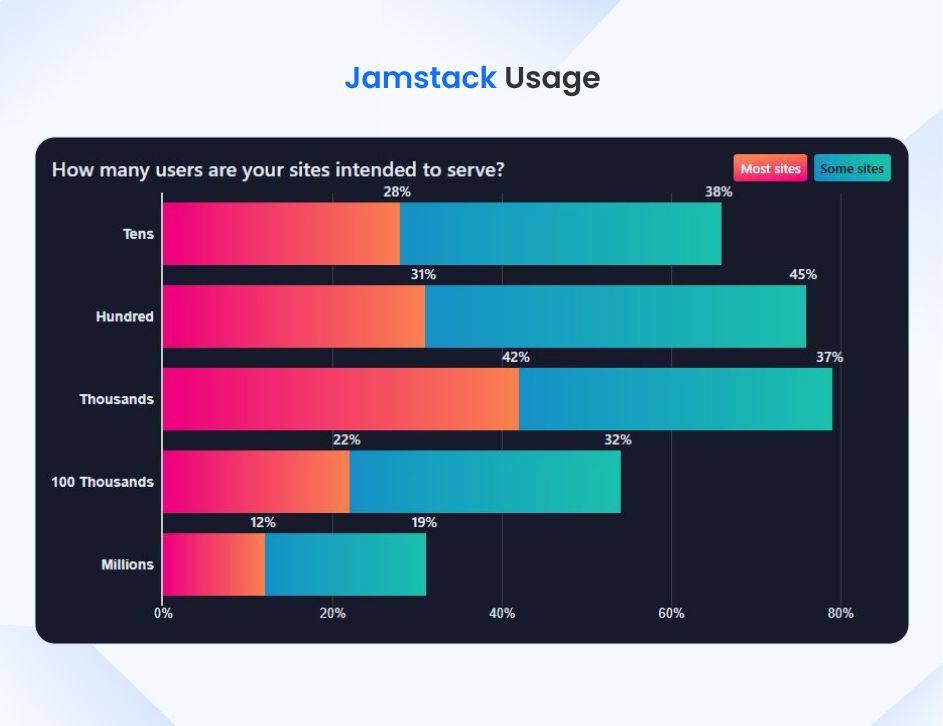
The reasons behind Jamstack's capability to attract millions of audiences are the groundbreaking benefits it offers, such as a content delivery network, microservices architecture, fast and lightweight pages, pre-built markup, etc. All these JavaScript usage statistics about Jamstack help it stay trendy in the coming years.
#34 JavaScript Usage: The Testing Game Belongs to Vitest
The testing libraries and tools with most respondents’ interest are Vitest, Playwright, Jest, Cypress, Storybook, and Testing Library. Vitest is at the front of the pack as expected since it’s a part of Vite JS - the next-gen frontend tool.
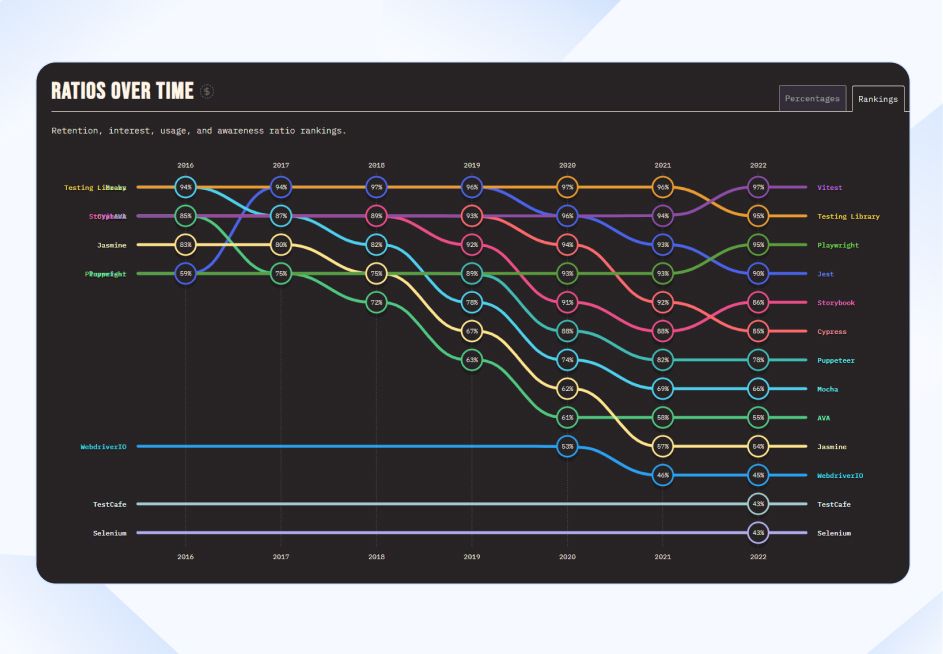
At the second position reigns Playwright. Jasmine continues to decline as it's the default testing tool for Angular.
Another more user-oriented testing tool is Testing Library which developers are now preferring to test React components. Jest comes in third position.
#35 JavaScript Usage: React Native Takes Two in One
In terms of mobile app development, Electron completely dominates the market with higher numbers of usage. However, React Native stands strong in the second position.
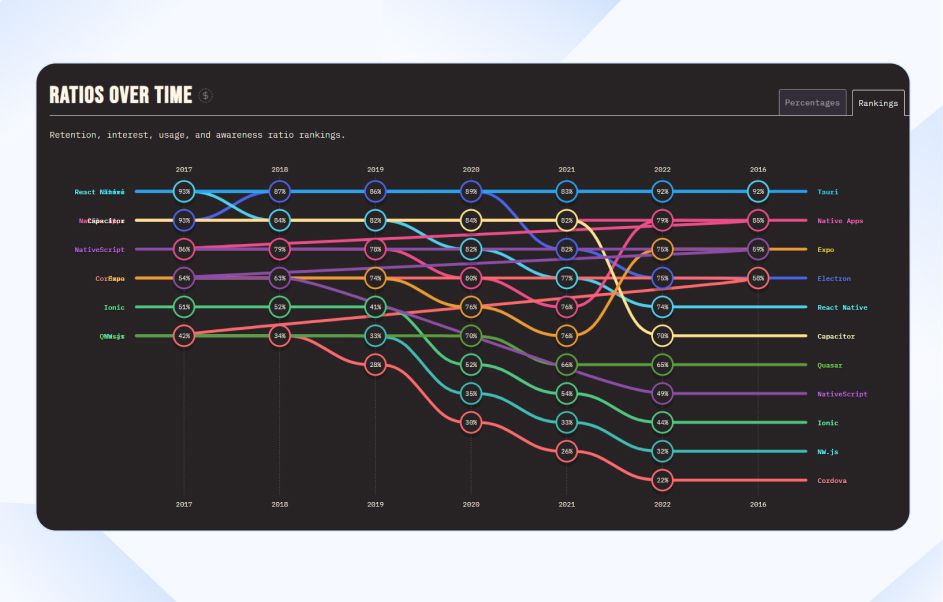
The similarities between React vs React Native enable developers to seamlessly build mobile apps. It's also cheaper and easier for organizations to create both web and mobile apps at the same time.
In this context, Expo gained immense popularity and entered the JavaScript statistics radar on the fourth rank with 24% of developers usage. As it's built on React Native, it's becoming a great choice for developing mobile apps.
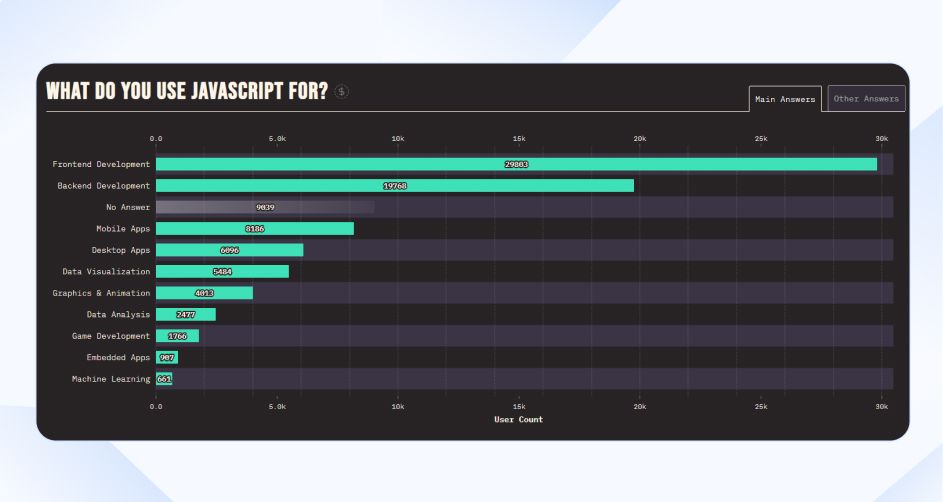
#36 JavaScript Usage
98% of developers prefer to use JavaScript for frontend development. Backend development comes in the second spot, with 65% of developers.
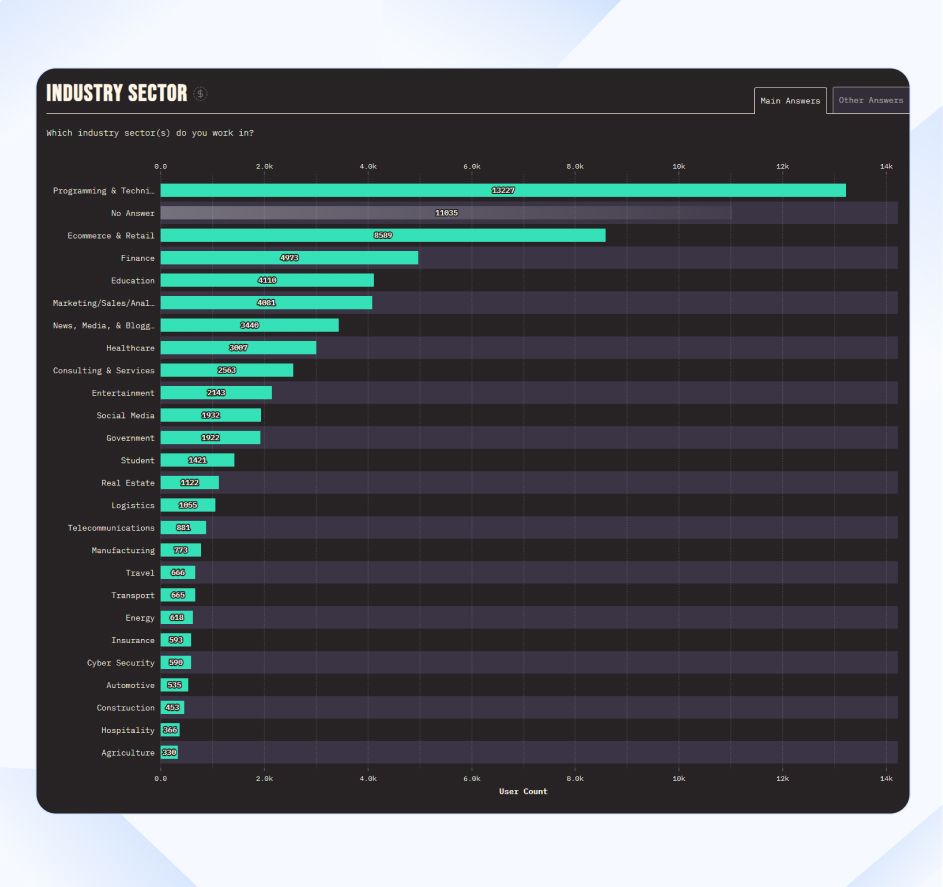
#37 JavaScript Usage by Industry
46.6% of users of Programming and Technical Tools use JavaScript. 30.3% of eCommerce and Retail industry use JavaScript.

Conclusion
JavaScript continues to shape the future of modern web and application development. Based on the above JavaScript statistics for 2026, we can conclude that JavaScript remains a cornerstone technology for building scalable and interactive digital experiences. The growth of modern frameworks, full-stack development capabilities, and a massive open-source ecosystem further reinforces its relevance in today’s rapidly evolving technology landscape.From dynamic front-end experiences to powerful backend architectures, the language continues to support innovation across the entire software development lifecycle.At Radixweb, we closely track these technology trends to help organizations make informed decisions about their digital platforms. By leveraging modern JavaScript technologies and frameworks, our teams build high-performance applications that support long-term scalability, improved user experiences, and future-ready digital products for global businesses.So, if you are interested in creating stable, easily maintainable, and future-proof JavaScript solutions, take a look at our JavaScript development services. Our team will take it from there!Want even more interesting technologies-related statistics and facts?Check out NodeJS Statistics , AI Statistics, and Agile Statistics from Radixweb’s Facts and Figures library.
Ready to brush up on something new? We've got more to read right this way.

