
Recognized for AI Excellence at 2026 Globee® Awards - Read More
Client Background
The enterprise is a UK-headquartered provider of business management software. They support well over 160,000 organizations in Europe, the USA, and APAC. Its cloud platforms serve multiple sectors with a workforce exceeding 9,000 employees.

Client Location
UK

Engagement Model
Dedicated Team

Project Duration
From 2018 till now

Industry
Software Development
Business Goals

The engagement followed the task of replacing a fragmented, document-driven onboarding process with a unified cloud-based digital onboarding platform for staffing companies. Objectives included consolidating pre-hire registration, background checks, inductions, contract signing, payroll data capture into one system, and enabling direct synchronization with existing applicant tracking and CRM tools. The broader aim was to shorten onboarding timelines, reduce administrative load on recruiters, and give candidates a self-service experience.
Project Brief

Enterprise recruitment operations were processing hundreds of temporary placements daily, and the existing employee onboarding software offered little visibility into where each candidate stood in the process. Paperwork moved slowly between systems that didn't communicate with each other, which meant recruiters were re-entering the same information multiple times and candidates waited longer than necessary to start work.
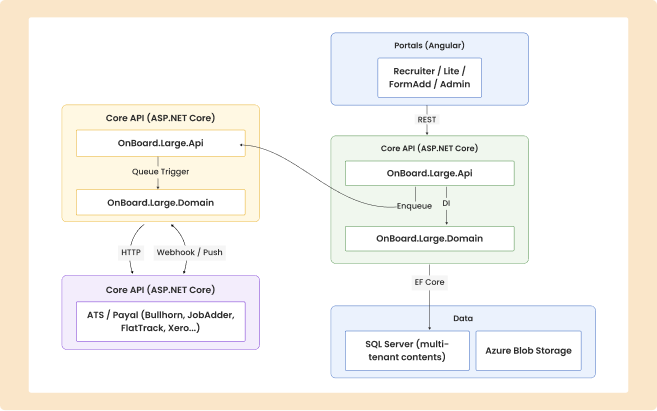
Radixweb assembled a 15-member dedicated team specializing in legacy modernization solutions to rebuild this workflow from the ground up. The team handled full lifecycle delivery, spanning development, quality assurance, DevOps, Azure infrastructure, release coordination, and direct stakeholder engagement. The result was a single automated employee onboarding solution built on .NET and Angular, with automated data capture, secure identity handling, and integration pathways into the client's recruitment systems.
Client Feedback

The transparency we now have into candidate progress has changed how our recruiters work day to day. What used to require constant follow-up now happens automatically, and that's given our team room to focus on the people, not the paperwork.
This project rewarded discipline more than cleverness. Working on legacy and modern frameworks side by side meant every integration decision had to account for what already existed, not just what we wanted to build next.

Niketa Parekh
Key Challenges

- Manual, paper-based onboarding created delays and left recruiters without visibility into candidate progress at any given stage.
- Duplicate data entry across disconnected ATS and CRM systems increased both administrative workload and the likelihood of errors.
- High daily placement volume demanded a system architecture that could scale without introducing processing bottlenecks.
- Legacy .NET Framework components needed to operate alongside modern ASP.NET Core services without disrupting existing functionality.
- Security requirements included recurring penetration testing cycles, requiring the platform to adapt quickly to newly identified vulnerabilities.
Solutions Delivered

Unified Onboarding Workflow
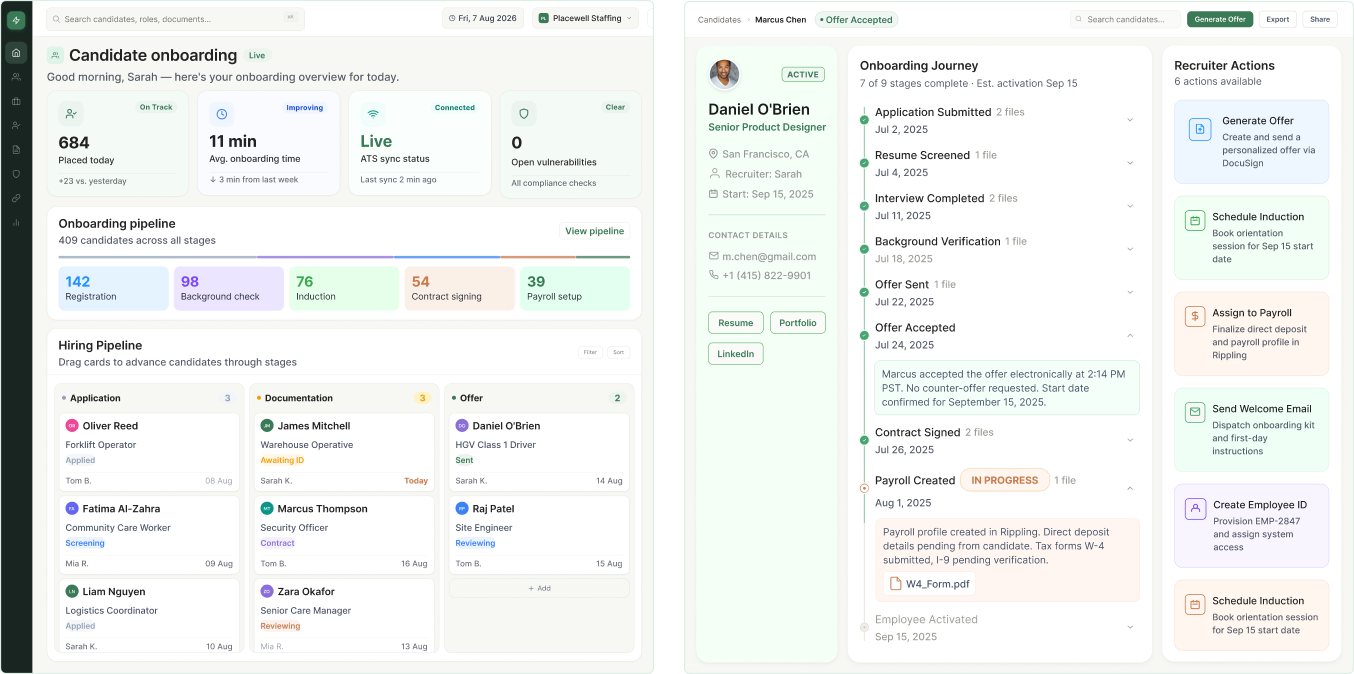
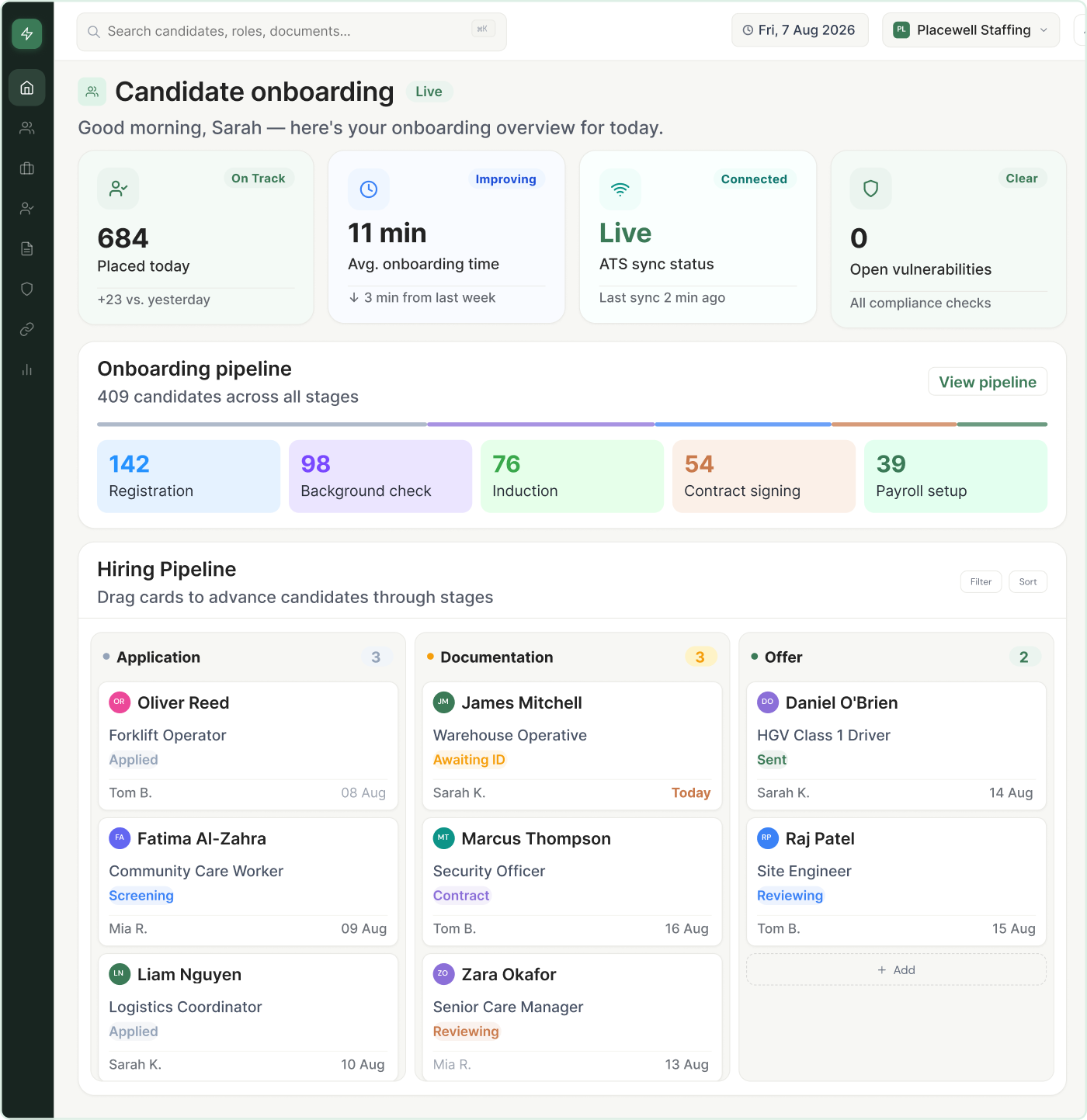
Our team consolidated registration, background checks, inductions, and contract signing into a single digital pathway. We removed the handoffs between disconnected tools that previously slowed candidate progress.

ATS and CRM Integration
Direct data synchronization with the client's recruitment systems eliminated redundant entry. The digital onboarding solution for recruitment agencies/companies allows candidate information captured once to flow automatically into downstream systems without manual re-keying.

Self-Service Candidate Experience
Candidates gained the ability to complete onboarding steps independently and remotely, supported by digital signature capture, document viewing, and address autocomplete built into the portal.

Secure Identity and Access Management
Authentication combined salted password hashing, account lockout policies, optional multi-factor authentication, and SSO through OpenID Connect, with JWTs re-validated on every request.

Continuous Vulnerability Monitoring
Automated scanning tools review every pull request against the main branch to generate tracked work items for any identified vulnerability, so fixes moved directly into sprint planning.

Observability and Application Monitoring
Distributed tracing and telemetry gave the engineering team visibility into the performance of the candidate onboarding software with ATS integration across environments, supporting faster diagnosis when issues surfaced in production.
If your organization is managing high-volume hiring through disconnected tools, there's a more efficient path forward. Let us help you.
Tech Stack Used
.NET Framework & ASP.NET Core
For this platform-based app modernization solution, we combined a legacy .NET Framework base with modern ASP.NET Core services, allowing the team to extend functionality without forcing a disruptive full rewrite of existing systems.
Entity Framework & EF Core
Both frameworks handled data access across different bounded contexts, with EF Core managing SQL Server interactions and newer migrations while legacy components remained supported.
SQL Server & DbUp
SQL Server served as the primary relational database, with DbUp managing schema migrations in a controlled, versioned manner across deployment environments.
Azure Identity & Key Vault
Sensitive credentials and secrets were managed through Azure Key Vault, reducing the risk of exposure that comes with hardcoded configuration values.
Open Telemetry & Application Insights
These tools provided distributed tracing and performance monitoring across the API layer, giving the team early visibility into latency or failure patterns.
Stripe & SendGrid
Payment processing and transactional email delivery were handled through established third-party services, reducing the engineering overhead of building and maintaining these functions internally.
Angular UI Libraries
A collection of Angular-focused libraries supported phone validation, address autocomplete, PDF viewing, rich text editing, and digital signature capture within the automated candidate registration and onboarding platform.
Azure Pipelines
CI/CD workflows were managed through Azure DevOps YAML pipelines, supporting consistent builds and deployments across development, staging, and production environments.
Business Benefits

Faster Onboarding Cycles
What once took hours of manual paperwork coordination now completes in minutes, with the onboarding platform supporting 650 to 700 temporary worker placements daily through a single automated workflow. Recruiters place candidates into roles faster, and candidates spend less time waiting between application and their actual start date.

Reduced Administrative Burden
Automated data capture and direct ATS/CRM integration removed the need for recruiters to manually re-enter candidate information across disconnected systems. With daily placement volumes running in the hundreds, this shift freed recruiter time that would otherwise go toward repetitive administrative tasks and redirected focus toward candidate support and higher-value recruitment work.

Improved Data Integrity
Direct synchronization between the candidate onboarding automation systems and recruitment systems reduced the transcription errors that typically arise when information moves manually between disconnected tools. At a volume of 650 to 700 daily placements, even small error rates compound quickly, so automated data flow materially lowered the risk of compliance gaps and payroll discrepancies.

Stronger Compliance Posture
Recurring security audits, conducted on a 6-month cycle, combined with continuous automated vulnerability scanning on every code change, gave the client a defensible compliance position without slowing active development. This meant security reviews and sprint delivery ran in parallel, rather than one blocking the other during release cycles.
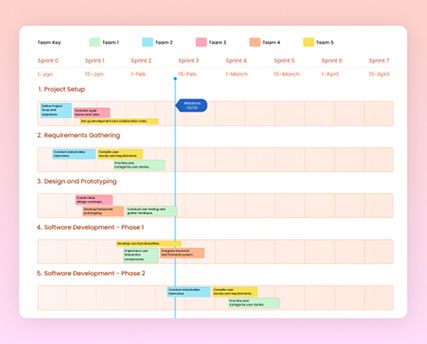
Fixed team size, fixed sprint cadence, and a named engineering lead from week one. Contracts start at your desired timeline, with month-to-month flexibility.