

Read More


Recognized for AI Excellence at 2026 Globee® Awards - Read More

Pratik Mistry

Quick Sum Up - Understanding factors that impact the React Native app development cost is imperative before starting any project. This blog will help you explore the detailed cost structure of a React Native project, highlighting all the key factors that influence pricing, a complete breakdown of development expenses, and realistic budget estimates. It also outlines common challenges and issues, and underscores how your team's expertise and location affect long-term budget planning.
The rising adoption of high-quality, cross-platform apps is gaining traction, and React Native continues to hold the top spot as an affordable, futuristic, and scalable framework. Whether you’re developing a revenue-generating digital solution, an enterprise mobility platform, or a client-facing app, understanding React Native app development cost is imperative for strategic planning and long-lasting growth. React Native’s single codebase approach, native-like performance, and rapid iteration cycles help minimize software maintenance expenses and development time.
However, certain factors, such as app complexity, team expertise, security needs, third-party integrations, UI/UX requirements, and backend architecture, can significantly impact the final budget. That’s where Radixweb makes a real difference. With in-depth expertise in custom app development, cloud-native architectures, API integration, and modern UI engineering, we also help organizations simplify the development costs while maintaining remarkable product quality and ensuring on-time delivery.
We've curated this blog to help you understand the most significant question: how much does it cost to build an app? It also highlights multiple cost-impacting factors, provides a detailed cost estimate, includes a cost breakdown, and offers guidance on how to reduce them.

React Native is one of the leading frameworks for building cross-platform applications. Developed and supported by Meta, it enables developers to create a single codebase that runs on both Android and iOS without compromising user experience. With features such as reusable UI components, modern architecture, and robust community support, React Native simplifies app development while helping to minimize time-to-market. These features make it the top choice for enterprises, SMEs, and startups.
From enterprise-grade solutions to on-demand services and eCommerce apps, React Native provides flexibility, scalability, and a near-native app experience. As an increasing number of businesses seek rapid digital evolution, understanding the React Native app development cost has become necessary for ROI-driven decision-making and efficient planning.
Choosing the right technology stack for developing apps directly influences its performance, development time and cost, and user engagement. React Native outshines for multiple reasons, including:
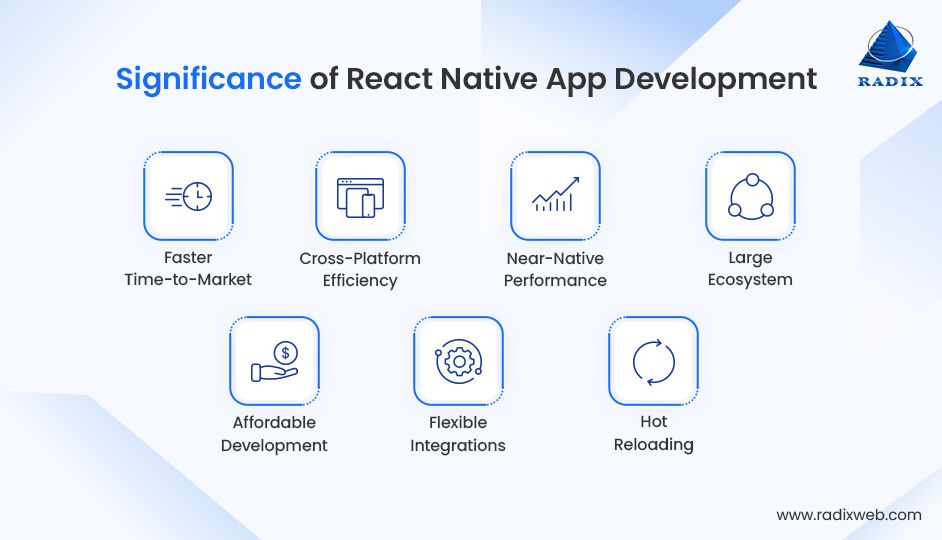
Whether you own a startup or are an established entrepreneur running a business, you can create React Native apps that would be cost-effective and easy to deploy.
However, as with other frameworks, it is challenging to estimate the React Native app development cost. React Native cost depends widely on the complexity of a project or the app requirements. The price may also vary based on business requirements.
On average, the cost of creating a React Native app range of $10,000 to $200,000 or even more. It depends on the application's complexity and its functions and team expertise and development time can take 2 to 12 months. Here's the breakdown.
The basic React Native app development cost varies from $10,000 to $40,000 with 2 to 5 months of development process and includes simple features like user login, navigation, cross-platform support and more.
For a medium complexity React Native app cost is around $40,000 and $100,000 with a development period of 5 to 9 months. This application includes lazy loading, UI/UX design, payment solutions and API integration with a moderate customization.
To develop an advanced or enterprise-level React Native app, the cost ranges from $100,000 to $200,000 or more, with a development timeline of 9 to 12 months. The cost includes complex features such as rich animations, live data tracking, AI features, and a custom backend setup, along with advanced security, which makes the application more user-centric.
React Native app development costs per hour can range from $15 to $25 per hour and fluctuate depending on the developer's experience, skills, and location.

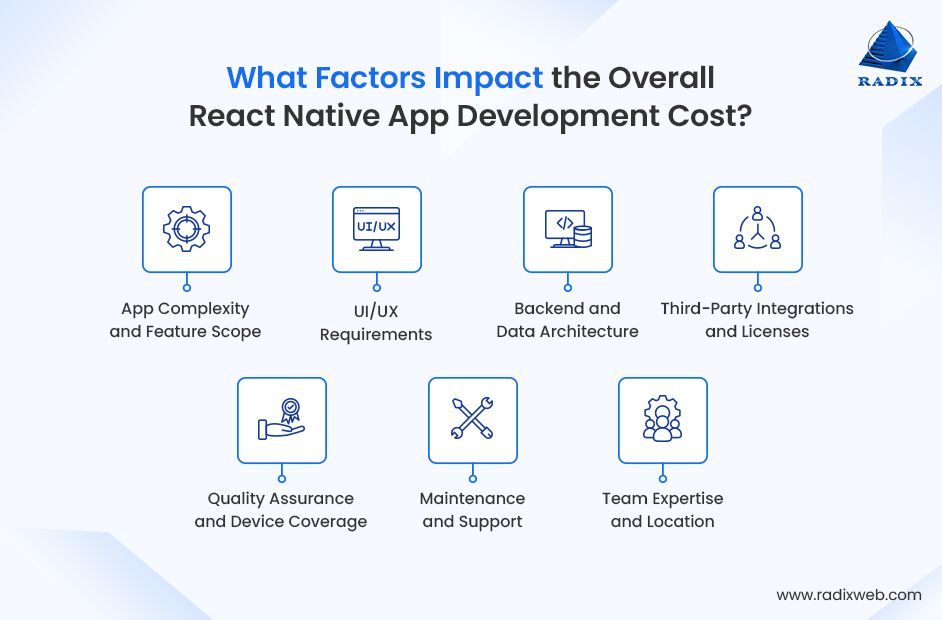
The costs of developing React Native apps differ based on app complexity, team structure, performance requirements, integrations, backend architecture, and design needs. Each factor contributes to timelines and the overall budget. Understanding these factors enables better planning, prevents overruns, and provides a practical financial outlook. Let’s now go through these factors:
React Native app development typically falls into three cost categories: simple MVPs, mid-level apps with feature integrations, and complex, advanced platforms. Each category varies in development schedules, features, and technical complexity. Estimating the app development cost helps organizations choose the proper scope, strategic goals, and rollout roadmap.
| App Type | Cost | Timeline | Core Features |
|---|---|---|---|
| Basic App (MVP/Utility) | USD 15k – USD 30k | 4–8 weeks | Basic screens, authentication, simple API calls, no complex integrations |
| Mid-Complex App | USD 30k – USD 70k | 8–16 weeks | One or two custom animations, moderate backend logic, maps/geolocation, push notifications, and user accounts |
| Complex Enterprise-Grade App | USD 70k – USD 200k+ | 16+ weeks | Offline-first architecture, AI/ML features, advanced security/compliance, enterprise system integration, multi-role access, real-time sync |
As per updated estimates of 2026, developing a React Native app typically costs $20,000–$250,000+, with lean MVPs starting around $15,000–$30,000 and large enterprise-grade apps reaching $150,000–$300,000+.
Includes requirement gathering, technical planning, feature prioritization, and user journeys.
Includes interactive prototypes, design systems, high-fidelity mockups, and wireframes.
Designing app screens, offline support, animations, state management, logic, and navigation.
Includes dashboards, push notifications, payments, user authentication, database setup, and server configuration.
Includes cross-device platform testing, automated testing, performance tuning, and bug fixes.
Includes release management, App Store and Play Store submission, CI/CD setup, and build automation.
Includes sprint planning, buffer for unknowns, reporting, and communication.

React Native app cost estimates also depend on your developer’s location, team structure, and experience. Rates may vary across different regions, and skilled teams help minimize rework and expedite delivery. Choosing the right app development team and their location ensures affordability without compromising quality.
React Native development may encounter specific challenges, such as occasional platform-specific issues, dependency conflicts, and performance limitations, particularly with complex apps. Ensuring stability and long-term reliability needs experienced developers, comprehensive testing, and robust architecture. The following are some significant risks and challenges in React Native app development:
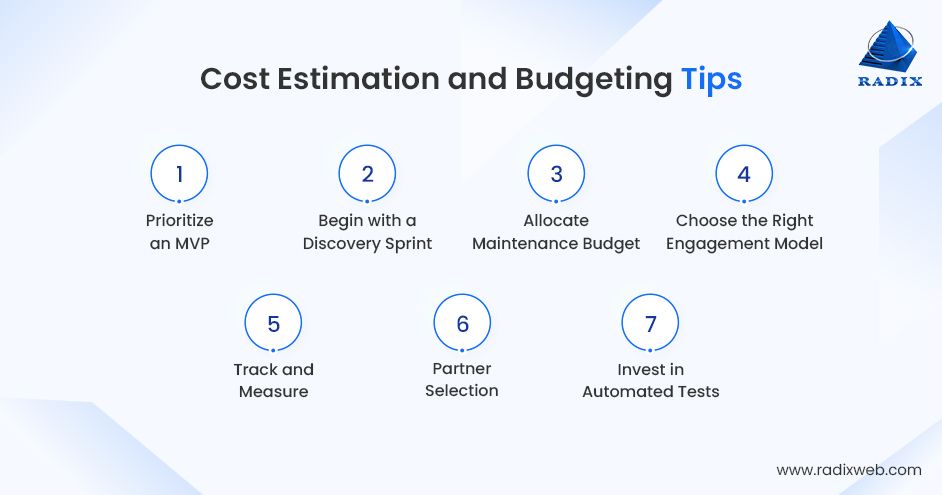
Efficient cost budgeting requires precise requirement analysis, realistic schedules, step-by-step development, and consistent maintenance planning. Let's now go through some of the best budgeting tips to minimize the cost to build a React Native app:

Unlock Value-Driven React Native Development with Radixweb
React Native is emerging as one of the most resilient and affordable frameworks for modern app development. Its capability to repurpose a single codebase across Android and iOS can substantially reduce development time, speed up time-to-market, and minimize maintenance overhead, making it a calculative choice for enterprises, SMBs, and startups.However, to experience these advantages, you need a clear understanding of cost-influencing factors such as app complexity, compliance needs, integration, backend architecture, and UI/UX depth. Careful planning, well-planned budget allocation, and phased execution ensure seamless development cycles and minimal financial surprises.Moreover, choosing the right tech partner is equally important. This is where Radixweb comes into play! With extensive expertise and experience in React Native app development services, we integrate robust architecture, proven delivery frameworks, and transparent cost modeling into every project. Our in-depth knowledge helps organizations optimize the development costs while also ensuring higher performance, adaptability, and long-term product viability. Contact our experts to experience a top-tier pathway for building high-impact, next-gen React Native apps.
Ready to brush up on something new? We've got more to read right this way.

