Read More


Recognized for AI Excellence at 2026 Globee® Awards - Read More

Ekta Rijhwani
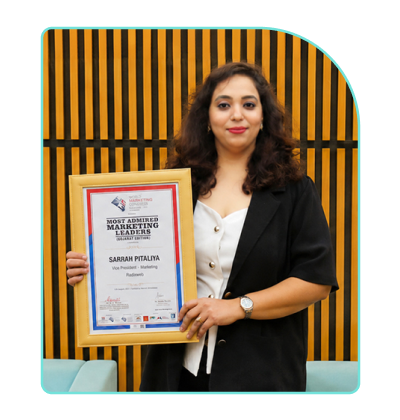
Marketing used to sit at the edge of a business, waiting for something to promote. Today, it has moved much closer to the center of business decision-making. Sarrah Pitaliya, Vice President of Marketing, at Radixweb, has spent much of her career inside this shift.
Handling marketing for Radixweb, a global software development and AI-first digital engineering company, she has helped build a marketing organization suited to exactly this kind of environment. One where brand work, demand generation, and business strategy move together. Not in a sequence.
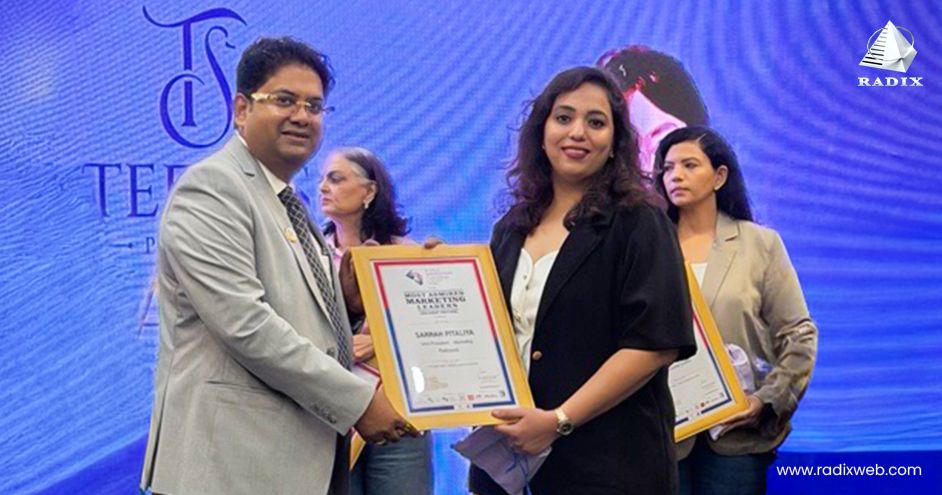
And now, her approach and work have been recognized by CMO Asia. She was named the Most Admired Marketing Leader for her strategic vision and impact. The recognition follows her 2022 honor as a Fast-Paced Leader by CMO Asia.
The two recognitions offer a useful lens into how her approach evolved with the broader marketing landscape. To understand this evolution more closely, I sat down with Sarrah to discuss the recognition, her leadership journey, the role of AI in marketing, and what comes next.
Below are some excerpts from my conversation with Sarrah Pitaliya about her recent award win, AI, and what's next in marketing.
Well, it is no longer about how many people saw your brand. It is now more about understanding customers, the market and the general direction of business. Also we aren't asking “What do we want to say?” anymore. Instead, we are more concerned about “What does the customer need to understand?”
At Radixweb, that's exactly how we've always looked at marketing. Not as an auxiliary function, but as a growth function. Our work connects to what the business is trying to achieve. Visibility matters, but it is not enough. We also focus on making sure that our work is reaching the right audience, creating meaningful conversations, building trust, and contributing to business growth.
I feel leaders are not born, but they are made. And organizations and individuals play a very important role in helping build the next generation of leaders through the right support, guidance, and opportunities.
And I truly believe no marketing leader is built alone.
Every campaign, every launch, every bold idea, and every result is a collective effort. If I stand here as a leader today, it is because of the people who choose to build alongside me every single day.
For me, leadership is about creating an environment where people are trusted to take ownership. My goal with my team is to ensure they get the opportunity to build themselves into the next generation of leaders.
I have met some incredible mentors like our CEO Mr. Divyesh Patel and COO Dharmesh Acharya, who have really pushed the envelope throughout my journey. Their guidance, trust, and support have played a significant role in shaping me. The same is what I want to create for my team.
There is no denying that AI has changed how marketing is done. It helps us research faster, analyze information, identify patterns, generate ideas, and automate repetitive work. More importantly, AI has also changed what marketing is expected to do and achieve.
And I see that as a great opportunity. But I feel AI should support human thinking, not replace it. When something becomes easier to produce, the thinking behind it becomes even more important. AI can give you information, sure. But you still need to understand the customer, the context, the business problem, and what the information actually means.
So, empathy, creativity, judgment, and interpretation remain extremely important.
Working at Radixweb gives me a close view of this shift because we are building and operating at the forefront of an AI-first environment. I see the possibilities of AI every day. But I also understand that technology creates value only when it solves the right problem. So, I don't believe in using AI simply because it is available. I believe in using it where it creates real value, while keeping human judgment intact.
AI fluency is now an essential skill for marketers. But knowing when to use AI is just as important as knowing how to use it.
B2B buyers are more informed than ever. They research independently. They compare companies and consume different perspectives. And they also often form an opinion before they speak to a technology partner.
That means generic messaging doesn't work anymore.
So, my approach isn't to just put our word out, but understand what customers are actually trying to solve and what information will genuinely help them make a decision. That is more useful than just focusing on what we want to communicate.
I also believe there is a difference between being relevant and chasing trends. We should experiment. We should learn. We should understand how customer behavior is changing. But we don't need to respond to every new platform, format, or trend.
The goal is to evolve without losing the identity and value proposition of the brand.
I see a lot of change, both personally and professionally. Back in 2022, leadership was closely connected with execution, speed, and taking responsibility for getting things done. But now, leadership is much more about people, direction, and creating an environment where others can grow.
The Fast-Paced Leader recognition was an important milestone for me. The Most Admired Marketing Leader recognition feels like another step in that journey. I truly appreciate the moment I am in and everything that made me my determined version, personally and professionally.
That is what leadership means to me today. Not simply what I achieve personally, but what the people and the organization around me are able to achieve because we are building together.
Marketing is changing too quickly for anyone to believe they have figured it all out. The tools will change. AI will change how we work. Customer expectations will change. And today marketing already overlaps with technology, sales, customer experience, data, and business strategy. So, I think the marketers moving into leadership over the next few years will inherit a function with fewer fixed boundaries.
But the need to understand people, solve meaningful problems, make sound decisions, and create value will remain. Knowing the tools will matter. So will knowing when not to use them.
I also believe future leaders need to focus on developing people. If you create an environment where people can take ownership, experiment, learn, and challenge ideas, you create more than a successful team. You create the next generation of leaders.
My own journey has taught me how important the right environment is. I love what I do, but I also believe that comes from the environment, the culture, and the processes you are part of at your workplace. That builds you to love what you do, and that is something individuals look for while they work.
A Leadership Approach Built for What Comes Next
Sarrah’s journey serves as a great reminder that effective marketing leadership goes beyond just keeping up with change. It’s about recognizing what’s truly worth chasing, getting to know your audience, and allowing your teams the freedom to develop.Her perspective on AI carries this same message. Sure, technology is going to keep altering the way marketers operate. But things like good judgment, creativity, understanding your customers, and making solid decisions will always be crucial.Being recognized as a CMO Asia is a significant milestone for her, but she emphasizes something even more important: true leadership is about what people can achieve together.At Radixweb, this belief shapes the way teams collaborate, experiment, learn, and evolve. If you are looking to work in an environment where ideas are trusted, experimentation is encouraged, and people are empowered to grow, explore career opportunities at Radixweb and become part of what we are building next.
Ready to brush up on something new? We've got more to read right this way.