

Read More


Recognized for AI Excellence at 2026 Globee® Awards - Read More

Dhaval Dave
Picture this: Your application works well on AWS. You adopted Lambda, DynamoDB, RDS with AWS-specific replication, and Cognito for identity. The decision made sense at the time. But then a major customer says its technology policy requires Azure. Another prospect prefers Google Cloud (GCP). Your company acquires a business running on Azure. Or your leadership team starts asking a less comfortable question: What happens if we ever need to leave AWS?
Suddenly, that "easy" decision to go all-in on one cloud became a million-dollar replatforming project.
This story isn't unique. It's the default outcome when companies don't intentionally design for portability. And if you're building applications today, you'll face the same decision.
Building a portable cloud application means keeping core application logic, data, infrastructure, and operations independent from individual cloud providers as practical. Containers, open standards, infrastructure as code, portable data architectures, and standardized CI/CD help. You do not need to eliminate every cloud-specific service. You need enough flexibility to move or redeploy without rebuilding the application.
| Aspect | Details |
|---|---|
| What does this guide cover? | Cloud-portable application architecture, multi-cloud implementation patterns, AWS vs Azure vs GCP, portability testing, data portability, CI/CD, key challenges and trade-offs |
| Who should read this guide? | Senior engineers, cloud architects, technical leaders, DevOps and QA teams, enterprises planning or managing multi-cloud environments |
Multi-cloud and portable cloud applications are often confused. Majorly because both involve AWS, Azure, or GCP. But using multiple clouds does not automatically make an application portable.
A multi-cloud app uses more than one cloud provider for workloads, customers, and capabilities. But moving an app from one provider to another could still require significant work.
A portable cloud application, however, is designed with a different goal. It allows workloads to move between cloud environments with little rebuilding or recoding. The app architecture, deployment process, and infrastructure are designed to reduce dependence on any provider.
Cloud agnostic apps go a step further. They represent the highest degree of cloud portability. It refers to an architecture where the core app minimizes dependence on provider-specific services. Such apps are as independent of the underlying cloud as practical. Although achieving complete cloud independence is rarely practical or necessary.
The important part is that these aren't three interchangeable approaches.
And that distinction matters because more portability isn't automatically better. Full portability is difficult. It often requires giving up some of the value of building a truly cloud-native application. Most enterprises are better served by deciding which parts of the app need to remain portable and where cloud-specific capabilities are worth the trade-off.
When you build cloud applications for AWS, Azure, and GCP all at once, it introduces additional architecture and testing requirements. That directly translates to higher cloud app development costs, longer timelines, and more complexity upfront. So, you should build a portable cloud app that works across AWS, Azure, and Google Cloud, only when the business value clearly justifies the investment.
Here are some of the situations where the investment makes sense:
These drivers also explain why cloud-agnostic application design is becoming a strategic consideration for some enterprise architecture teams.
The portability decision becomes clearer when you look at where AWS, Azure, and GCP differ. They offer similar categories of services, but their implementations, APIs, identity models, and managed capabilities are not interchangeable.
| Application Concern | AWS | Azure | GCP |
|---|---|---|---|
| Compute | EC2 / ECS / EKS | Azure VMs / AKS | Compute Engine / GKE |
| Identity | IAM | Microsoft Entra ID | Cloud IAM |
| Storage | S3 | Blob Storage | Cloud Storage |
| Database | RDS / DynamoDB | Azure SQL / Cosmos DB | Cloud SQL / Firestore |
| Messaging | SQS / SNS | Service Bus / Event Grid | Pub/Sub |
| Serverless | Lambda | Azure Functions | Cloud Run / Cloud Functions |
| Monitoring | CloudWatch | Azure Monitor | Cloud Monitoring |
Also Read: In-Depth AWS vs. Azure vs. GCP Comparison
These services solve similar problems, but they do not provide identical interfaces or operating models. If portability matters, the architecture should isolate these differences rather than allowing them to spread through application code.
But before you ask how to make an application cloud agnostic, know that 100% portability is not automatically the right answer.
If your application has no foreseeable requirement to run outside its current cloud, your customers are standardized on one provider, and your business gets substantial value from that provider's managed services, forcing every component into a portable abstraction can create unnecessary complexity.
There is a real tradeoff here.
Cloud-native services exist because they solve difficult infrastructure problems for you. Replacing every managed service with a theoretically portable alternative can increase engineering effort, operational responsibility, and cost.
AWS itself recommends an 80/20 approach rather than trying to distribute workloads equally across clouds. Its multicloud guidance also warns against spreading tightly connected workloads across providers simply to achieve multicloud coverage.
The right question is not:
"How do we eliminate cloud dependency?"
It is:
"Which cloud dependencies create enough value to justify keeping them?"
That distinction should guide the rest of the cloud application architecture.
Here's the trap most organizations fall into: They think cloud portability means an application that runs identically on AWS, Azure, and GCP. That's almost never achievable without building your own abstraction layer that slows everything down. And trying to make every component interchangeable often adds abstraction, testing, and operational complexity without creating enough business value.
The better question is: How much portability does your business actually need?
Most organizations don't need 100% portability. They just need enough flexibility to move a workload, recover on another provider, serve customers across clouds, or avoid deep dependence on one vendor.
Use your business requirement to determine how much portability to build and which multi-cloud pattern fits best:
Portability Level: High Portability
Architecture Pattern: Portable Core + Cloud-Specific Infrastructure
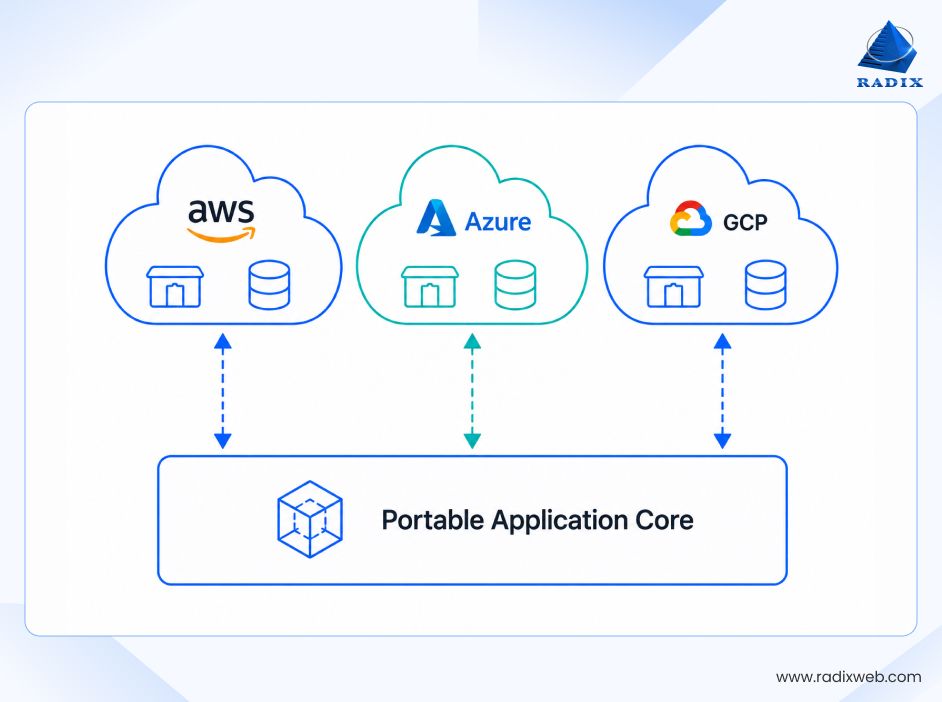
Keep the application core portable and minimize provider-specific dependencies. Each cloud can still handle infrastructure services differently.
Portability Level: Targeted Portability
Architecture Pattern: Active-Passive Multi-Cloud
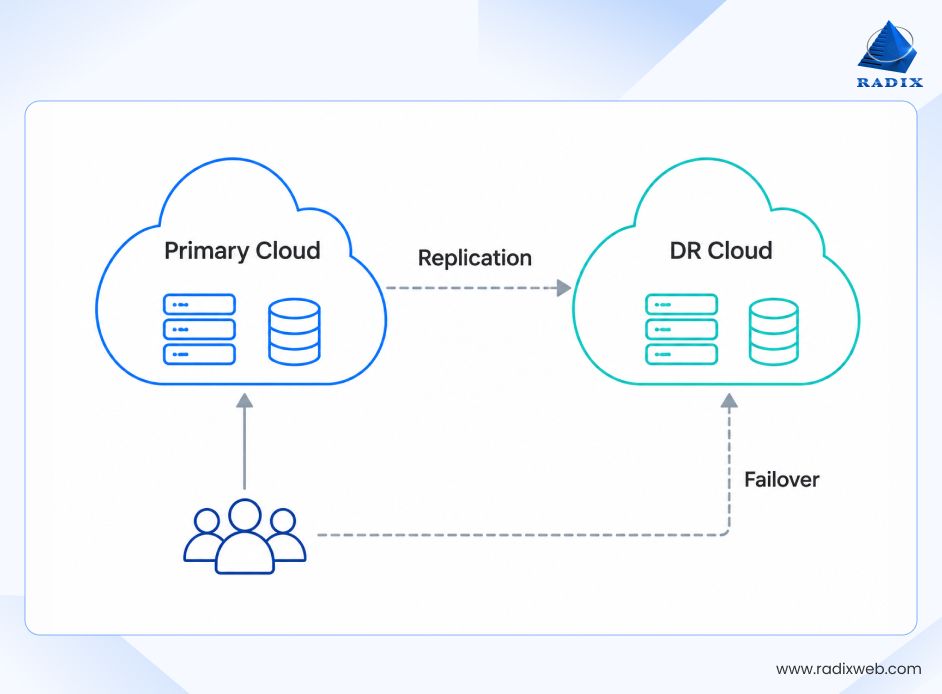
Keep enough of the application portable to recreate it on another provider when needed. Focus on tested failover rather than running two production environments.
Portability Level: Selective Multi-Cloud
Architecture Pattern: Workload-Level Multi-Cloud
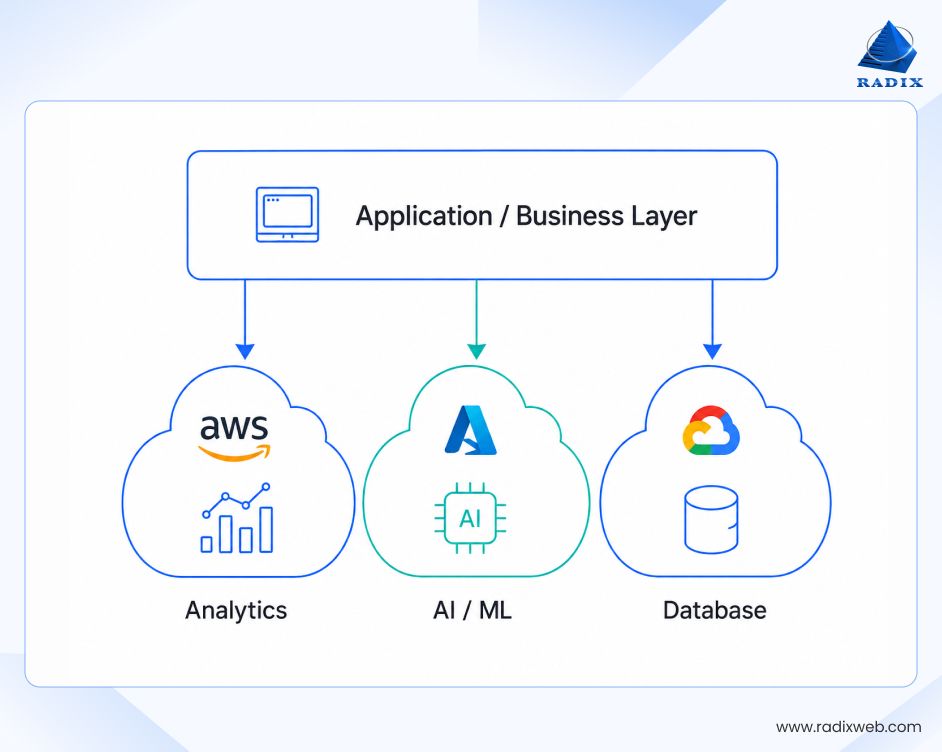
Keep suitable workloads portable while using provider-specific services where they create clear value, such as analytics or AI workloads.
Portability Level: High Portability + Multi-Cloud Operations
Architecture Pattern: Active-Active Multi-Cloud
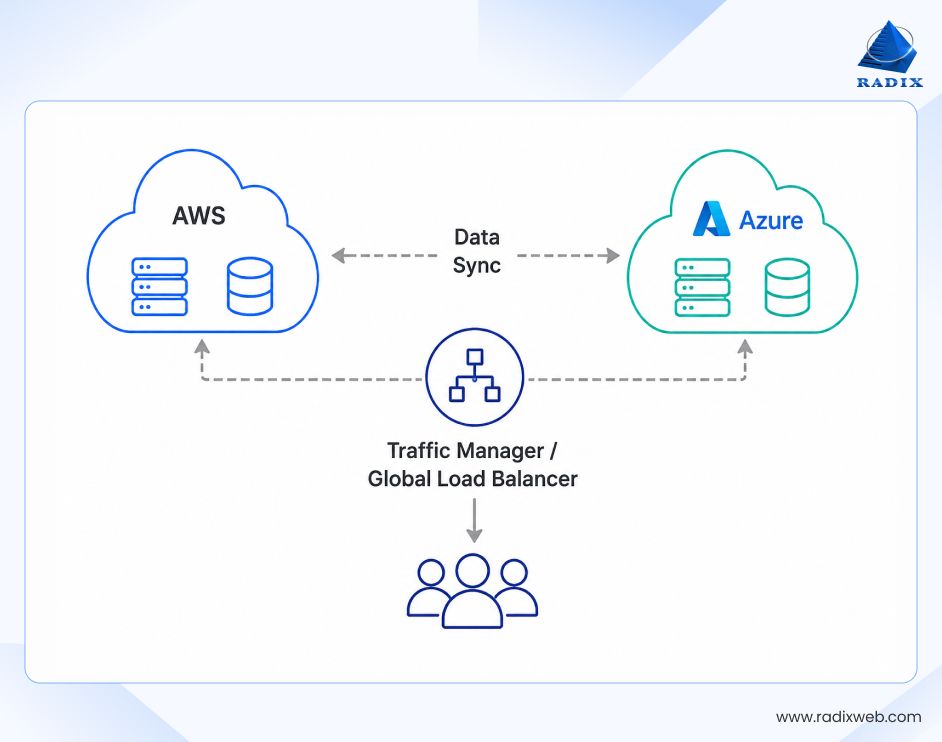
Run workloads across multiple providers at the same time. This requires additional investment in data synchronization, traffic management, identity, observability, and deployment.
Portability Level: Cloud-Optimized
Architecture Pattern: Cloud-Native Architecture
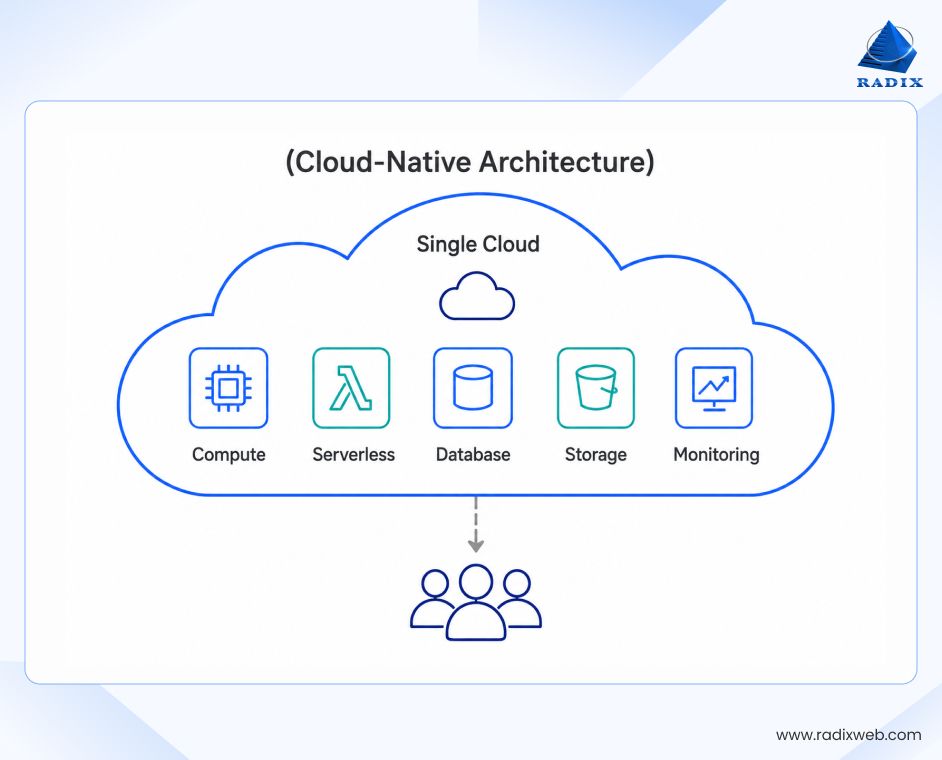
Use the provider's managed services where they improve speed, scalability, or operations. Portability is not a primary architectural goal. The goal is not to eliminate every cloud dependency. It is to make deliberate decisions about which dependencies are worth keeping.
Irrespective of which architectural pattern you use, the key principle to remember is: Portability is not an all-or-nothing architecture decision. Build only as much portability as your business needs, and keep cloud-specific capabilities where they deliver meaningful value.
Once the required portability level is clear, the architecture should be designed around the boundaries that need to remain portable. And cloud portability starts long before the first production deployment.
A practical cloud-agnostic application architecture separates application logic from infrastructure, data, identity, deployment, and cloud-specific services. This gives teams room to change providers without rebuilding the application from scratch.
Here’s how to build portable cloud applications
Containers package application code, dependencies, libraries, and runtime requirements into a consistent deployment unit. The same container image can run across AWS, Azure, and GCP, wherever a compatible container runtime is available.
This creates portability at the application runtime layer. It does not remove dependencies on databases, identity services, networking, or cloud-specific APIs. So, containers should be treated as one layer of a portable architecture, not the entire solution.
Kubernetes is an open-source container orchestration platform that provides a common orchestration model across cloud environments. Managed services such as Amazon EKS, Azure AKS, and Google GKE let teams use Kubernetes-based deployment patterns without managing the entire control plane themselves.
Kubernetes helps standardize deployments, services, scaling, configuration, and workload management. However, apps that depend heavily on provider-specific networking, storage, or identity services still remain tightly coupled to that cloud.
Managed cloud services improve productivity, but they also create portability tradeoffs. Using services such as AWS Lambda, DynamoDB, or SQS might be the right decision if their capabilities provide clear business value.
But the key is to understand the exit cost. Before adopting a proprietary service, consider how difficult it would be to replace, migrate its data, and modify the app if the workload needed to move to another provider. Portability does not mean avoiding every managed service. It means making cloud-specific dependencies deliberate rather than accidental.
Open standards create stable interfaces between application components and infrastructure. REST APIs, OAuth/OIDC, OCI container formats, OpenTelemetry, standard database interfaces, and established messaging protocols reduce unnecessary provider-specific dependencies.
The principle is simple: keep the contract stable even when the implementation changes.
For example, application code should interact with an authentication interface, rather than directly embedding the implementation details of a specific cloud identity service. The same approach applies to messaging, observability, storage, and external integrations.
Business logic should not need to know whether it is running on AWS, Azure, or GCP. Cloud-specific implementation should sit behind clearly defined application boundaries.
For example, an order-processing service should express the business action of publishing an order event. A separate infrastructure layer should determine how that event is delivered through the selected messaging service.
This makes it easier to replace infrastructure components without rewriting core business processes. The same principle applies to storage, notifications, authentication, secrets, and other infrastructure dependencies.
Portable infrastructure needs to be reproducible. Infrastructure as Code allows teams to define infrastructure through version-controlled configurations instead of relying on manual cloud-console settings.
Tools such as Terraform and OpenTofu support infrastructure management across cloud environments. The objective is not to create one configuration that makes every cloud identical. Instead, teams should create reusable modules and provider-specific implementations that deliver equivalent outcomes.
This also makes portability testable. If another cloud is intended to serve as a production or recovery environment, the required infrastructure should be deployable through automation.
Also Read: Infrastructure as Code Explained
Data is often harder to move than application code. A container can be redeployed quickly, while a large database brings schemas, relationships, replication, migration, compliance, and recovery requirements with it.
Choose data technologies and models with the required portability in mind. Consider database formats, migration tooling, backup and recovery, encryption, retention, replication, and data residency from the beginning.
The real question is not whether data can be exported. It is whether the data can be moved, validated, reconnected to the application, and brought back into production within an acceptable business window.
A portable cloud application should follow a consistent delivery process regardless of its target cloud. The pipeline should build the application, run tests, scan dependencies and images, create deployment artifacts, provision or validate infrastructure, deploy the workload, and verify the deployment.
Cloud-specific configuration should remain in environment definitions and infrastructure modules rather than being embedded throughout the app delivery process. This allows the same application version to move across environments without maintaining three separate release processes.
Overall, portable cloud app architecture does not eliminate cloud differences. It contains them. The application runtime, deployment artifacts, infrastructure definitions, data strategy, and delivery process should remain consistent wherever practical, while cloud-specific capabilities stay behind deliberate boundaries.
That is what turns portability from an aspiration into an engineering property.
Cloud portability is something you validate, not something you claim.
A container image that deploys successfully on another cloud does not prove the application is portable. It proves that the container starts. Real portability requires the application to perform its intended business functions after deployment.
Your testing should cover:
The most useful test is brutally simple:
If your AWS environment disappeared tomorrow, how much work would it take to get the application running on Azure or GCP?
You can assess portability across three broad levels.
Low portability: The application requires substantial code changes, infrastructure redesign, manual configuration, and complex data migration before it can run elsewhere.
Moderate portability: The application requires infrastructure and configuration changes but limited application changes.
High portability: The application can be deployed to another environment using existing application artifacts, automated infrastructure, and a defined data migration or replication process with limited application modification.
You do not need to chase the third category unless your business requires it.
The useful question is: "Can we meet our business recovery, customer, regulatory, or migration requirement within the time and effort we have budgeted?"
That is a much better portability metric than a claim that an application is "100% cloud agnostic."
Portability provides flexibility. But it also adds technical and operational complexity. Understanding these challenges of multi-cloud application development early helps teams decide where portability is worth the investment.
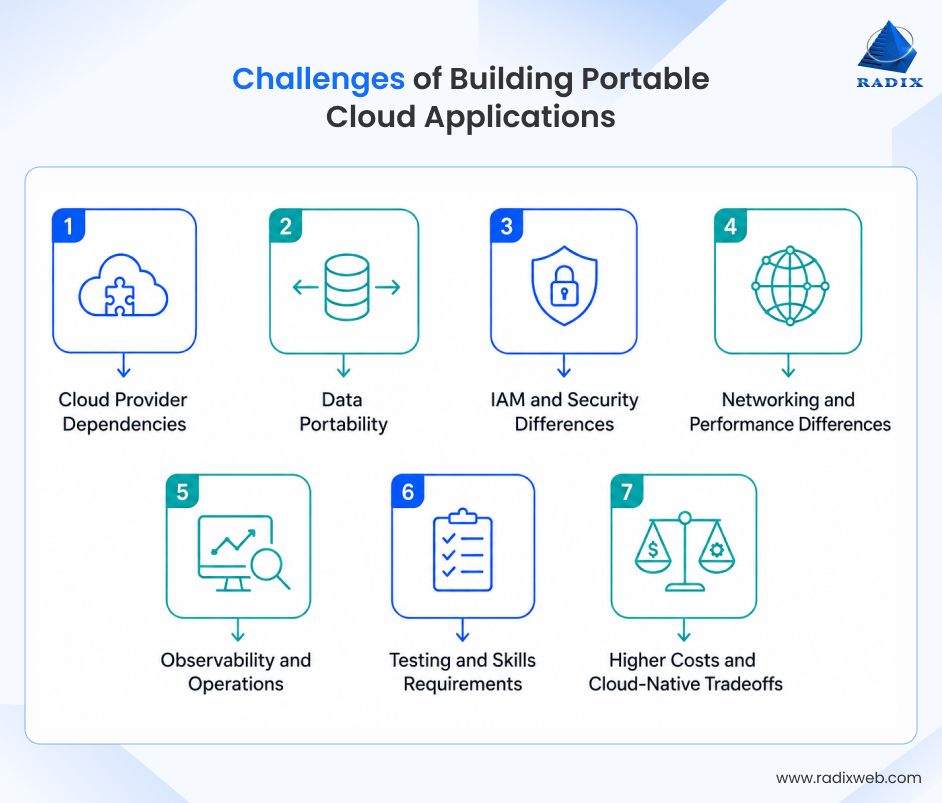
The more an application relies on proprietary cloud services, the harder it is to move. Replacing a cloud-specific database, messaging service, or serverless function often requires application and infrastructure changes.
Data is harder to move than code. Large datasets, complex schemas, replication, compliance, and data residency requirements can make migration difficult.
A portable architecture needs a clear plan for moving, validating, and reconnecting data.
AWS IAM, Microsoft Entra ID, and Google Cloud IAM work differently. Standards such as OAuth and OIDC reduce application-level dependencies. However, you still need robust cloud security configuration and identity management for every cloud.
Cloud networking works differently across providers. VPCs, routing, firewalls, DNS, load balancing, and private connectivity all need separate configuration.
Performance can also vary. There might be latency or throughput differences when you deploy applications across multiple cloud platforms, so every target environment needs testing.
Each cloud has different monitoring and operational tools. Multi-cloud also means managing more credentials, policies, configurations, service limits, and operational processes.
Standardized logging, metrics, and tracing help, but teams still need processes for managing each environment.
Every supported cloud adds another environment to test. Releases need validation for functionality, security, performance, and deployment.
Teams also need enough knowledge of each cloud to troubleshoot and optimize workloads.
Portability requires more architecture, automation, testing, documentation, and infrastructure work. This increases upfront development costs and timelines.
It can also mean giving up some capabilities that you would have only received with the development of cloud-native applications for enterprise needs. A portable alternative might not offer the same performance, features, or operational benefits as a provider-specific service.
Portability is not always worth the extra effort. Build it where it reduces a real business risk or creates meaningful flexibility. Use cloud-specific services where they provide more value than the portability they sacrifice.
Move from Cloud Portability to Long-Term Cloud Flexibility
Cloud portability is not about making AWS, Azure, and GCP work exactly the same. It is about keeping critical parts of your application independent while using cloud-specific services where they deliver real value. It requires clear architecture and deliberate trade-offs. Portability is not a checkbox. It is a strategy built into every step when building a cloud application for your business needs.At Radixweb, we design cloud-agnostic application architectures and help enterprises build multi-cloud application portability without adding unnecessary complexity. We help identify cloud dependencies, define portability boundaries, and create practical migration and deployment strategies. So, whether you're planning a multi-cloud strategy, building a new application, or simplifying an existing multi-cloud environment, we can help you choose the right approach for your business. Schedule a consultation with our cloud engineering team to build the right level of cloud flexibility.
Ready to brush up on something new? We've got more to read right this way.

